
A new book on workplace psychological hazards and laws has been published. The book “Managing Psychosocial Hazards and Work-Related Stress in Today’s Work Environment – International Insights for US Organizations” written by Ellen Pinkos Cobb, has a similar format to her coverage of international sexual harassment laws in a previous publication. Many occupational health and safety-related books written in the United States suffer from American parochialism. Cobb’s book is written for US organisations to show what workplace health and safety achievements are possible. The book is a very good summary of international changes in workplace psychosocial hazards.
Category: mental-health

Worksafe Victoria’s new gendered violence campaign
WorkSafe Victoria has actively campaigned against occupational violence for the last few years. The pandemic, understandably, brought the focus onto violence against emergency services workers and healthcare staff. Recently the campaign has focussed on gendered violence at work. The intention is to be inclusive, to address the variety of violent acts and the variety of people gendered violence affects, but it is not as inclusive as it could be.
New mental health code and regulations
Last week Safe Work Australia released its “Managing psychosocial hazards at work – Code of Practice“. It offers solid guidance on psychosocial hazards reflective of the work already conducted by Victoria, New South Wales and other jurisdictions and in support of the new regulations in the Model Work Health and Safety laws. In connection with a blog article earlier today, the Code provides some insight into cognitive demands.

A workplace injury could include adverse effects on physical, mental or cognitive conditions.
I recently refreshed my Lead Auditor in OHS training – the first time since Australia updated its Occupational Health and Safety Management Systems Standard to ISO45001. It was challenging on some issues but generic on others. Due to the recent heightened awareness of psychosocial hazards in the workplace, I was watching for how this hazard would be addressed. Still, I became stuck on the inclusion of “cognitive condition” in the definition of “injury and ill health”.
WorkSafe advertises for a sex work Project Officer
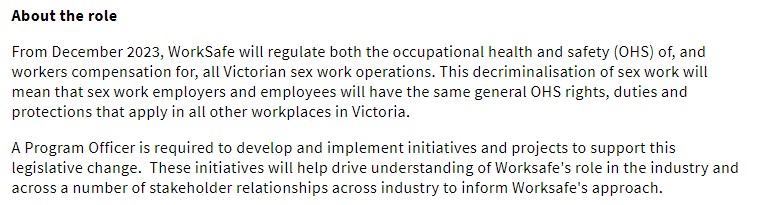
WorkSafe Victoria is advertising for a Program Officer for its new sex work industry obligations. It’s a tough ask as the candidates will need to combine a good level of occupational health and safety (OHS) knowledge with a close, effective association with the local sex work industry networks.
WorkSafe has outlined its expectations for sex work OHS with these suggested considerations:
A Wellbeing Budget needs a strong cultural change strategy
Jim Chalmers has completed his first week of Australia’s Parliament as Treasurer. On Thursday, he presented a statement of the country’s finances without mentioning his well-being intentions (which some are claiming to be a gimmick). This does not mean that well-being is dead, as the “Wellbeing Budget” is not due until October; Chalmers needs to establish his authority, but it illustrates a common perspective on occupational health and safety (OHS) in the minds of many small business people.
Psychological regulations and control
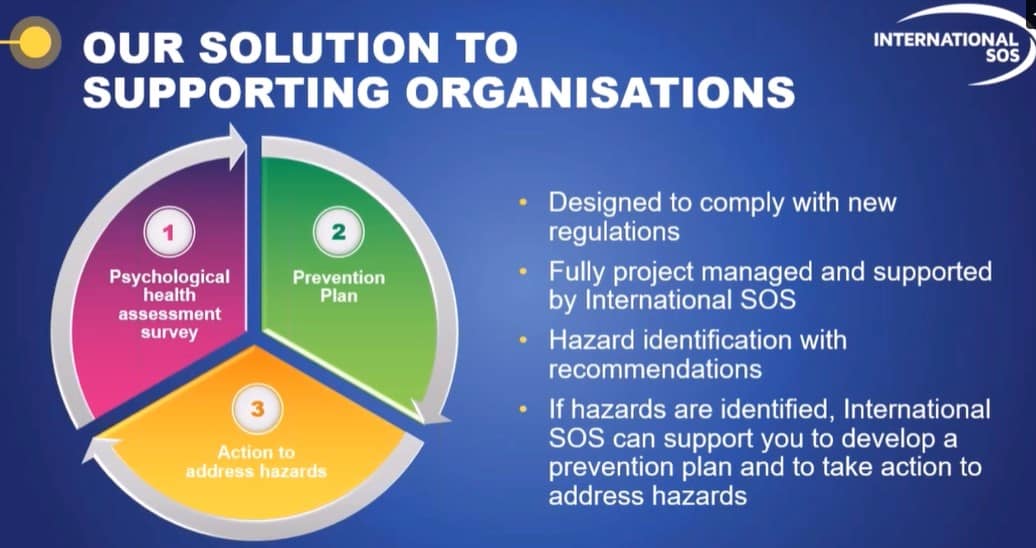
Recently International SOS conducted a webinar on workplace psychosocial hazards and controls. Parts of it were clearly marketing and promotional, but some of the speaker’s content was fascinating and useful.
The seminar’s structure was good because it included a global perspective and a local Australian. The speaker from a worldwide standpoint, Dr Rachel Lewis, used financial figures to illustrate the seriousness of workplace mental health risks. These involved annual costs to employers, costs of workplace stress and other figures in the billions. This approach encourages a misunderstanding of the audience for workplace mental health seminars and the occupational health and safety (OHS) approach to the hazard.