Sleep disorders and workplace safety – new research grant

Recently, the Australian Government awarded some research grants of which at least one is relevant to workplace safety.  $2.5 million was given for the establishment of a Centre for Clinical Research Excellence in Interdisciplinary Sleep Health (CRISH).

When the grant was announced Professor Ron Grunstein of the Woolcock Institute of Medical Research said,

“Adequate sleep is as important as exercise and diet. Sleep loss and sleep disorders contribute to mortality, chronic disease, mental health problems and the economic health burden.

“This funding will allow us to establish a network of leading sleep researchers and physicians in different specialties to investigate the biology of sleep, and look at ways to prevent and treat sleep disorders.”

Amongst several social benefits of the research, the issue of shiftwork health was mentioned.  There are many contributory factors to the health of shiftworker and sleep disorders is only one, but an important one.

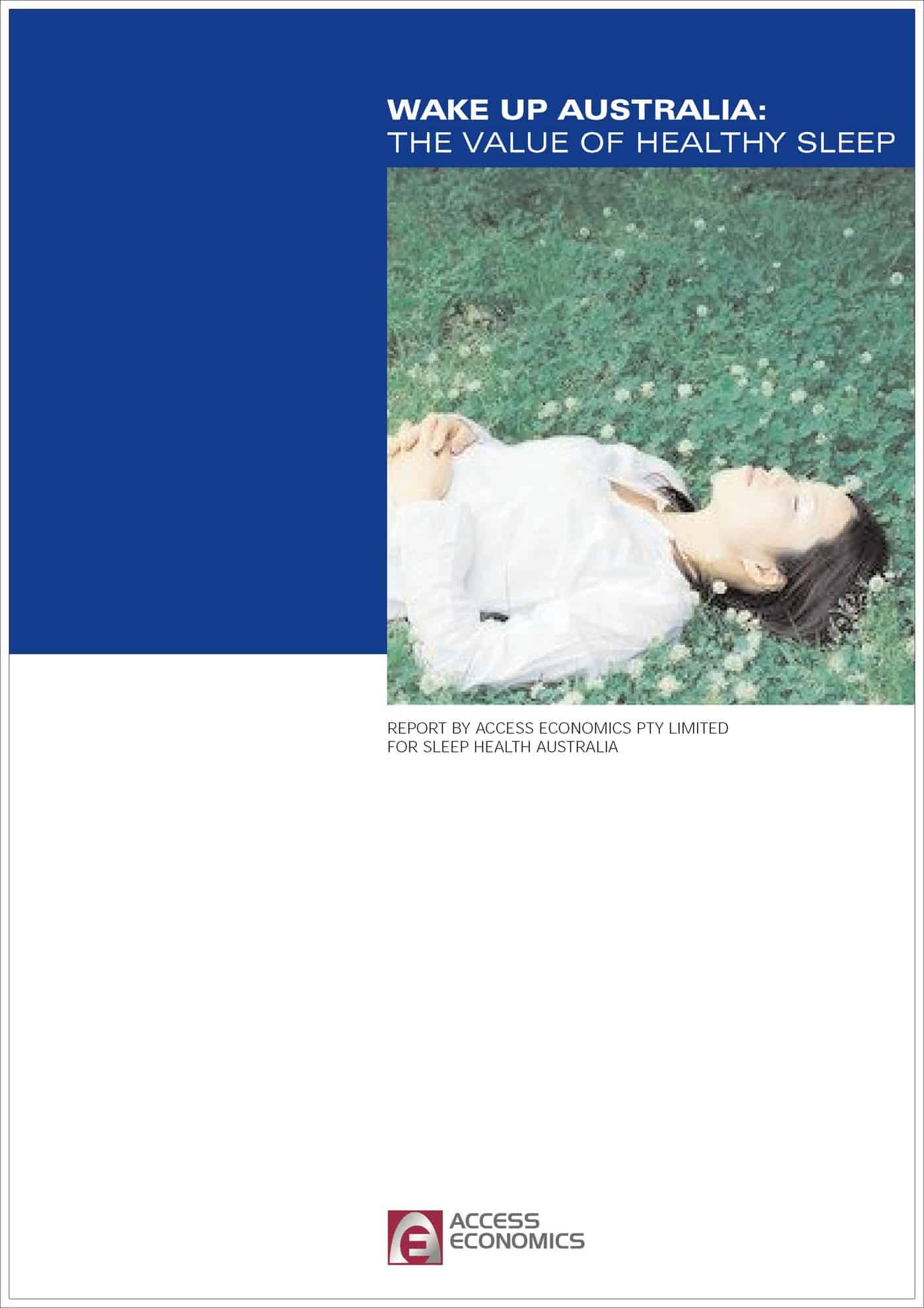
WakeUpAustralia-CoverThe most recent Australian data on the costs of sleep disorders was from 2004 by Access Economics, an organisation that the government often relies on for data.  Its report, Wake Up Australia, estimates that  sleep disorders such as obstructive sleep apnea and insomnia underlie 9.1 per cent of work related injuries.

The origin of this statistic needs to be closely examined in the body of the report (page 23) as there is quite a bit of statistical magic applied however the 9.1% figure has been referred to in relation to the potential benefit of the CRISH project.  The statistic is not invalid but it is also not so simple.

Kevin Jones

When employees are their worst enemy.

A recent article in a rehabilitation newsletter reminded me of a client from several years ago.

Several employees in a small item packaging line were reporting wrist and forearm soreness toward the end of their shift.  They believed that the line speed was too fast for them to comfortably work their full shift.

In consultation with the workers and the operations manager we went through various possible control options – line speed, automation, seating, posture, warm-up exercise, footwear, length of shift…..

A couple of days later, I was at the workplace at the end of the shift.  The employees said they were sore but they did not go home.  They stayed on for several hours of overtime.  When I asked them about this they said they always do the overtime.

So the assessment of working environment had incomplete data.

My advice was that if the employees were putting themselves at harm of the potential for harm, undertaking overtime while not fit-for-work contravenes their own OHS obligations.  If the employer offered these employees overtime knowing the employees were in pain, the employer is breaching the OHS obligation.

That is the straight OHS position.  But life is more complex than OHS.  The right OHS decision deprives the employees of additional income.  The right OHS decision could encourage employees to not report their pain or discomfort, for if they do, the offer of overtime would be withdrawn.  Non-reporting of injuries is a common short-term decision that many employees make.

It is in this context that consultation is required between employees, production manager, supervisor, human resources officer, and the health & safety rep, if one is on site.  This consultative group can then make a decision that everyone understands the justification for, even if some participants do not like it.

A question to ponder from the scenario above – if one of the workers developed pain during the normal work shift, undertook overtime without the employer being informed of the pain and put in a worker’s compensation claim for the pain, would the employer feel justified in contesting the claim?

Kevin Jones

Fatigue is the biggest threat to a person’s safety

Not so long ago, it was considered a legitimate criticism to blame the individual for “doing the wrong thing” at work.  Depending on the type of worksite, this was considered “human error” or “bloody stupid”.

Fatigue is an interesting illustration of how occupational health and safety must cope with new perspectives on established hazards.  Australian OHS legislation operates on a responsibility to manage the systems of work in a workplace, of which only one element is the worker.

A good incident investigation goes beyond the incident to see what led up to a worker acting the way they did, the reasons behind the decision.  Instead of “tell me about your childhood”, OHS practitioners can legitimately ask “tell me about your sleep patterns”, or “tell me about your second job”, or “tell me about your relationship with your partner”, as these can be contributory factors to the decision made on the day or the work environment at the time of the incident.

Some recent AAP articles provide interesting examples of the different contexts in which fatigue as a workplace issue can manifest:

Ambulance Employees Australia (AEA) said weary paramedics had fallen asleep at the wheel and administered wrong drugs because they did not have enough time off between shifts.

They have called for a minimum 10-hour break between shifts, compared with eight hours under the current award.

But Ambulance Victoria has said the fatigue issue was one of 175 union claims, which it said sought $800 million from pay talks.”

Investigators examining the near-catastrophe at Melbourne Airport last month are exploring whether fatigue was a factor after being told the pilot had barely slept the day before the flight.

Emirates pilots are permitted to fly a maximum of 100 hours each 28 days and the pilot was also almost at the legal threshold of the number of hours he was able to fly.

Emirates has issued a statement saying safety was a top priority for the airline.”

A higher priority than a good night’s sleep apparently!  Clearly it is the spread of hours that is the issue not the total over a fixed period.

Both these examples relate to workers’ interactions with the public and reflect the complexity of OHS’s spread to public safety.  

It seems that every investigation now automatically assesses the fatigue level, or impairment, of the participants in incidents in the same way mobile phone records are checked in car accidents and blood-alcohol levels or drug testing in some industrial events.

If your OHS professional does not consider psychosocial issues in developing safety management plans or incident investigation, seek a second opinion, or better yet, make sure the first opinion is comprehensive.

Kevin Jones

Farmers creating dis-harmony in OHS legislation

Australia is undergoing a process of national harmonisation on workplace safety legislation.  The government has played down the chances of  State jurisdictions creating exemptions to, or variations of, OHS law.  The message was that we are all “singing from the same song sheet”. 

Even before model OHS legislation has been approved, the New South Wales Farmer’s Federation has wangled an exemption from the driver fatigue legislation in that state.

According to the President of the NSW Farmer’s Federation, Jock Laurie, the fatigue law was not about reducing or removing fatigue from the transport industry, it was about 

“bureaucrats finding other ways to make life difficult for people”.

He is willing to even go on the record with the statement – Jock Laurie

As farmer and outspoken conservative Senator Bill Heffernan, said in Parliament on 22 September 2008, the legislation

“is designed to make driving safer and the work conditions better for drivers in Australia, and to harmonise the laws across the states.”

Yet he goes on to support the call for an exemption which results in weakening the harmonisation process.

It seems that farmers who drive trucks long-distances over many hours, particularly during harvest-time, do not have any relationship to the transport industry.  The situation will now be that a petrol tanker driver on a country highway can operate under one set of national OHS and transport rules and a farmer delivering grain to a port operates with an exemption – all because maintainign a log book is unnecessary red tape!

This threat to the harmonisation process should have been jumped on by the Federal government.

However, it has to be said, that inadequate transport infrastructure investment has lead to the closure of country rail lines and increased the need for farmers to transport produce by road, thereby increasing the road risk to rural communities.  Perhaps the farmers’ lobby groups realise they can’t change the big picture so are aiming for little targets.

Kevin Jones

Sex trafficking and brothels

Every employee has the right to a safe and healthy work environment.  It was this statement and belief that pushed me to providing OHS advice to the legal brothel industry in Victoria.  The industry is frowned upon by most but used by many, and yet the OHS support for the industry is far less than that provided for many other legal businesses.

Over the years sex trafficking, or slavery, has gained a lot of attention, more so, in my opinion, than other examples of illegal migration and worker  exploitation.  Articles in The Age newspaper today report on approaches to brothel owners and managers from people who have women for sale.  Regardless of the industry in which this occurs, this practice is abhorrent and the full weight of the law should be focused on these slave traders.

But a point that is getting lost in the wilderness is that not all women working in brothels are illegal.  Almost all choose to work there for the same reasons anyone works anywhere.  Many academics, and Australia has some of the most rabid, see all sex work as exploitation, as slavery and degrading to women.

The question for safety professionals and advocates is whether the nature of the work discounts the workers’, and employers’, access to legitimate safety advice?  Can the moral switch be flicked off, even for a short time, in order to provide workers in this industry with the same level of occupational health and safety as any other worker can rightfully demand?  Does the switch need turning off?

The statement at the start of this blog, that is reflected in OHS legislation around the world, is not selective, it applies to all.

The legal brothel industry has a long way to go in achieving the levels of OHS compliance that other small businesses have already gained.  The established hazards of manual handling, ergonomics, noise, etc are largely dealt with but consider those issues that have entered the occupational area over the last decade or so.  

Ask yourselves how would the owner of a legal brothel, a business where (predominantly) women have sex with multiple partners over their shift, deal with these contemporary hazards:

  • Stress
  • Bullying
  • Fatigue
  • Drugs and alcohol
  • Security

And then ask yourselves how the OHS profession and discipline would deal with these workplace issues?

  • Sexually transmitted infections
  • Sprains and strains
  • Hygiene
  • Personal protective equipment
  • Working in isolation

I judge the success of safety management systems in companies by the level of knowledge the most isolated worker has about safety in that workplace.   I ask the teleworkers, the night-shift workers, the security guards, the cleaners, the maintenance staff…  These employees, if a safety management system is working properly, should have the same level of safety knowledge, and the same level of access to OHS support, as those workers on day shift in a  head office.

I also judge the safety profession and the regulators on the success of their safety initiatives, the level of their safety commitment, by looking at how OHS is accepted and implemented at those industries on the fringes of society, like the brothel industry.  If the workers in these industries and the owners of these businesses are treated differently because of the nature of the work, we need to reassess our commitment to safety and the professional vows many of us took to ensure everyone has a safe and healthy work environment.

Kevin Jones

A March 2008 podcast on the issue of sex trafficking in Australia is available HERE 


OHS context of leave entitlements

Family-friendly work initiatives always get increased attention around International Women’s Day.  This is a shame as work/life balance is not gender specific, however the dominant Western family structures make the application of the concept relative to gender.  As long as the matter is perceived as a “women’s issue”, it will struggle for attention in a basically patriarchal society.

Family-friendly work structures are predominantly associated with hours of work and leave entitlements.  These don’t seem to be OHS matters as they are mostly handled through HR or the pay department however there is a link and it is a link that work/life and work/family advocates may use as a strong argument for their cause.

Leave is a worker entitlement for several reasons:

  • Situations may occur where the employee is required to stay home to look after an ill relative;
  • The employee may stay home as they are too sick to work; and
  • The employee may feel they need time away from work to rebalance their lives.

The second point has an OHS relevance because going to work while sick may introduce a hazard to your work colleagues – presenteeism.  In many jurisdictions it is a breach of an employee’s OHS legislative obligations to not generate hazards for their work colleagues or members of the public while at work.

The third point relates to an individual’s management of stress and/or fatigue.

In Australia, some workplaces allow for “doona days” (or for those in the Northern hemisphere’s winter at the moment “duvet days”).  These are days where a workplace and the employee would benefit psychologically from some time-out in order to “reboot”.

It may also be a valid fatigue management mechanism where long hours have been worked to the extent where attending the workplace may present hazards to others, or to themselves by feeling impaired, or have the employee working well below the appropriate level of attentiveness for the job to be properly done.

Leave entitlements, to some extent, form part of the employer’s legislative obligations to have a safe and healthy work environment.  But they also support the worker’s obligations to look after themselves and not present hazards to others.

The OHS element of leave entitlements should be emphasized when discussions of family-friendly workplaces occur.  Not only does it legitimately raise the profile of OHS in business planning, it can add some moral weight to an issue that can get bogged down in industrial relations.

Some readers may want to check out recent presentations to the US Senate in early-March 2009, by various people on the issue of family-friendly work structure.  These include

Eileen Appelbaum, Director of the Center for Women and Work at Rutgers University,

Dr Heather Boushey, Senior Economist at the Center for American Progress Action Fund,

Rebia Mixon Clay, a home health care worker who cares for her brother in Chicago. (Rebia’s video is below)

Kevin Jones

Happiness is a warm million

The Australian newspapers in late-February shared the “outrage” of politicians and then the community over training that was provided to public servants by the American “happiness guru” Professor Martin Seligman.

The cost to the taxpayer seems exorbitant but the psychologist was from the US and was training delegates for many days.  It is not unusual for US experts to charge over $US600 per hour plus travel and accomm0dation.

The Community & Public Sector Union‘s Assistant National Secretary Paul Gepp noted  in a media statement that news of the expensive conference, which paid an American psychologist’s team more than $440,000, came with news of more layoffs of  public servants, as 100 lost their jobs in the Crime Commission. 

“Public servants are working hard to keep essential services going, keep our communities safe and make the stimulus package work,” said Mr Gepp.  “Million-dollar, feel-good conferences don’t help get these jobs done. If the Government is looking to cut, we suggest it starts with junkets like this.” 

The OHS context of this furore comes from the reasons for the training and whether the same benefits could have been obtained at a reduced price.

Media reports say that in parliament on 26 February 2009

“[Deputy Prime Minister, Ms Julia] Gillard attacked Liberal frontbencher Andrew Southcott for attempting to “parody” Professor Seligman, who she described as a “noted educationalist”.
“He is the leader in the development of (a) resiliency program that has been shown to make a difference to mental health issues amongst young people, including issues like anorexia and depression.  That is actually serious and ought not to be cat-called about.”

SafetyAtWorkBlog has written previously about the workloads of the public sector under the Rudd government and how the government has chosen not to set reasonable production targets.  The Seligman seminars are an example of trying to treat the symptoms and not the cause.   Seligman’s programs are not the issue here as the results claimed may be absolutely justified.  

Part of the problem for the government is timing, and in this, it shares a lot with behavioural-based safety programs.  Whenever a company introduces a wellbeing program, or a happiness seminar, or resilience training, or a team-building extreme sports excursion, it indicates to me that either the company is one that has already tried the traditional approaches to controlling workplace hazards, hasn’t  the faintest ides what to do to improve the safety in their workplace , or has too much money in its human resources budget and needs to spend it by the end of the financial year.

Regrettably, the money spent on public service mental health has been poorly targeted and papers over the cracks whilst ignoring the structural instability of how it manages its people.

Kevin Jones

Concatenate Web Development
© Designed and developed by Concatenate Aust Pty Ltd