
Workplace bullying report lost in the political frenzy

Earlier this year Victorian MP and Minister for Small Business, Adem Somyurek, was accused of bullying his Chief of Staff, Dimity Paul.  This week, Somyurek resigned from his Cabinet position but not without a press conference in which he stated that the issue was political payback and that his resignation is no admission of guilt.

As you can see from this very brief summary, party politics has infested this instance of workplace bullying, and to such an extent that the important and solid investigation report into the incident is being missed.  The reports are publicly available and deserve to be carefully considered rather than relying on some of the current media coverage. Continue reading “Workplace bullying report lost in the political frenzy”
Secrecy is hard to understand

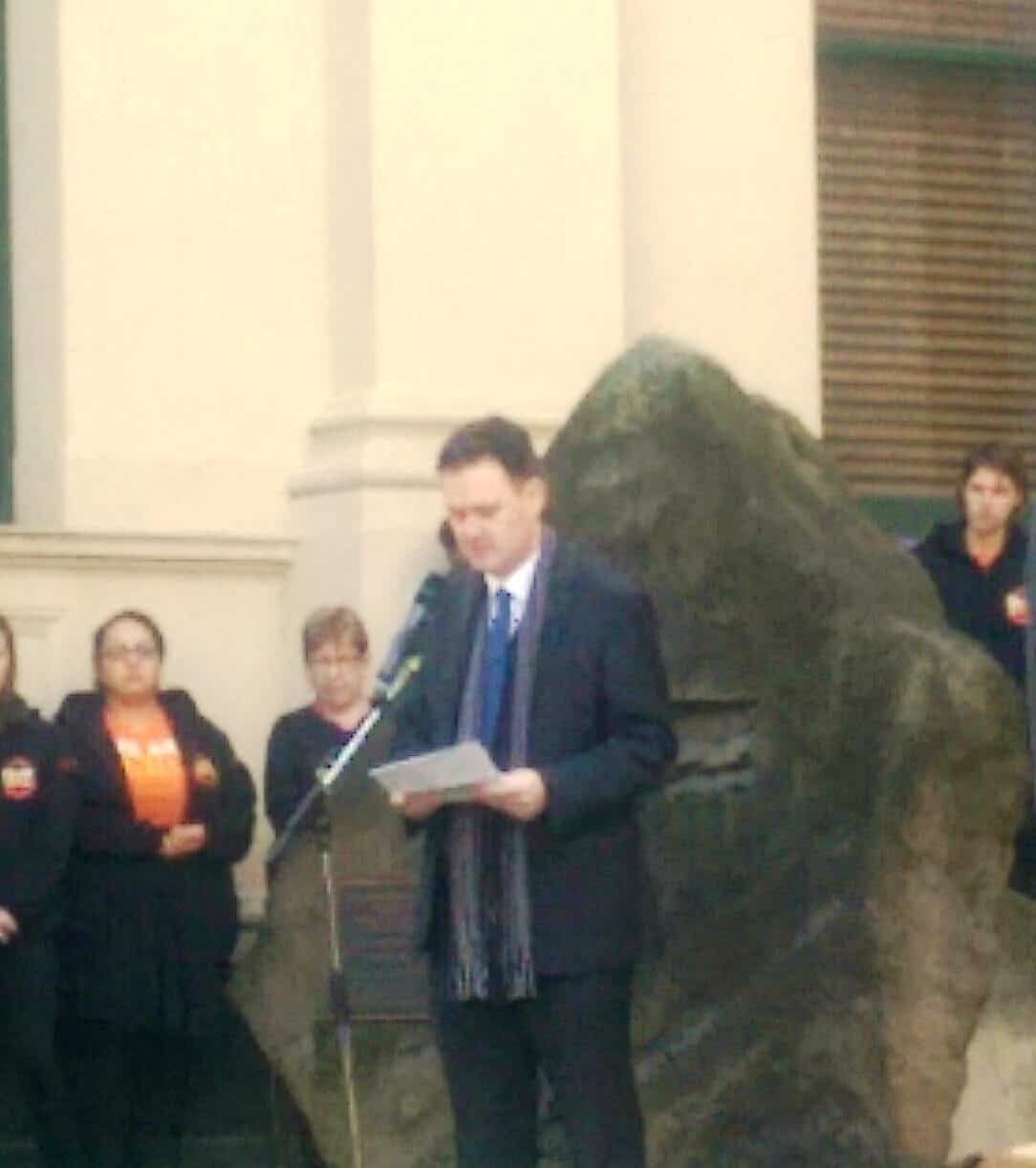
Scott picOver two months ago, SafetyAtWorkBlog sought basic and innocuous information from the office of Victoria’s Industrial Relations Minister, Robin Scott (pictured right at the Workers Memorial in April), about the MacKenzie review in to WorkSafe Victoria that was announced in February 2015. No response was received until 28 July.
A spokesperson for the Minister advised SafetyAtWorkBlog that all details of the review are Cabinet-in-Confidence and therefore cannot be released until Cabinet has discussed the review.  An update will be available when that occurs.

It seems odd that information, such as an inquiry’s terms of reference, should be so hush-hush. 

Subscribe to SafetyAtWorkBlog to continue reading.
Subscribe Help
Already a member? Log in here

Learning safety and leadership from drama

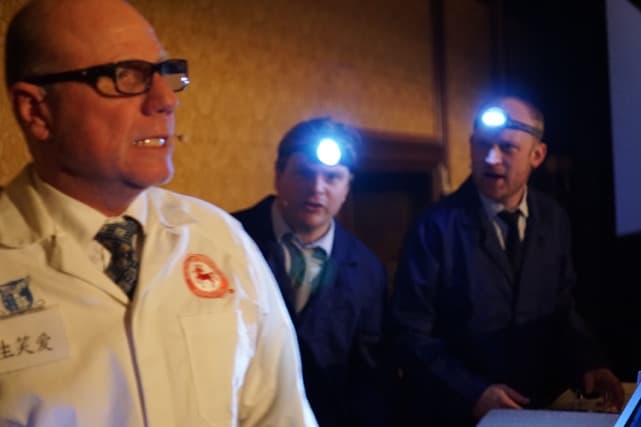
Fukushima playMost professionals, including occupational health and safety (OHS) professionals, support the use of stories or narratives or case studies to explain complex scenarios and situations.  Recently, at the ProSafe 2015 conference in Melbourne, acting and theatrical skills were used to illustrate the humanity behind the nuclear disaster of Fukushima.

To the uninitiated this may sound like quantitative risk assessment of underground mining being explained through interpretative dance by bandicoots, but the actors in the Fukushima disaster scenario were captivating and the power of theatre, even in this small-scale and on a conference podium, was powerful, stimulating and engaging. And with a

Subscribe to SafetyAtWorkBlog to continue reading.
Subscribe Help
Already a member? Log in here

Safe Work Australia is gearing up for National Safe Work Month

Last year, Safe Work Australia (SWA) gambled on a series of online videos and live events through National Safe Work Month in the form of Virtual Safety Seminars (VSS). VSS provided good online content that continues to be viewed but such a safety communication strategy should stand up to questioning, particularly if it arises from a Government agency.

One of the most important elements of any safety communication strategy is to attempt to measure its success.  The strategy may be aimed at raising awareness of an issue, providing information or promoting a service or product but the important part is to structure the strategy so that it can be measured and for that measurement to occur.  The OHS sector in Australia has a tradition of trying something because it is a good idea and then considering the effort to be a measure of success.  Too many strategies magnify awareness of an issue of which the community is already aware rather than developing a strategy for change, and of tangible change. In some ways the community’s tolerance for awareness over change is starting to wear thin.

With this in mind, SafetyAtWorkBlog posed some questions to Safe Work Australia: Continue reading “Safe Work Australia is gearing up for National Safe Work Month”

Stanley’s story is powerful and unforgettable

Recently I was telling a colleague to temper their online video strategy and consider extracting the audio tracks from which a podcast strategy coud be developed. The advantage of podcasts is they can be listened to, be more portable, less distraction and, I think, can be more powerful. Earlier this week I listened to a Canadian podcast/documentary about the familial and social effects of a workplace death in the 1950s.

What can you tell me about Stanley?” is not a contrived plea for greater focus on workplace fatalities, as we often get from occupational health and safety regulators.  It is a snippet of family history, a painful and secret family history about the death of an uncle and a brother in a steel mill in the 1950s.  The  podcast looks at coronial records, company records, notes taken at the time by Stanley’s brother and shows that shame that many feel around workplace deaths now, existed then.

I listened to the podcast several days ago but I shiver now when I recall some of the pain and surprise that the family experienced.

“What Can You Tell Me About Stanley” can be listened to as a straight tale of a workplace death and the way such an incident was perceived in the 1950s.  But just as importantly, this should convince people of the power of simplicity in storytelling and social media.  The documentary obviously took months to put together and the revelations to the family are clearly not linear but this effort provides a fascinating 30 minutes for your attention.

Think of Stanley when you are applying your OHS skills.  You’ll be better for it.

Kevin Jones

Concatenate Web Development
© Designed and developed by Concatenate Aust Pty Ltd