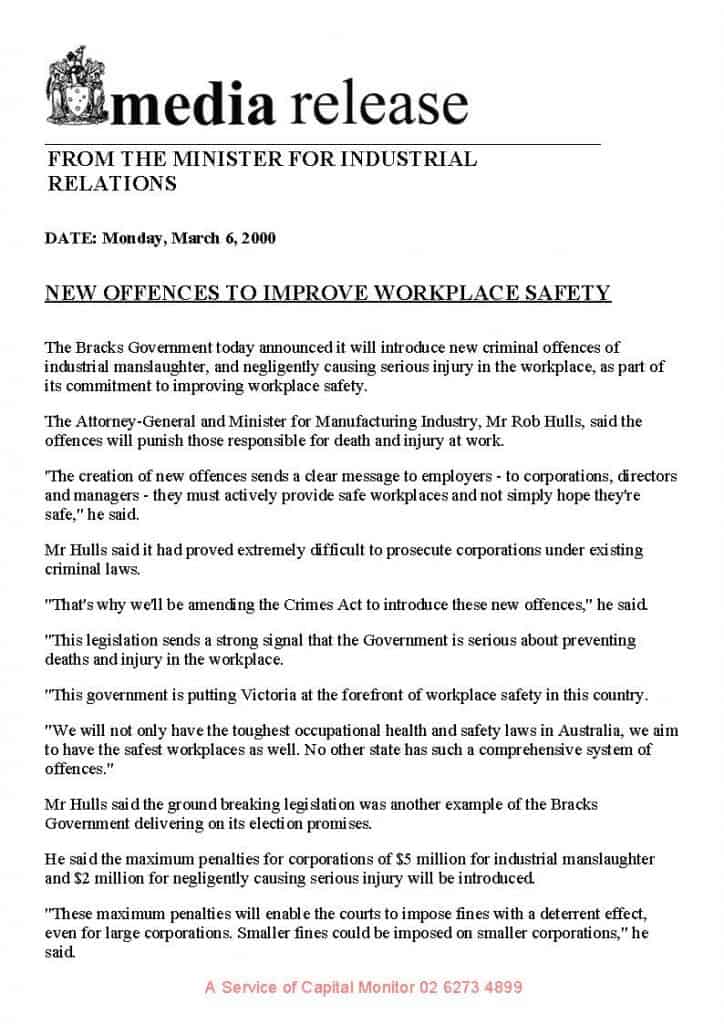
The coronavirus pandemic may have disrupted plans for International Workers Memorial Day, but it also has taken some of the sting out of the activation of Victoria’s Industrial Manslaughter (IM) laws on July 1 2020.

The coronavirus pandemic may have disrupted plans for International Workers Memorial Day, but it also has taken some of the sting out of the activation of Victoria’s Industrial Manslaughter (IM) laws on July 1 2020.
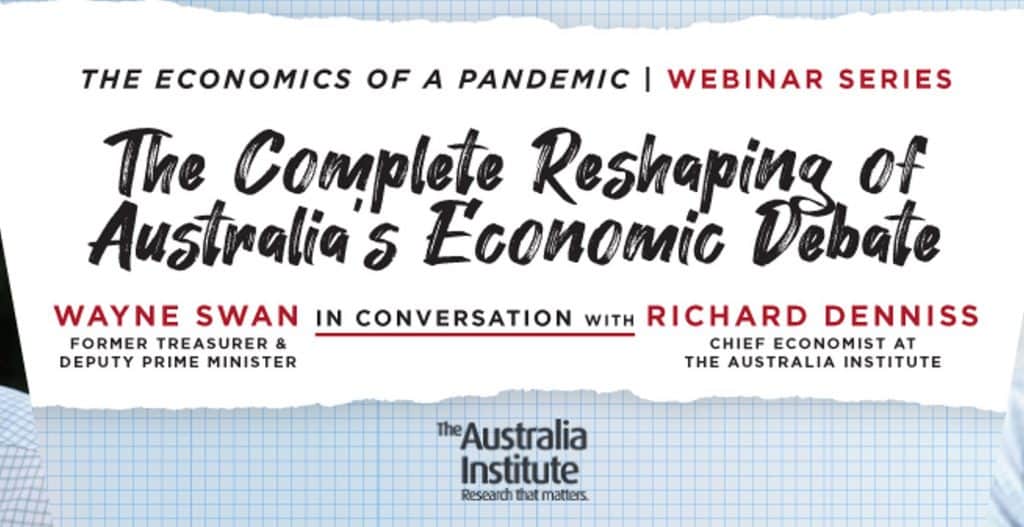
The Australia Institute conducted a webinar on Australia’s economic future during and after the COVID19 pandemic. Former Federal Treasurer Wayne Swan and economist Richard Denniss were the featured speakers. Two particular issues were of relevance to occupational health and safety (OHS) – the future of the gig economy and re-industrialisation.

On May 4, 2006, John Della Bosca advised the New South Wales Parliament:
“The Government will clarify that the general duties and obligations under the Act apply so far as is reasonably practicable. Ensuring the health and safety of employees will mean eliminating risks to health and safety so far as is reasonably practicable. Where it is not reasonable to eliminate a risk, employers will be required to reduce the risks to the lowest level reasonably practicable. Practical risk management does not require employers to go to extraordinary, unrealistic lengths, and never has. Rather, it requires the management of risks that are likely to affect health and safety over which the duty holder has a level of control. This is what the Government has always said, and it has always been Government policy. This is what it intends to enshrine in legislation to give greater certainty to both employers and employees.”
Della Bosca paints “so far as is reasonably practicable” (ASFAIRP) as an integral part of eliminating risks to health and Safety, and it is an integral part of OHS laws, but it is also a limitation, a condition and a concession in achieving safe and healthy workplaces and one that is drastically in need of a thorough independent review.

Australia is starting to settle into a state of stability as the various restrictions on life and work become more consistent. This has also allowed for some to start thinking about the recovery phase – the “bridge”, the awakening, whatever one wants to call it – to reconsider what we think of work and workplaces and our expectations are for the future. Do we resurrect the BC (Before COVID19) employment and economic models or work differently? There is an opportunity to steer work and business into a more sustainable direction that reduces physical and psychosocial harm and regains productivity and profitability. The structures, models and criteria already exist.
And, perhaps, we should incorporate the values recommended by actor, Matthew McConaughey.

On March 10 2020, the Andrews Labor Government and the Minister for Workplace Safety, Jill Hennessy, released a media statement about a “social experiment” involving the safety of young workers, in response to the fact that “about 50 young workers are injured every week”.
The statement said that the campaign is
“… warning employers to protect young workers and making sure young Victorians are aware of their rights through a powerful new campaign …..
[and]
“…is part of a social experiment which saw young workers aged 18-25 asked to participate in a mock job information session for a research company.”
The significant finding was that
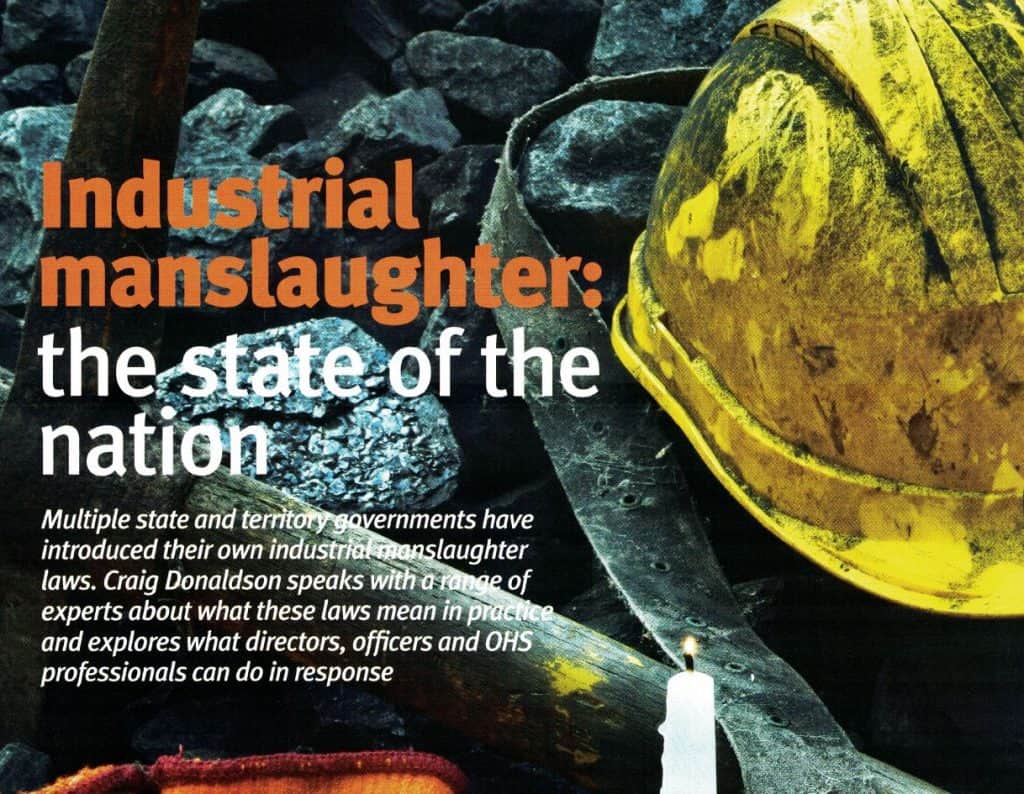
The Australian Institute of Health and Safety (AIHS) has published a long article about Australia’s Industrial Manslaughter (IM) laws. It is a very good article but includes a lot of information that should already be familiar to those who have followed the development of IM laws over the last two decades.
The Peter Sandman quote concerning delivery people and infections that appeared in an earlier SafetyAtWorkBlog article highlighted an issue from 2005 that was taken up in Senator Tony Sheldon‘s questioning of the head of Safe Work Australia, Michelle Baxter, in Senate Estimates on March 4 2020. Sheldon has challenged SWA in earlier committee meetings but his confidence is increasing as he covered more issues than delivery workers and coronavirus.
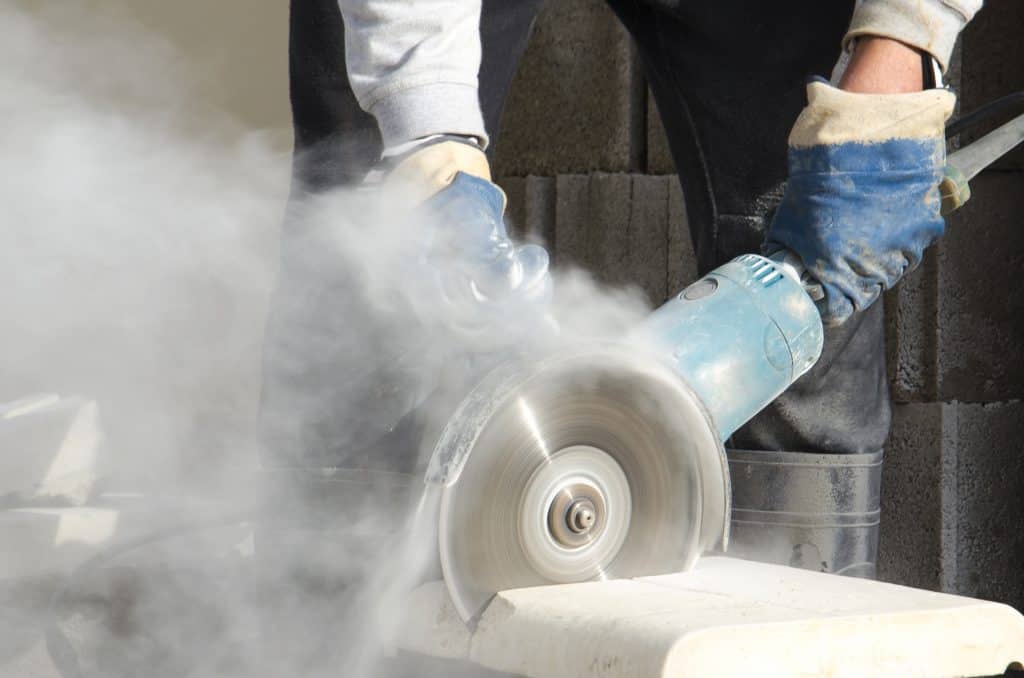
Michelle Baxter was also questioned on the provision of OHS guidance in languages other than English, silicosis data and the banning of engineered stone.