In cases of wage theft, who investigates the OHS issues?

In August 2017, the ABC Four Corners program reported on the dysfunctional glass recycling industry. Following this various media looked at the issue and in September of that year, one recycler, Polytrade, allowed some media into their worksite. The focus was on the “recycling crisis” and occupational health and safety (OHS) did not get a look in but two years on and OHS is now mentioned, but perhaps not as prominently as it could be.
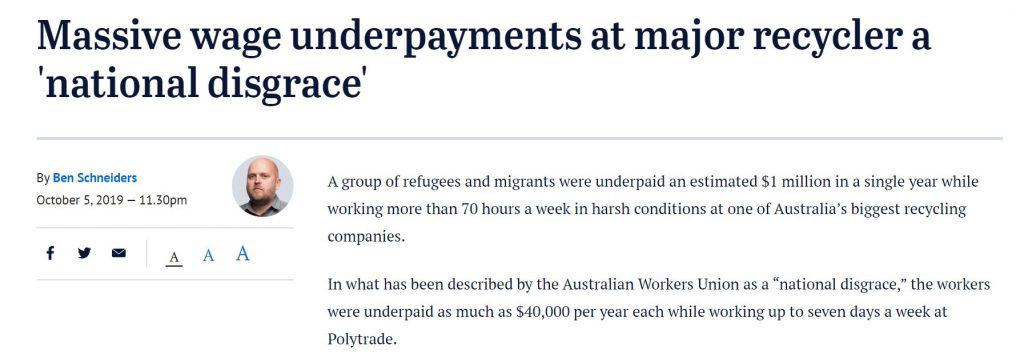
On October 5 2019, The Age newspaper reported on accusations by the Australian Workers Union that workers at Polytrade were underpaid around $40,000 each year. There are many elements to this story such as migrant workers, “wage theft”, which have tapped into topical issues of several years, but the health and safety of the workers has received much less attention.
Subscribe to SafetyAtWorkBlog to continue reading.
Subscribe Help
Already a member? Log in here

Australian Greens push for ban on engineered stone to eliminate silicosis risks

Greens MPs in Australia are increasing the political pressure to ban engineered stone from Australia because of the difficulty in eliminating silicosis risks.

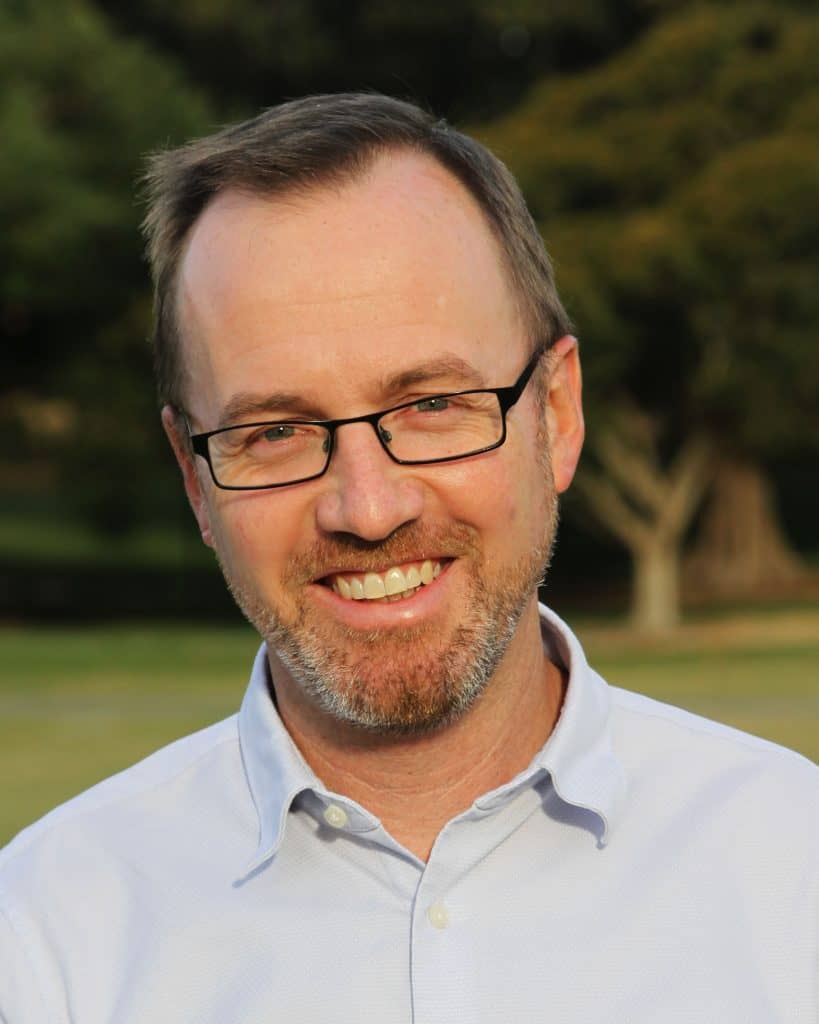
On October 18, 2019, Greens MP David Shoebridge released a statement calling for the ban. Greens MP in South Australia Tammy Franks spoke in Parliament on October 16 2019, also calling for a ban on engineered stone. This and other action from other Members of Parliament are in response to inaction on the national level, partly due to occupational health and safety (OHS) being regulated by the States rather than the Commonwealth.

But as with the current controversy of thoroughbred horses being killed for export and pet food, the Federal Government is in charge of exports and imports, so could make the decision to stop imports of engineered stone. It is not as if there are not safer substitutes

The Greens in Western Australia have not called for a ban but have supported a reduced exposure standard.

David Shoebridge MP

Shoebridge was responding to reports in The Australian ($) about New South Wales government plans to reduce silicosis risks, saying they:

  • Do not remove the risk of silicosis by banning the use of manufactured stone
  • Fail to expressly ban dry cutting, which is the most dangerous way in which the product is currently used
  • Will not prevent workers in the industry being exposed to potentially lethal silica dust with even the reduced exposure standard not being implemented for three years, and
  • Fail to put in place the right screening to identify cases of silicosis as early as possible.

Tammy Franks asked the Minister for Industrial Relations and Treasurer Rob Lucas, about government action on silicosis risks in Parliament on 16 October, 2019 (video available). Curiously, Lucas indicated that an Italian manufacturer of engineered stone is producing a version with a much reduced silica content, so imports could continue but of a safer product.

More on the science behind the politics next week when SafetyAtWorkBlog reports from the Annual Scientific Meeting of the Australia and New Zealand Society of Occupational Medicine in Adelaide.

Kevin Jones

“We need to act together to help me get my act together”

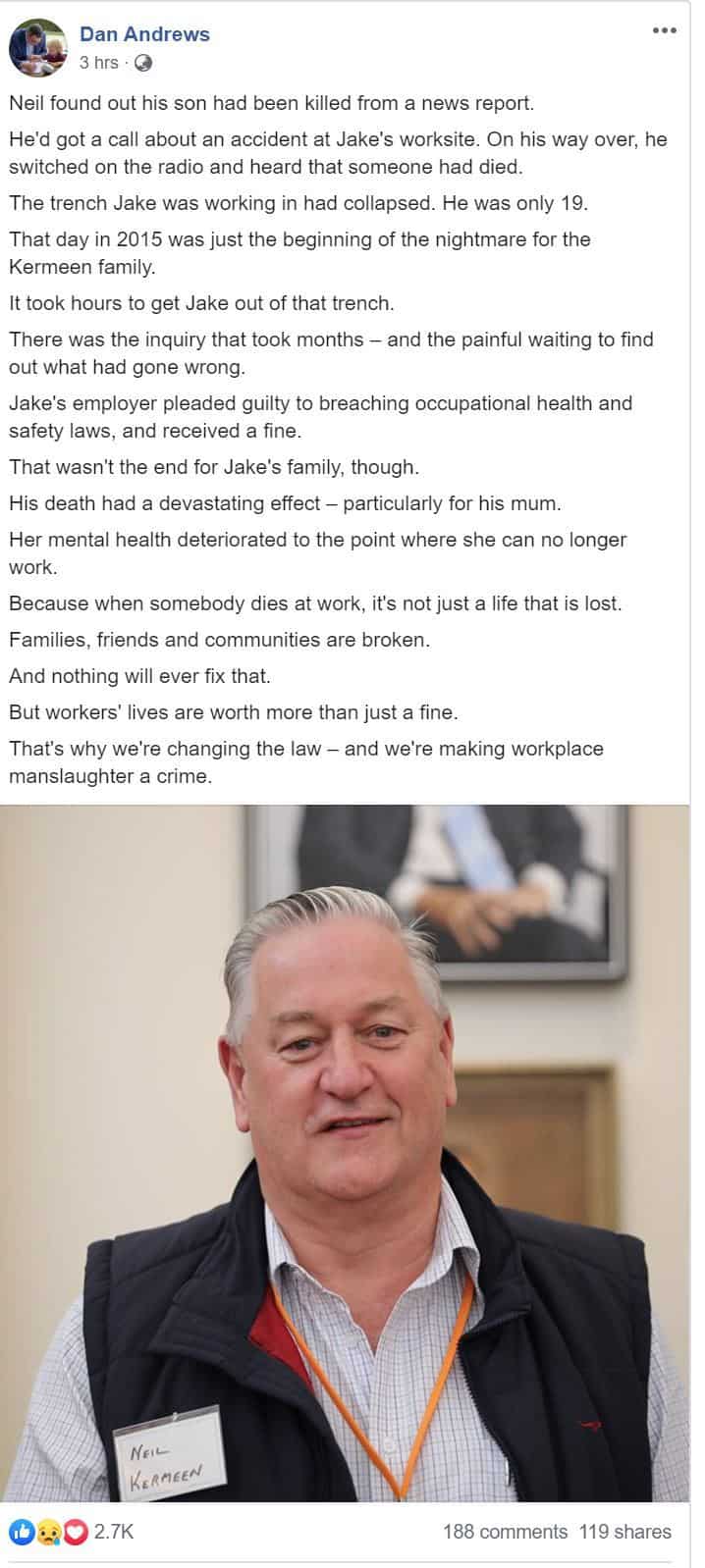
On October 21 2019, Victorian Premier Daniel Andrews posted on Facebook in support of his government’s move to introduce Industrial Manslaughter (IM) laws. He chose the death of Jacob Kermeen and its effect on the family in support of the need for these laws.

It is surely a coincidence that a fatality from a trench collapse was chosen for this exercise. Some of the leading advocates for IM laws are the relatives of two workers who died from a trench collapse in Ballarat in March 2018, a case being prosecuted by WorkSafe Victoria.

Subscribe to SafetyAtWorkBlog to continue reading.
Subscribe Help
Already a member? Log in here

One death may be too many, but it remains a prerequisite for Industrial Manslaughter laws

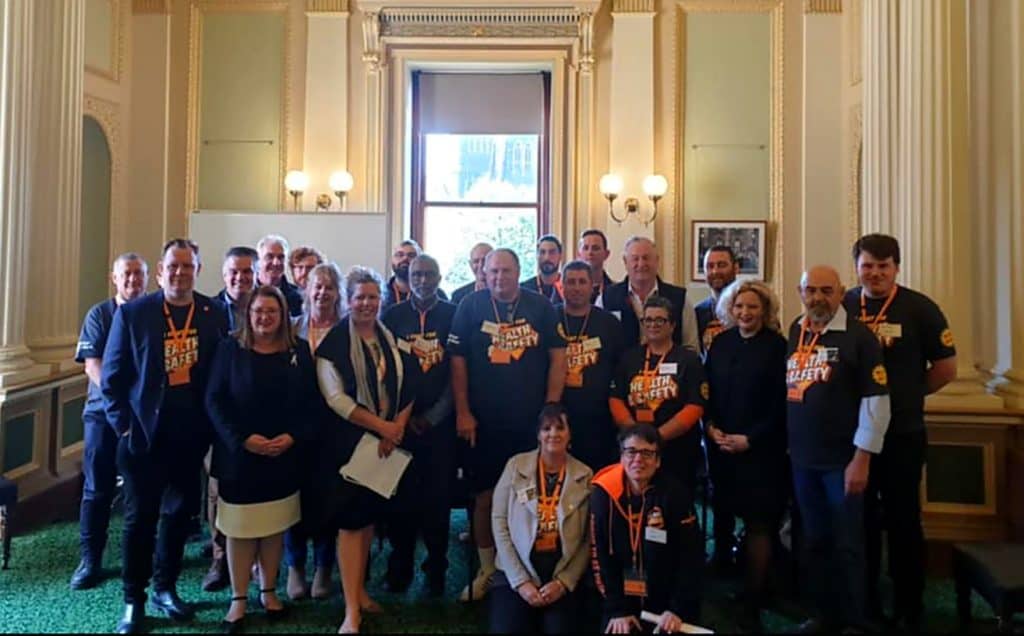
In Victoria there is much anticipation about the introduction of Industrial Manslaughter (IM) laws to the Parliament. Yesterday Minister for Workplace Safety Jill Hennessy and others hosted a meeting for some prominent IM advocates and trade unionists. Part of the reason for the meeting was that this week was the tentative date for the introduction of the IM laws to Parliament. The latest strong rumour is the Victorian Government has privately conceded that the Bill will not pass this year as expected and the Premier is moving to Plan B.

Subscribe to SafetyAtWorkBlog to continue reading.
Subscribe Help
Already a member? Log in here

The reluctant acceptance of quad bike safety changes

One important stage in improving the safety of farm vehicles was completed on October 10 2019 with the acceptance by the Australian Government of recommendations to make Operator-Protection Devices (OPD) mandatory for all quad bikes in Australia. That decision is a substantial achievement that many have lobbied, and fought, over for many years, but it will not save every farmer’s life as quad bike use has always only ever been one part of the occupational health and safety (OHS) risks on farms.

The Australian Government’s recent announcements on this issue have also been a little odd.

Subscribe to SafetyAtWorkBlog to continue reading.
Subscribe Help
Already a member? Log in here

Shared Values, Social Values and Safety Values

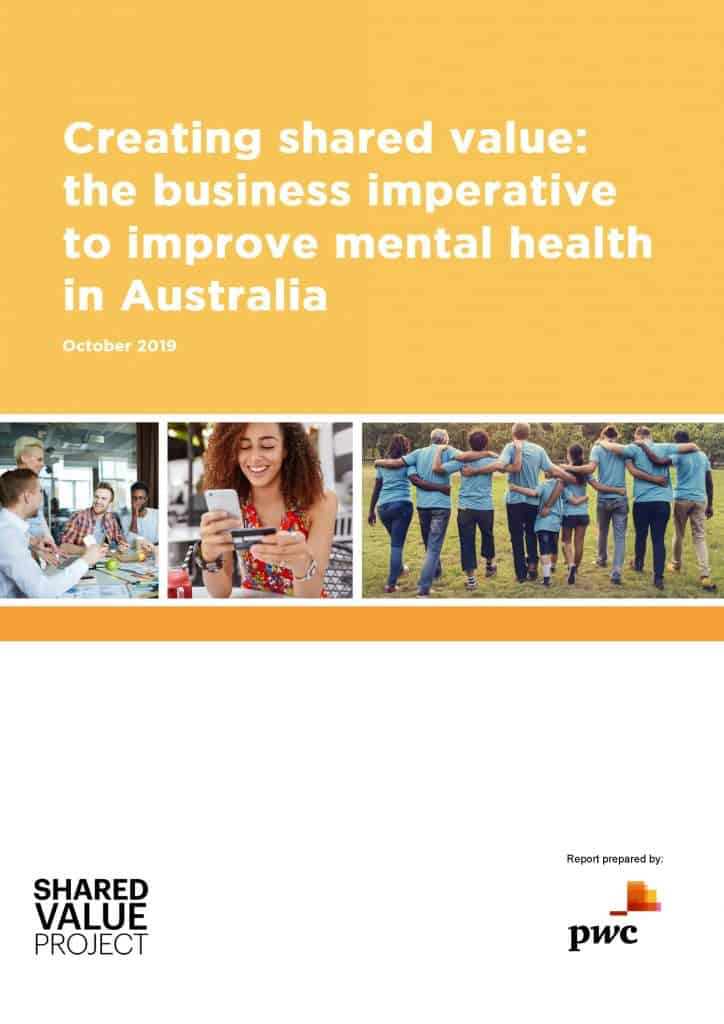
Last week, the Shared Value Project launched its whitepaper called “Creating Shared Value, the Business Imperative to Improve Mental Health in Australia.” It is an interesting document that is part of the trend of reconfiguring capitalism, the decline of neoliberalism, talk of a “social licence”, Environmental, Social and Governance (ESG) and more. Depending on one’s position on capitalism, this makes it part of the wave of change or another failed humanitarian action in the wake of that capitalism.

Several people spoke at the launch, including Professor Allan Fels and the Victorian Minister for Mental Health, Martin Foley.

Subscribe to SafetyAtWorkBlog to continue reading.
Subscribe Help
Already a member? Log in here

Business Leaders hear about the Vic Government’s OHS achievements, and about OHS is the Arts

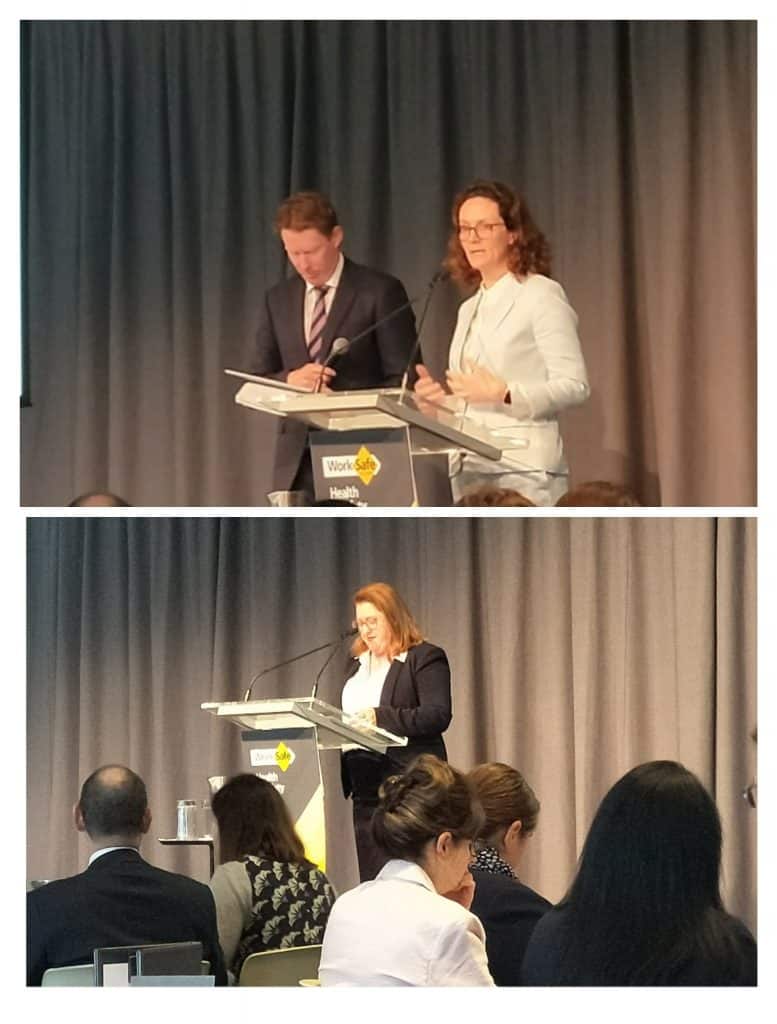
Cameron Ling and Claire Spencer (top) and Natalie Hutchins (below)

October is Australia’s workplace safety month. It operates under different names in different States, but they all started on October 1 2019. These months are almost exclusively about marketing and SafetyAtWorkBlog’s Inbox has received a lot of generic statements about the importance of occupational health and safety (OHS) but with little information about how to improve it. The best we can do about this is to seek knowledge in some of the physical events and seminars scheduled during October.

On October 2 2019, WorkSafe Victoria held a Business Leader’s Breakfast at which there were two featured speakers – the Parliamentary Secretary for Workplace Safety, Natalie Hutchins, and the CEO of Arts Centre Melbourne, Claire Spencer. Hutchins spoke about the occupational health and safety achievements of the Victorian Government and Spencer spoke about the significance of the Arts Wellbeing Collective. They provided a good mix of politics and practice.

Hutchins spoke about

  • Silicosis
  • Hazardous Chemicals and Dangerous Goods
  • Workplace Manslaughter Laws, and
  • Mental Health.
Subscribe to SafetyAtWorkBlog to continue reading.
Subscribe Help
Already a member? Log in here
Concatenate Web Development
© Designed and developed by Concatenate Aust Pty Ltd