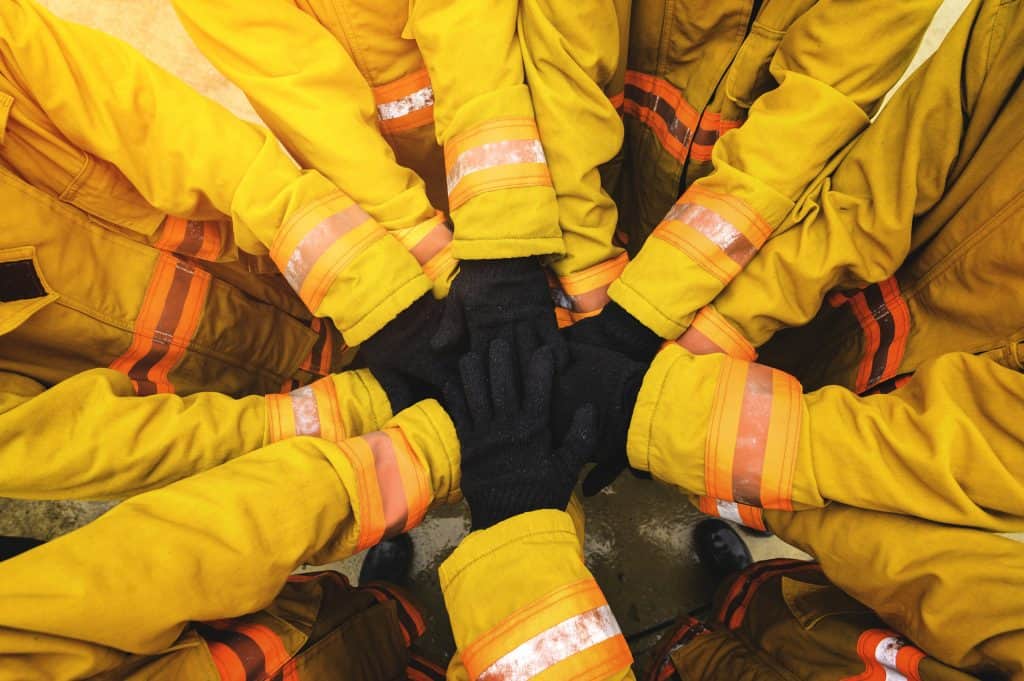
OHS needs to ride the ESG wave

The current Environmental, Social and Governance (ESG) movement can be seen as the latest iteration of companies and business owners reflecting on the broader purposes of running a business.  An earlier manifestation of this reflection was Corporate Social Responsibility (CSR).  ESG and CSR are similar perspectives from different times but with a fundamental continuity.

Occupational health and safety (OHS) is integral to CSR/ESG/Sustainability considerations but is often overlooked or considered as a business add-on, a situation that has been allowed to persist by the OHS profession, Regulators and others over many decades.

Subscribe to SafetyAtWorkBlog to continue reading.
Subscribe Help
Already a member? Log in here

Thinking beyond one’s role on OHS

“My approach tends to be revolutionary.”

A major criticism of the Australian Prime Minister’s handling of the current bushfire disaster in South-east Australia is that he was reluctant to engage in the fire fighting or relief effort. Scott Morrison’s reason was valid – firefighting responsibilities sit with the States and Territories. The Federal Government has no direct role in this.

Australian politics, and progress, continues to be hampered by the Constitutional demarcation of National and States rights and obligations, but Morrison missed the point. One does not have to be directly involved in an event to show support and leadership, and leadership can be effective in a secondary, support role. This is equally the case for occupational health and safety (OHS).

Subscribe to SafetyAtWorkBlog to continue reading.
Subscribe Help
Already a member? Log in here

Brexit, Boris and OHS

One reader has asked about the occupational health and safety (OHS) impacts of Brexit. This article looks specifically at The Conservative and Unionist Party Manifesto to identify potential OHS-related actions and intentions. The relevance for Australian readers is that UK and Australian politics frequently feed off each other.

The United Kingdom’s OHS laws have been greatly affected during the country’s membership of the European Union (EU). This has been seen as a nuisance by some but some EU safety Directives, such as Seveso 1, 2 & 3, have assisted many countries in establishing or strengthening their own regulations on specific hazards. EU safety rules seem amazingly complex for someone who has no involvement with them but then any economic community of over two dozen countries can seem baffling to an OHS writer who operates from an island with a small population in the Southern Hemisphere.

What can be said is that the UK will need to accommodate the “best” of the EU OHS laws in their own legislative structure, if it has not already. It is unlikely the UK will remove OHS rules that serve a positive, i.e. harm prevention, purpose unless there is a very good reason. But sometimes it seems that good reasons are not required, only political reasons.

Subscribe to SafetyAtWorkBlog to continue reading.
Subscribe Help
Already a member? Log in here

This year’s bushfires should change the management of outdoor work

Sydney, NSW, Australia – November 20th 2019: Smoke over Sydney due to bush fires on edge of city. Fires have been burning for days and have been described as unprecedented.

Safe Work Australia (SWA) has reminded Australian businesses that they have a formal occupational health and safety (OHS) responsibility for workers exposed to poor air quality. Its guidance provides sound risk considerations for outdoor workers and their managers, but needs further explanation to help businesses reduce the risk in a practical sense.

Subscribe to SafetyAtWorkBlog to continue reading.
Subscribe Help
Already a member? Log in here

Mining comments are revealing

The reader’s comments on online articles can be very revealing. Below is a discussion of some of the comments posted on The Australian website in response to an article about the accuracy of workplace fatality data in the mining industry. Given that this is one of the few mainstream media articles about occupational health and safety (OHS), they are telling.

One commenter asked the newspaper:

“… if one of your accountants based in the Sydney office were to have a car accident in Parramatta while driving to work in the morning, would you include that in your OHS statistics as a workplace fatality?”

Subscribe to SafetyAtWorkBlog to continue reading.
Subscribe Help
Already a member? Log in here

Instead of throwing stones, build a stronger house

Stock photo of hot worker who, yes, should also be wearing long sleeves and a hat.

On 19 December 2019, the Australian Council of Trade Unions (ACTU) issued a confusing and, ostensibly, three-paragraph media release about working in heat, a hazard that has been regularly analysed by SafetyAtWorkBlog. It states:

“OHS laws which are designed to keep workers safe at work need to be updated to deal with the reality of climate change, which will mean hotter days and more bushfires, resulting in conditions which are hazardous to workers, especially those who work outside.”

Paragraph 1 – update the occupational health and safety (OHS) laws. Paragraph 3 – new regulations needed:

“… we call on the Morrison Government to act urgently to implement new regulations to protect workers from these hazards.”

So which is it – enforce the old or create new?

Continue reading “Instead of throwing stones, build a stronger house”

Alright stop, collaborate and listen

On 2 December 2019, Australia’s Attorney-General, Christian Porter released a discussion paper about workplace relations in the hope of sparking contributions on how cooperative workplaces can create productivity improvements. Any discussion paper on productivity and workplace from the current conservative government is loaded with neoliberal ideology but one of the questions posed is:

“What has been the experience with techniques and practices to foster cooperative workplaces including…. Collaborative development of Health and Safety policies.”

It is not unreasonable for this to be seen as an opening for a broad discussion about the concept of Consultation included in Australia’s workplace health and safety laws, as the improvement of health and safety requires collaboration, trust respect and other elements in the discussion paper. The parallels between Collaboration and Consultation were on show at the Australian Labor Party’s national conference twelve months ago.

Subscribe to SafetyAtWorkBlog to continue reading.
Subscribe Help
Already a member? Log in here
Concatenate Web Development
© Designed and developed by Concatenate Aust Pty Ltd