The reluctant acceptance of quad bike safety changes

One important stage in improving the safety of farm vehicles was completed on October 10 2019 with the acceptance by the Australian Government of recommendations to make Operator-Protection Devices (OPD) mandatory for all quad bikes in Australia. That decision is a substantial achievement that many have lobbied, and fought, over for many years, but it will not save every farmer’s life as quad bike use has always only ever been one part of the occupational health and safety (OHS) risks on farms.

The Australian Government’s recent announcements on this issue have also been a little odd.

Subscribe to SafetyAtWorkBlog to continue reading.
Subscribe Help
Already a member? Log in here

Shared Values, Social Values and Safety Values

Last week, the Shared Value Project launched its whitepaper called “Creating Shared Value, the Business Imperative to Improve Mental Health in Australia.” It is an interesting document that is part of the trend of reconfiguring capitalism, the decline of neoliberalism, talk of a “social licence”, Environmental, Social and Governance (ESG) and more. Depending on one’s position on capitalism, this makes it part of the wave of change or another failed humanitarian action in the wake of that capitalism.

Several people spoke at the launch, including Professor Allan Fels and the Victorian Minister for Mental Health, Martin Foley.

Subscribe to SafetyAtWorkBlog to continue reading.
Subscribe Help
Already a member? Log in here

Business Leaders hear about the Vic Government’s OHS achievements, and about OHS is the Arts

Cameron Ling and Claire Spencer (top) and Natalie Hutchins (below)

October is Australia’s workplace safety month. It operates under different names in different States, but they all started on October 1 2019. These months are almost exclusively about marketing and SafetyAtWorkBlog’s Inbox has received a lot of generic statements about the importance of occupational health and safety (OHS) but with little information about how to improve it. The best we can do about this is to seek knowledge in some of the physical events and seminars scheduled during October.

On October 2 2019, WorkSafe Victoria held a Business Leader’s Breakfast at which there were two featured speakers – the Parliamentary Secretary for Workplace Safety, Natalie Hutchins, and the CEO of Arts Centre Melbourne, Claire Spencer. Hutchins spoke about the occupational health and safety achievements of the Victorian Government and Spencer spoke about the significance of the Arts Wellbeing Collective. They provided a good mix of politics and practice.

Hutchins spoke about

  • Silicosis
  • Hazardous Chemicals and Dangerous Goods
  • Workplace Manslaughter Laws, and
  • Mental Health.
Subscribe to SafetyAtWorkBlog to continue reading.
Subscribe Help
Already a member? Log in here

Tough but fair – Allan Fels

Allan Fels has served the Australian public for decades as the head of the Australian Competition and Consumer Commission, a Mental Health Commissioners and recently a Royal Commissioner for the Victorian Government in its inquiry into mental health. His level of activity and the breadth of that influence is extraordinary and should be no surprise that his service has overlapped and influenced workplace health and safety.

That experience has generated a book – Tough Customer – in which Fels reflects on his public service roles but also about how his life and that of his family have influenced his view of the world and his policy priorities. SafetyAtWorkBlog was able to speak with him for a short while earlier this week on the topics of

  • mental health
  • workplace health and safety
  • executive and political perspectives
  • the gig economy
  • ethics and social justice
  • the ACCC.
Subscribe to SafetyAtWorkBlog to continue reading.
Subscribe Help
Already a member? Log in here

Australian silicosis research mirrored in the US

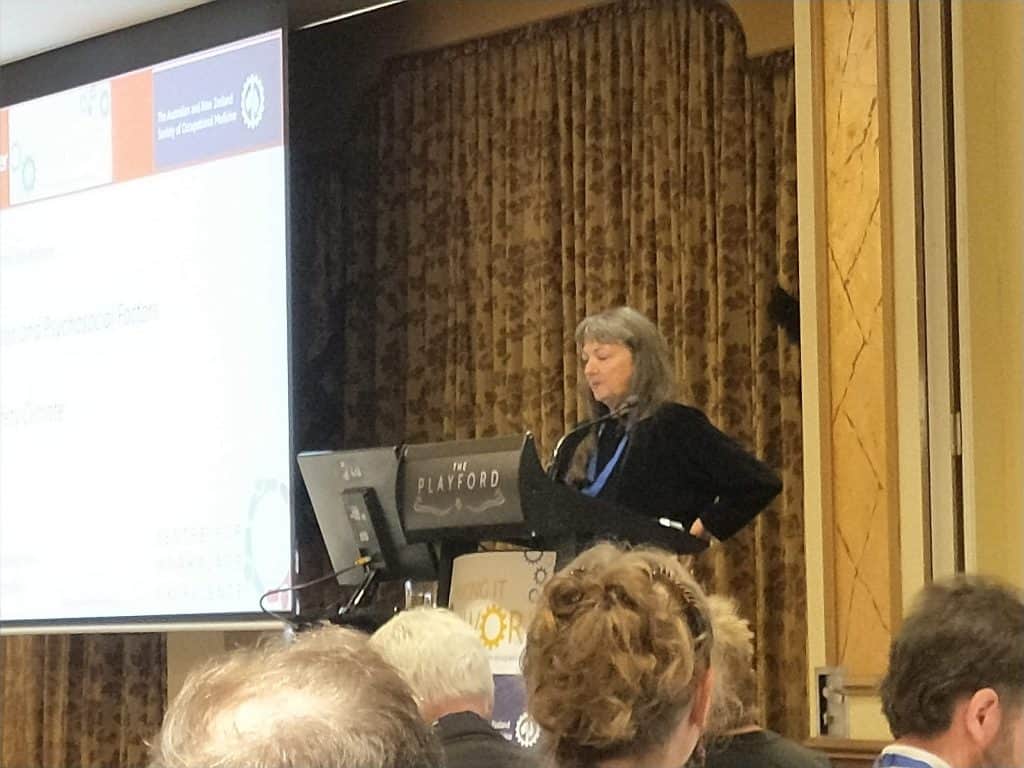
At the end of October 2019 the Australia New Zealand Society of Occupational Medicine (ANZSOM) will be conducting its annual scientific meeting in Adelaide. There are many issues on the agenda but silicosis is likely to figure prominently as it did last year, and as it should. The politics, knowledge and regulatory action has changed in the intervening twelve months.

Australia has new guidances from several occupational health and safety (OHS) regulators and agencies which restrict or ban dry-cutting of engineered stone and change other safety-related practices. There is also at least one political move to ban the use of engineered stone. But perhaps more important is that new research on silicosis risks is appearing and not just from Australia. The United States’ Centers for Disease Control and Prevention published new research on 27 September 2019 based on medical assessments and several silicosis-related deaths.

Subscribe to SafetyAtWorkBlog to continue reading.
Subscribe Help
Already a member? Log in here

Bystanders, safety hazards and prevention of harm – “what you do or don’t do”

Occupational health and safety (OHS) relies on workers to “blow the whistle” on the existence of hazards to their employers, even though the process is not considered whistleblowing. The avoidance of many workplace hazards has always relied on bystanders – one’s work colleagues who may say “watch out!” In recent years, the action of notifying employers and authorities of hazards, and of drawing colleagues’ attention to0 hazards has increased in prominence and debate, especially around the issue of psychological harm and, a subset of that harm – sexual harassment.

In September 2019, the Victorian Government released what it describes as a toolkit on bystander interventions in relation to sexual harassment and sexism. The full document is useful but, as with many government guidances on this issue, almost ignores the role of health and safety management in the prevention and reduction of this type of hazard.

Subscribe to SafetyAtWorkBlog to continue reading.
Subscribe Help
Already a member? Log in here

Red Tape comeback

The need to reduce Red Tape is getting another run in Australia through the lobbying of the Business Council 0f Australia and its CEO, Jennifer Westacott. “Red Tape” can be defined in many ways but it is often synonymous with government interference, of which occupational health and safety (OHS) regulation and enforcement is considered part.

In an interview with Laura Tchilinguirian on ABC News Radio on 16 September 2019 Westacott said that the community, which sounds mostly like business people:

Subscribe to SafetyAtWorkBlog to continue reading.
Subscribe Help
Already a member? Log in here
Concatenate Web Development
© Designed and developed by Concatenate Aust Pty Ltd