OHS subtext in Industrial Manslaughter discussions

Senator Deborah O’Neill continued her attack on Australia’s Liberal/National party government in Senate Estimates hearing last week.

With the Work Health and Safety (WHS) ministers split on the introduction of an Industrial Manslaughter (IM) offence in the Model WHS laws, Senator Michaelia Cash, Attorney-General, Minister for Industrial Relations and chair of that WHS meeting, could have voted in favour of these IM changes but declined. O’Neill saw this as a political weakness and challenged Senator Cash to justify her decision. The justifications, with a hint of arse-covering, were morally weak but legally sufficient. At one point, Senator Cash said:

“… a fundamental principle of work health and safety regulation in Australia, as you would be aware, is that liability should focus on risk, not outcome, because the evidence shows that when you focus on risk, as opposed to outcome—and the outcome that you are referring to here is a terrible outcome: a death in a workplace—it’s been proven to actually improve health and safety in workplaces.”

Hansard, June 2, 2021, page 8

Subscribe to SafetyAtWorkBlog to continue reading.
Subscribe Help
Already a member? Log in here

Industrial Manslaughter laws are not quite dead

The Hansard of June 1, 2021, Senate Estimates Hearings provided some nice background to the May 20 meeting of the Work Health and Safety (WHS) Ministers at which a national Industrial Manslaughter law was dismissed. Again, the politics of occupational health and safety (OHS) were on clear display.

Subscribe to SafetyAtWorkBlog to continue reading.
Subscribe Help
Already a member? Log in here

Cause is not the same as Correlation

Politicians and executives love to claim a cause when there is only a correlation. This was displayed recently in Australian Senate Hearings on the issue of occupational health and safety (OHS) and Industrial Manslaughter (IM).

Wiktionary defines Cause as:

The source of, or reason for, an event or action; that which produces or effects a result.

And Correlation as

A reciprocal, parallel or complementary relationship between two or more comparable objects.

The conflation of these two very different relations has been a serious drag on OHS progress in practice and policy.

Subscribe to SafetyAtWorkBlog to continue reading.
Subscribe Help
Already a member? Log in here

The causes of unsafe behaviours

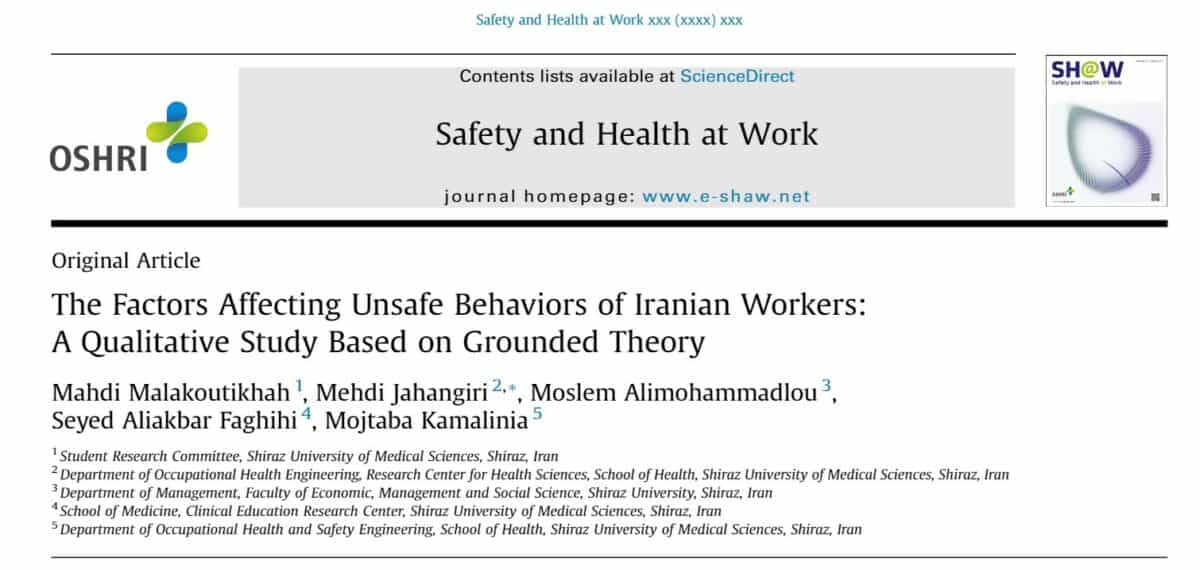
This blog has always had strong reservations about the occupational health and safety (OHS) focus on the unsafe behaviour of workers to the exclusion of organisational and socio-economic factors. A recent research study on Iranian workers provides a fresh look at the causes of unsafe behaviours applicable to a wide range of occupations.

The report* by Mahdi Malakoutikhah, Mehdi Jahangiri, Moslem Alimohammadlou,
Seyed Aliakbar Faghihi, Mojtaba Kamalinia of the Shiraz University in Iran found three factors contributing to unsafe behaviours:

  • Organisational
  • Individual
  • Socio-economic

Nothing radical in those categories but the subcategories and themes are more useful as this table shows.

Subscribe to SafetyAtWorkBlog to continue reading.
Subscribe Help
Already a member? Log in here

Latest Psych Health Code released

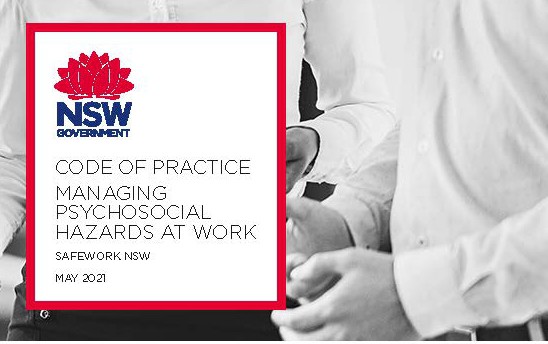
The big occupational health and safety (OHS) news in Australia has been the New South Wales release of its Code of Practice for Managing Psychological Hazards at Work. This Code is not mandatory but is a very good indication of what the OHS regulators (and perhaps eventually the Courts) believe are reasonably practicable measures for employers and business owners to take. These measures are discussed in detail below.

Subscribe to SafetyAtWorkBlog to continue reading.
Subscribe Help
Already a member? Log in here

Reuse of safety photos

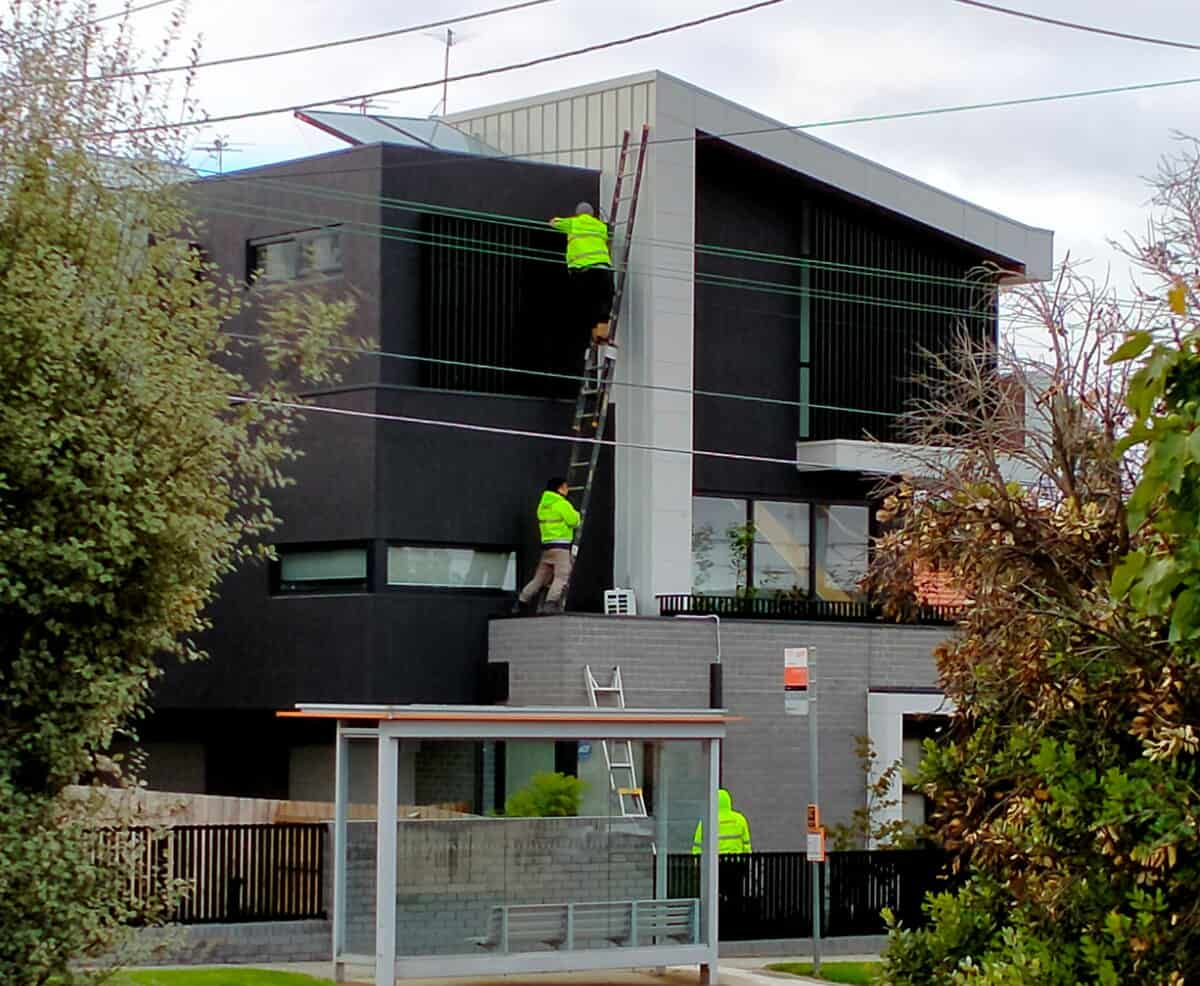
I have been told that any image loaded to Twitter becomes the property of Twitter. As a social media user, this type of situation seems common, but I was surprised when an image of unsafe work activities that I took and posted to Twitter appeared as an “Absolute Shocker” in a construction safety newsletter produced by WorkSafe Victoria. I sought more details from WorkSafe on the image’s use.

Subscribe to SafetyAtWorkBlog to continue reading.
Subscribe Help
Already a member? Log in here

Industrial Manslaughter or Category 1. Which prevents harm more effectively?

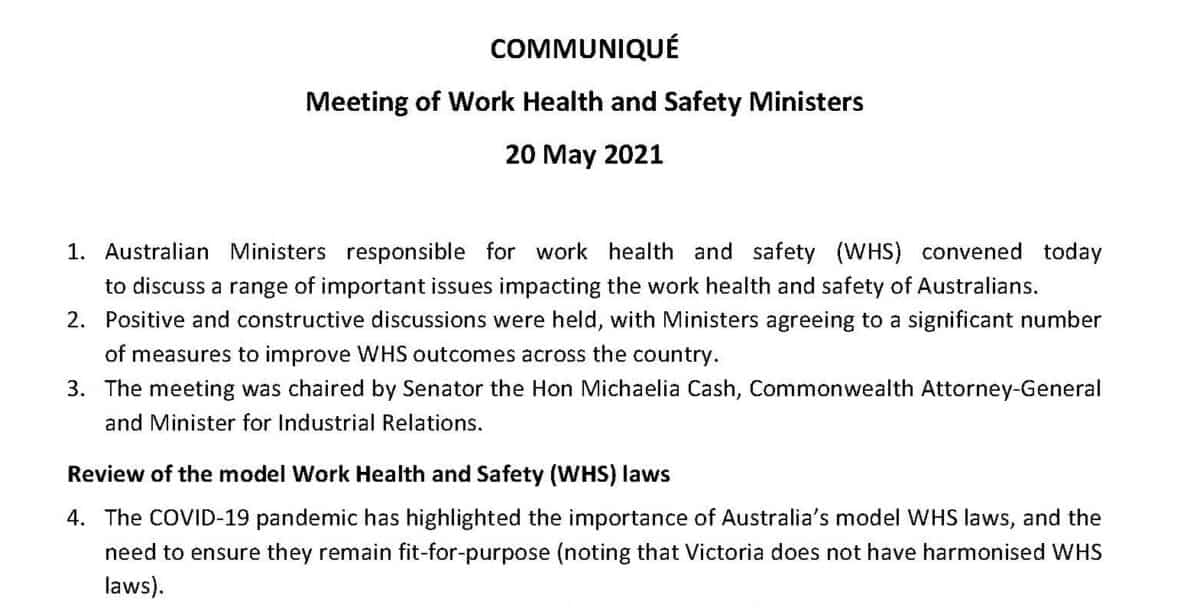
The Communique issued after the May 20, 2021 meeting of the Work Health and Safety (WHS) Ministers says that Australia is not likely to apply an Industrial Manslaughter law nationally:

“While the Northern Territory, Queensland, Western Australia, the Australian Capital Territory and Victoria provided their support for an industrial manslaughter offence, the recommendation did not receive the required majority.”

Some people think that this is no real failure as the Communique also includes “defacto ‘industrial manslaughter’ laws”. Here is the quote that supports that position:

Subscribe to SafetyAtWorkBlog to continue reading.
Subscribe Help
Already a member? Log in here
Concatenate Web Development
© Designed and developed by Concatenate Aust Pty Ltd