
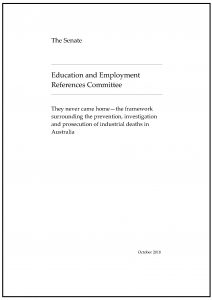
 One of the noticeable things about the Australian Senate’s report into industrial deaths is the workload it expects Safe Work Australia (SWA) to do in the implementation of the 34 official recommendations. Whether Safe Work Australia has the capacity and skills to undertake these tasks is not addressed.
The Senate report expects Safe Work Australia to develop various data-sets and public lists and to work with State and Territory occupational health and safety (OHS) regulators. But the lessons from OHS harmonisation and Safe Work Australia’s Model Laws reinforced that workplace health and safety is controlled by the States and Territories and that, although an Inter-Governmental Agreement was signed, party and local politics knobbled the harmonisation program so that several years on, Australian OHS laws are only slightly more harmonised than they were before the program began.
In the early 1990s, a program for National Uniformity of OHS laws was cancelled for political reasons. Prior to harmonisation there were strong calls for a national OHS regulator but this could not be undertaken without Constitutional reform. That lack of a single National OHS regulator is all over this Senate inquiry report.

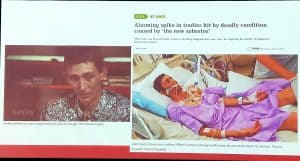
 Rumours of a TV report on the increasing hazards of silicosis have floated around for a week or so. On October 10 2018, the show appeared on the Australian Broadcasting Corporation’s
 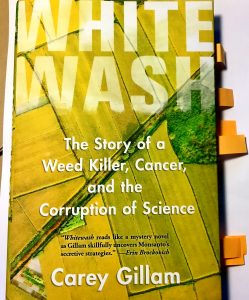 Occupational health and safety (OHS) related decisions are made on the state of knowledge about hazards and it is up to OHS people to make sure the state of knowledge is at its best so that the best decisions can be made. But what do you do if the state of knowledge on a hazard seems to be made purposely uncertain and that uncertainty is leading to the status quo, which also happens to provide a huge income for the owner of the product creating the hazard.