

SafetyAtWorkBlog’s article about the safety of Fly-In, Fly-Out workers has generated some discussion through its mention on LinkedIn which has raised some interesting points.
A common thread seems to be that it is impractical to build townships and facilities to support remote mine workers and which also provide services to workers’ families. One commenter posed these questions:
“Are we going to drag the FIFO families out to these areas, build houses for them, along with all the associated infrastructure to support them, for what may be only a 3-5 year construction program? Is it fair to drag the partners and families of FIFO workers away from their family supports (parents/friends, etc)? Away from decent medical care? Away from schools/universities?”
This may have been intended as rhetorical but prompts a question that I frequently ask when I consult with clients – “why not?”
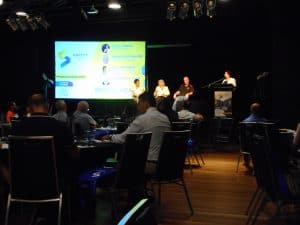 Small regional conferences often work better than major city-based conferences as the atmosphere is more relaxed, delegates are more approachable and there is less pressure to attend some grand trade expo.
  Being
Being  The
The  Last month a provider of Employee Assistance Programs (EAPs) circulated