Safety begins to converge to focus on the individual

If further information about the increasing inter-relationships between psychosocial health and physical health, organisational culture and a worker’s mental  health was needed, a new study from Sweden provides convincing evidence.

The research, a study of 81 research projects into the links between psychosocial factors and musculoskeletal disorders, was reported in by Eurofound on 10 September 2010.  It found, among other issues that

“… The link between an unfavourable psychosocial environment and the prevalence of MSDs is well established, with a number of studies demonstrating that high stress at work is connected to increased risk of developing a musculoskeletal disorder. Continue reading “Safety begins to converge to focus on the individual”

Death at work and work-related death

People die every day.  Some die in their sleep in bed, some collapse in the street, some suicide at a place of their choosing, others die at work.  But for those who die at work there is an important differentiation between dying at work and dying from work.

The differentiation can be fairly simple to determine but can be muddied by workplace politics.  For instance, the South Australian desalination project (video report available) has had one work-related fatality but there have been at least three deaths on-site.  Determining what is work-related is important for safety managers as this affects the way an incident is investigated, the resources allocated to the investigation and the level of emphasis placed on prevention. Continue reading “Death at work and work-related death”

Clarity of OHS laws in Australia

On 2 September 2010, an interview I undertook with Radio Atticus was broadcast in Australia  (9 minute mark of the podcast)  Radio Atticus is a law program on public radio in Australia.

As well as my comments, the reporter, Nat Cagilaba, interviewed Neil Foster of the  University of Newcastle (referred to as Ian in the podcast I believe).  We discuss the intended role and the current reality of OHS laws.

Comments on the audio are welcome.

Kevin Jones

WorkCover and Suicides

In response to a recent post about Workplace Suicides, Rosemary McKenzie-Ferguson provided a lengthy comment that I believe deserves a post of its own:

The hardest funeral to say “a few words” at is the funeral of a suicide victim.

The hardest thing to do is look into the hearts of the family and friends of the person in the coffin and try to find a glimmer of hope to gift them to hold onto.

The hardest thing to cope with is knowing that the loved one in the coffin held onto life with both hands until the harshness of life within the WorkCover system became too much to cope with. Continue reading “WorkCover and Suicides”

Death at work differs from work-related death

Often immediately following an incident, the safety manager receives a brief phone call “There’s been an accident.” Information is scarce and, in my experience, often wrong or more fairly inadequate. in OHS there will always be an assumption that an injury or death is work-related as that is our patch but people die every day and they can die anywhere, even in your workplace. Is this a workplace incident? Yes. Is it an occupational incident? not necessarily.

It is vital in those first moments of confusion and panic, not to jump to conclusions and rush out to the incident site. If it is your responsibility you will become involved but often, by asking a few simple questions, you are able to avoid this confusion and avoid worsening the situation by “butting in” where you are not needed.

I was reminded of this when reading about a coronial inquest into two suicides that occurred at an Australian shooting range in October 2008. These two incidents occurred at a workplace but not from work-related activities. There may have been some workplace management issues that, in hindsight, relate to supervision or security but these are the type of issues that the Coroner will investigate.

The deaths are reportable to the OHS regulators as they occurred on a workplace but it is unlikely that the regulator will put a lot of resources into the investigation given the Police and Coroner are investigating.

Only vampires work nightshift

For several years now evidence has been growing that nightshift is unhealthy.  Nightshift and other shiftwork can produce digestive problems, fatigue and impairment, increased breast cancer risks…….  OHS and workplace experts seem to avoid the question “should nightshift be allowed?”

Recently, a senior executive met with nightshift staff in a remote branch office.  The nightshift work was office- and computer-based.  The executive described nightshift as a “lifestyle choice”.  This comment infuriated some of the more placid employees to speak up and take the executive to task.  Their point was that the job has deadline constraints that have existed for well over twenty years but this does not mean that any of the employees would not jump at the chance of undertaking the same tasks in daylight.  Could the nightshift tasks be undertaken in daylight, in a new shift arrangement and still meet the client’s information needs?  The question had not been asked and, as a result, nightshift became the unquestioned status quo.  Status quo meant that any health hazards associated with the work were similarly seen as unchangeable and therefore not worth assessing. Continue reading “Only vampires work nightshift”

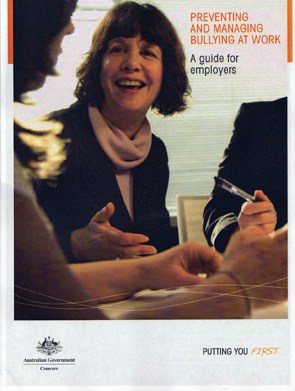
Confusion over bullying and sexual discrimination on display in air traffic controller media reports

The Australian media is providing considerable coverage to the legal claim by two female workers against Airservices Australia over bullying and sexual discrimination.  Airservices Australia is a government organisation that control aircraft movement over Australian airspace.

The details of the harassment mentioned in the media are quite offensive and have no place in the modern workplace.

There are a couple of OHS related issues that pertain to the legal action and the media articles.  Firstly, the media struggles to differentiate between sexual discrimination, sexual harassment and workplace bullying.  Bullying has the most direct relationship to occupational health and safety but the others generate stress in the workplace and therefore the impacts, if not the actions, fall within the OHS purview.  The Australian Financial Review (AFR) (page 7, not available online) has a headline “Flight controllers sue for sexual discrimination” yet the article reports on bullying.   Continue reading “Confusion over bullying and sexual discrimination on display in air traffic controller media reports”

Concatenate Web Development
© Designed and developed by Concatenate Aust Pty Ltd