
Sometimes it is better to read Sidney Dekker than listen to him. His presentation style is lively but his research and thoughts deserve more measured analysis than a conference or seminar presentation allows. A recent research paper, “‘Just culture:’ Improving safety by achieving substantive, procedural and restorative justice“, shows the advantage of reading over watching.
Category: psychosocial
Sex Work regulations review safety obligations
Consumer Affairs Victoria (CAV) is seeking public comment on some proposed revisions of the Sex Work Regulations. Several revisions specifically address workplace safety issues but also indicate out-of-date thinking on worker safety and safety management.
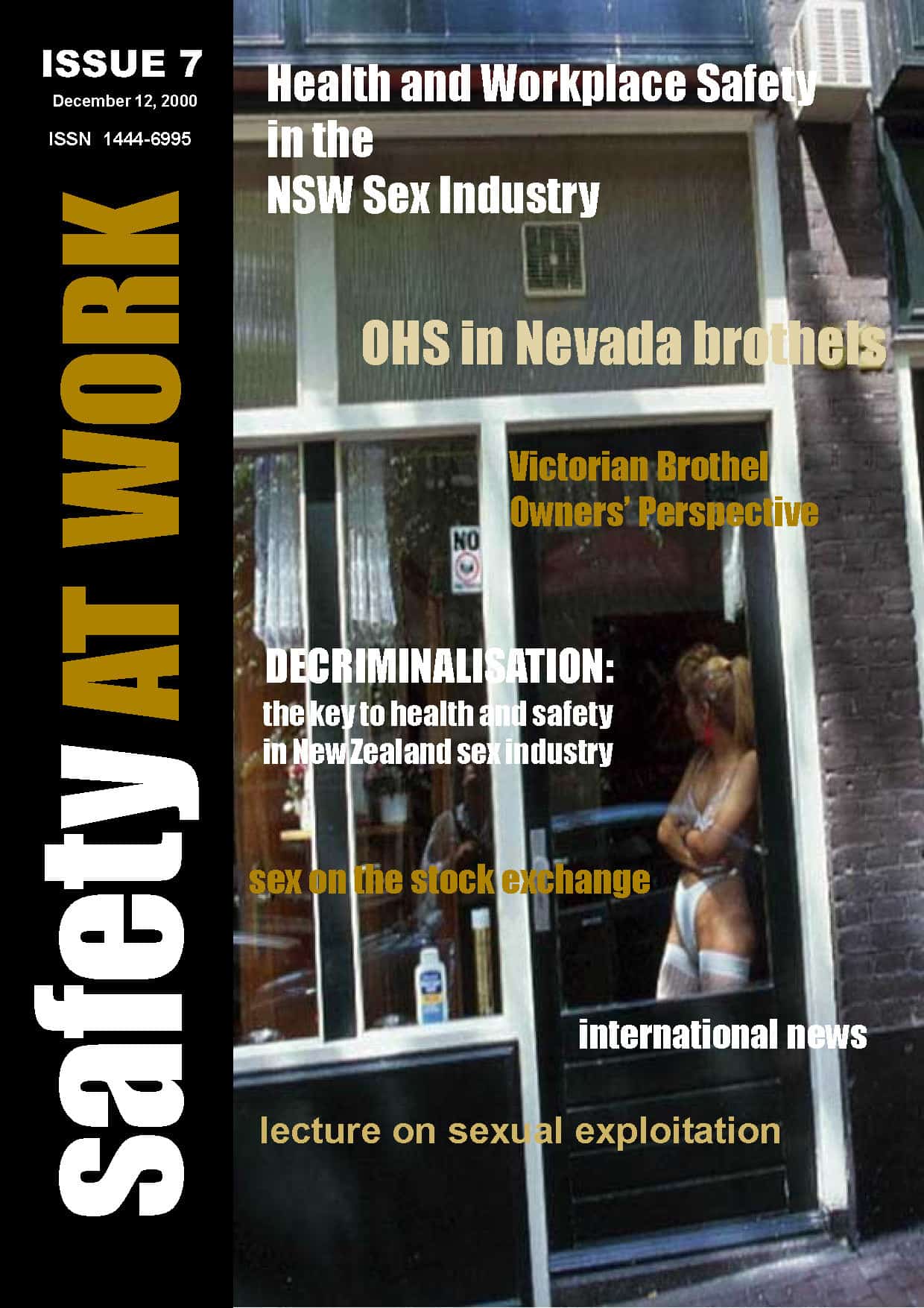
Victoria licences its brothels and, as such, the occupational health and safety (OHS) laws apply as they do to all workplaces. However, the regulators of the sex industry seem to perceive OHS usually in terms of sexual health and hygiene even though statistics have shown that these issues are low risk hazards. This perception has lasted well over a decade as this 2000 article from National Safety magazine shows. Continue reading “Sex Work regulations review safety obligations”
OHS cost research needs to stretch itself
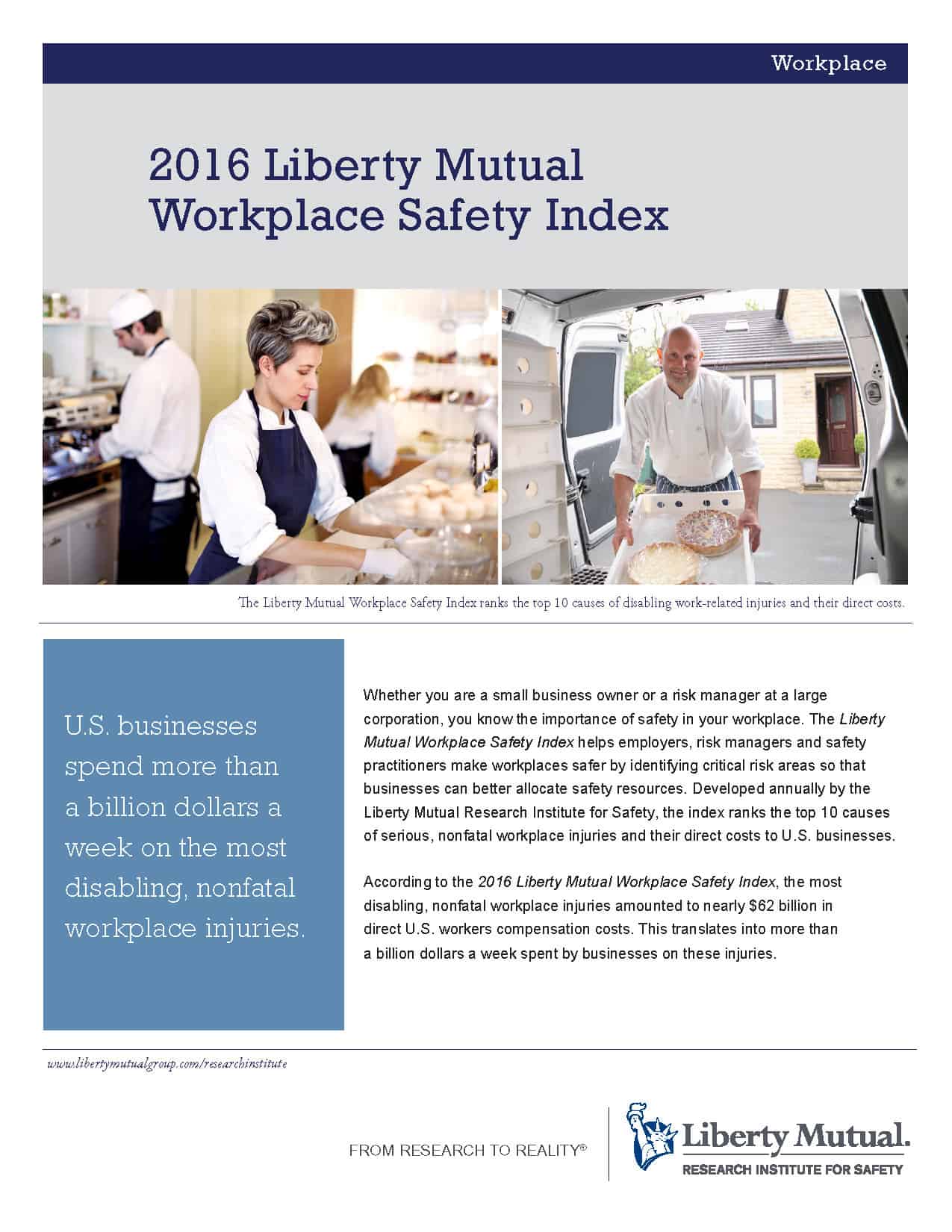 The annual workplace safety report Liberty Mutual Research Institute for Safety always gets a good deal of mainstream media attention. It deserves some of this attention as it has provided sound information on work-related injuries and injury costs for many years but it is now looking dated as it is not keeping up with current research in to the business case for safety, the move to leading indicators and the incorporation of psychosocial injuries (which are also covered by workers compensation). Continue reading “OHS cost research needs to stretch itself”
Can OHS achieve change in a neoliberal world?
The operation of the European Union is a mystery to everyone outside the EU and to most people in the EU. Any organisation that juggles the legislation of over 20 countries has a thankless task but some of the work being undertaken by occupational health and safety (OHS) advocates provides a clarity on power relationships between employers and workers. I never tire of reading articles and editorials by Laurent Vogel of the European Trade Union Institute. Below is an excerpt from his editorial in the Autumn-Winter 2015 edition of HesaMag: Continue reading “Can OHS achieve change in a neoliberal world?”
Important research into workplace cyber-bullying
Last week several Australian news sites reported on a new thesis about public servants and cyber-bullying which is discussed in detail below. The reports are based mostly on a media release about the research issued by Queensland University of Technology (QUT). What caught my eye was the statement in the one media report that the researcher, Dr Felicity Lawrence,
“…said traditional workplace bullying already cost the nation about $36 billion a year, “so the cost of cyber bullying on productivity could be profound”.
Not true. In the QUT statement, Lawrence stated
“Traditional workplace bullying costs the national economy up to $36 billion each year, so the cost of cyberbullying on productivity could be profound,…”
“up to” vs “about? This differentiation is important because the lack of clarity creates OHS myths and these myths can misinform policy priorities and public understanding of workplace hazards.
One view of how OHS needs to change
In a recent interview Richard Coleman states that the biggest opportunity for the occupational health and safety (OHS) profession is through health. He is another in the a long line of safety people (myself included) who advocate looking outside the traditional safety perspective to better understand safety. But health may not be the best option as the health profession can have just as much myopia as the safety profession. Continue reading “One view of how OHS needs to change”
Look back at the OHS books of 2015
All professionals need to keep up with contemporary thinking and not only in their own discipline. Below is a list of the books that I have read and reviewed in 2015. This is followed by a list of the books still in my reading pile that I will get round to soon.
Books I have written about this year:
Workplace Bullying by Joseph Catanzariti and Keryl Egan
Job Quality in Australia edited by Angela Knox and Chris Warhurst
Master Work Health and Safety Guide 2nd Edition, CCH Wolter Klouwers
Ten Pathways to Death and Disaster – Learning from Fatal Incidents in Mines and Other High Hazard Workplaces by Michael Quinlan
Nightmare Pipeline Failures: Fantasy Planning, Black Swans and Integrity Management by Jan Hayes and Andrew Hopkins
Safe Design and Construction of Machinery – Regulation, Practice and Performance by Elizabeth Bluff Continue reading “Look back at the OHS books of 2015”