

Another major company, KPMG, has been caught out in unethical behaviour, lies and mismanagement, only a few years after PwC’s scandal and not long after the damning Banking and Finance Royal Commission. These are the very institutions we are told to treat as exemplars of leadership and governance. Their repeated failures should force employers to question the advice they receive from these firms, including on occupational health and safety (OHS), psychosocial risk and organisational culture.
Category: psychosocial

Beyond Training – Designing Work to Prevent Harm
If the first lesson from IAWBH2026 was that psychological risks must be treated as system hazards, the second is that most organisations remain structurally ill-equipped to manage them. Despite years of policy development and training initiatives, the evidence presented at the recent International Association on Workplace Bullying and Harassment conference in Canberra showed persistent gaps between intention and outcome.

What was Missing from the Bullying and Harassment Conference?
The IAWBH2026 sessions offered a revealing snapshot of how international practitioners are grappling with bullying, harassment and gendered violence at work—and how closely these discussions align with Australia’s psychosocial‑hazard framework. Several presentations landed squarely within the Australian work health and safety (WHS) model, particularly those that treated these issues as structural hazards requiring organisational controls. Sapphire Parsons’ argument that gendered violence demands primary prevention, equitable decision‑making, and action on power imbalances mirrors the prevention‑first duties under Australian safety law.
However, there were also indications of how far the change has to go.
Continue reading “What was Missing from the Bullying and Harassment Conference?”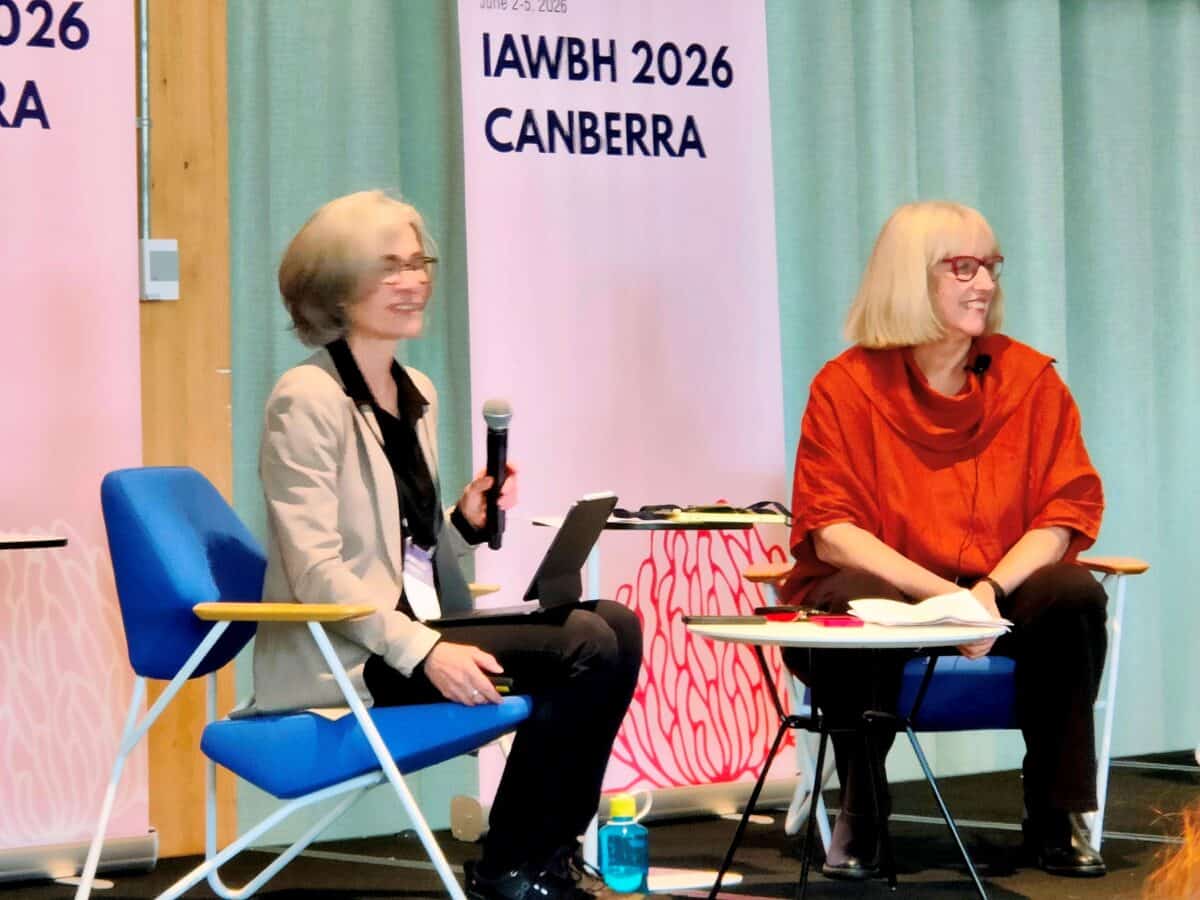
When Consultation Fails, Psychosocial Safety Fails With It
The Human Resources and Human Rights sectors in Australia are increasingly realising how useful the occupational health and safety (OHS) structures, laws and processes can be to preventing harm related to bullying, sexual harassment and gender-based violence. Recently, a joint presentation by Dr Rachel Cox from Canada and Associate Professor Belinda Smith from Australia (pictured above) highlighted this cross-sectoral awakening.
From Complaints to Control—IAWBH2026 and the Quiet Revolution in Psychosocial Safety
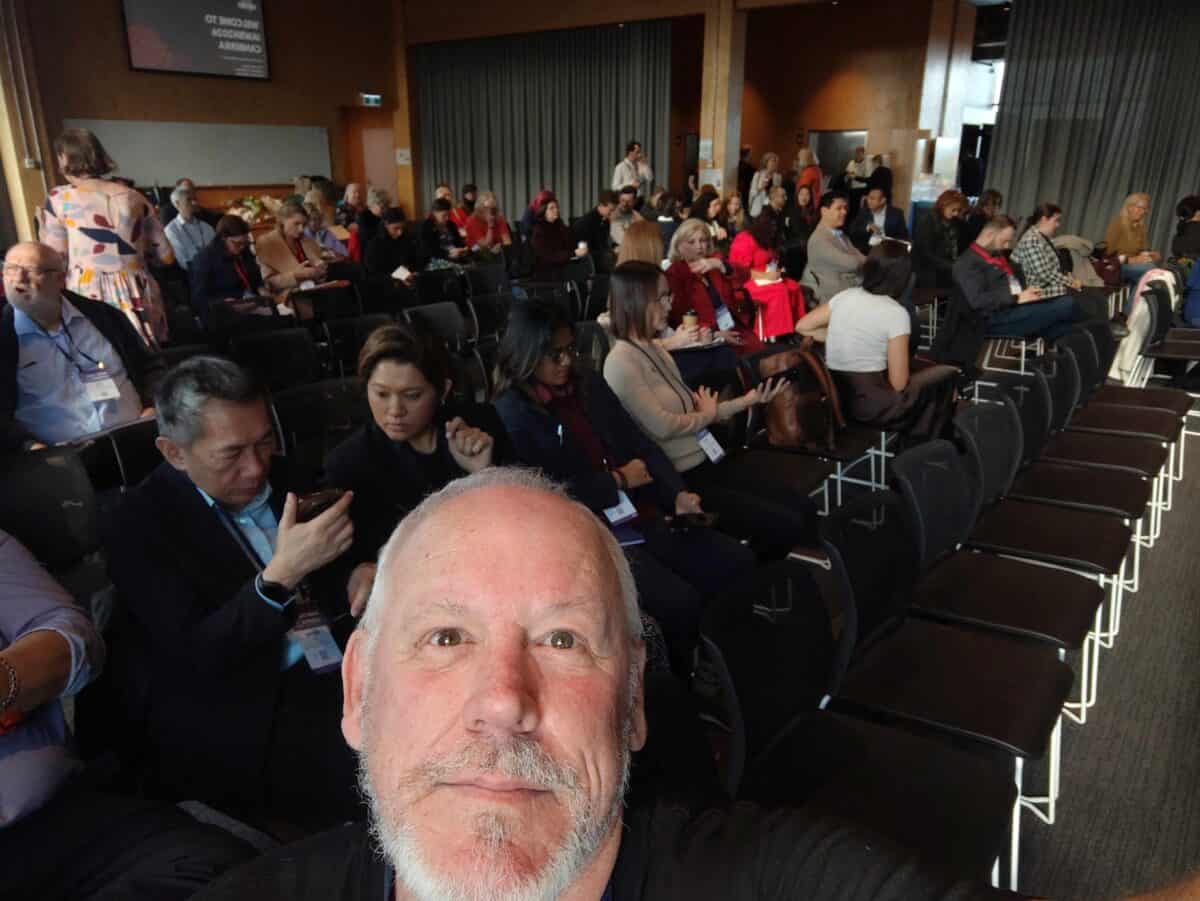
The 2026 conference for the International Association on Workplace Bullying and Harassment (IAWBH) was held in Canberra in June 2026. I was always curious about how prominent the term “psychosocial hazards” would be at this conference. It seems that most of the world still talks about workplace bullying and harassment and sexual harassment separately from the psychosocial, but the occupational health and safety (OHS) approach seems to be in the ascendant.
Below is my take (part 1 of 2) on the conference sessions I attended and the issues raised. (I missed the half day of Day 3). I have tried to use a generic, informative tone for a broader readership.

Breaking the cycle of inquiry and inaction in emergency services reform
This week saw the release of an inquiry into the workplace culture of the New South Wales police force. The findings were damning, but even though all Australian jurisdictions have police forces, the report received little attention beyond NSW, perhaps because we have heard it before. Coincidentally, this report was published one week after Carlo Caponnechia told an international workplace bullying and harassment conference that similar inquiries around the world have found similar cultural faults.
To address contemporary occupational health and safety (OHS) and community expectations, many businesses need to redesign their operations and organisational structures. The emergency services organisations should be given top priority.
The Gap Between Leadership Theory and Practical Prevention of Workplace Harm
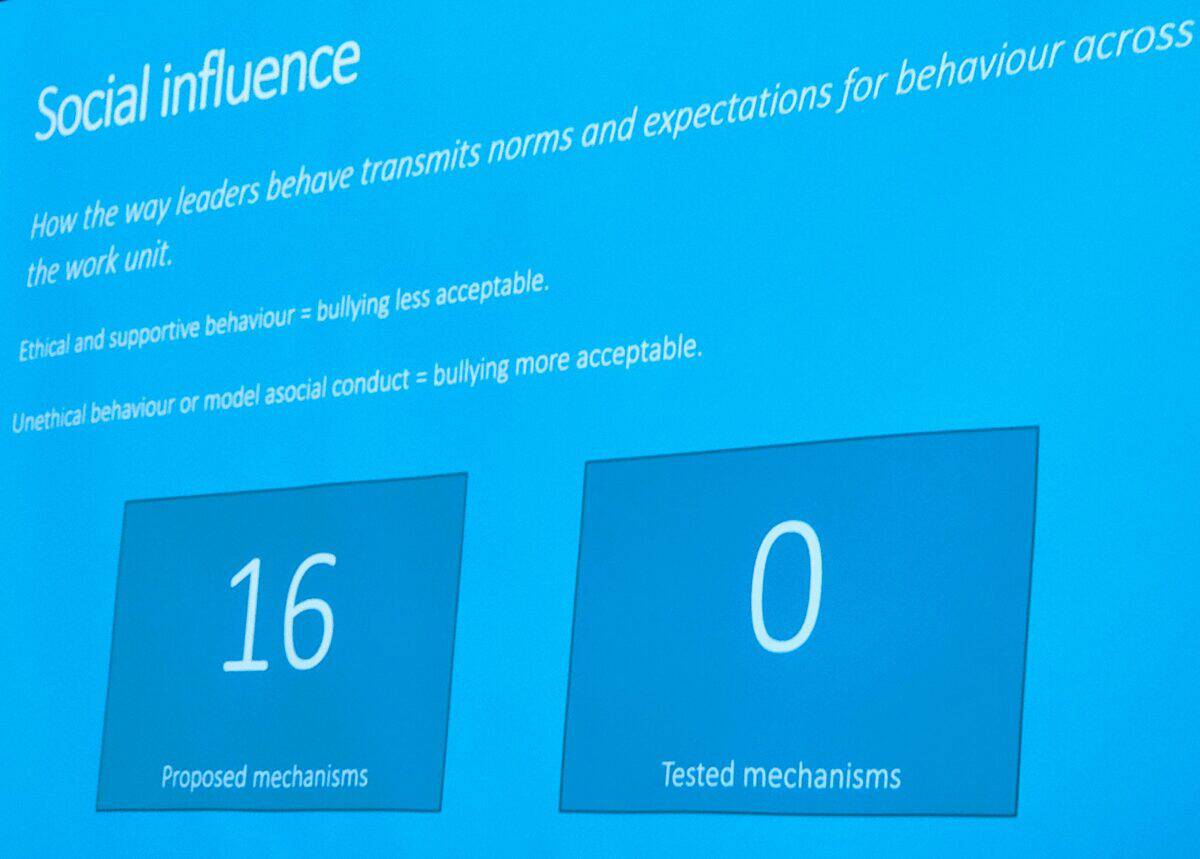
I was able to explore the concept of business leadership a little further at the recent conference of the International Association on Workplace Bullying and harassment. Lucienne Ruddenklau presented on ‘Mechanisms through which Leadership influences Workplace Bullying: A Conceptual Review”. I asked her, a leadership researcher, whether Leadership is an honorary title for executives or an adjective for leadership throughout an organisation. Her response was useful, as was her research presentation.