
Dr Tom Doig has continued to build on his earlier work about the Morwell mine fire, expanding his “The Coal Face” from 2015 into his new book “Hazelwood” (after court-related injunctions, now available on 18 June 2020).
SPECIAL OFFER: The first four (4) new Annual subscribers in the month of June 2020 will receive a copy of Hazelwood.
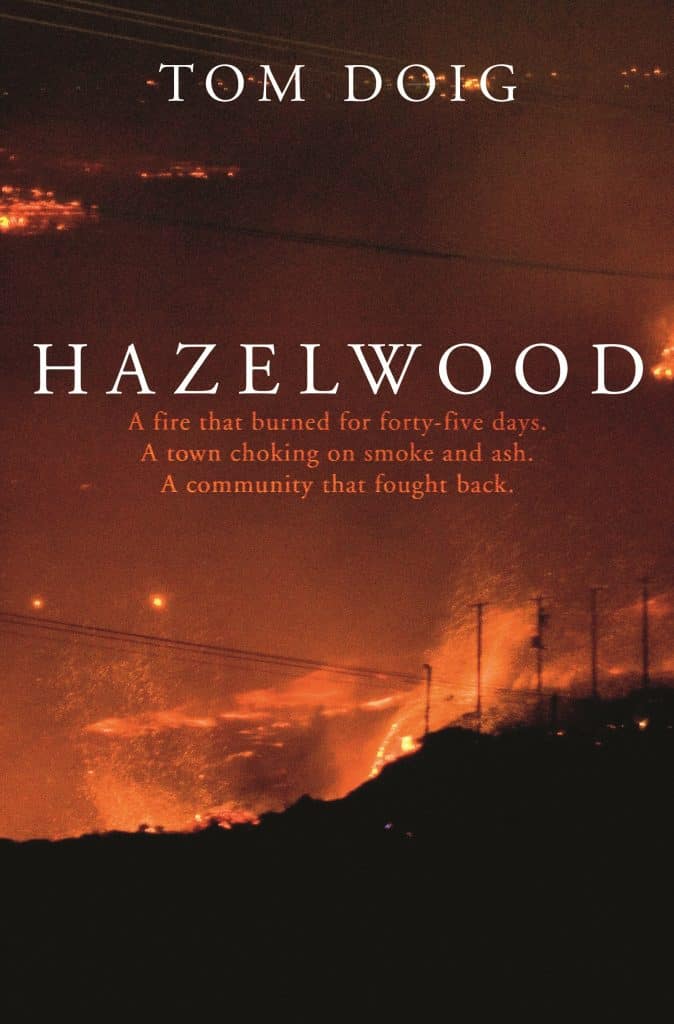
The Morwell mine fire created great distress to residents in Victoria’s Latrobe Valley, ongoing health problems, and a parliamentary inquiry, but can also be seen as a major case study of occupational health and safety (OHS) laws, enforcement, role and the obligation on employers to provide a safe and healthy working environment that does not provide risks to workers and “protect other people from risks arising from employer’s business”. The management of worker and public safety is present in almost every decision made in relation to the Morwell Mine fire. The overlay of an OHS perspective to Doig’s book is enlightening.


 It is always good to see researchers assessing issues related to workplace health and safety rather than relying on overseas data. Recently researchers from the Australian Catholic University and St Vincent’s Hospital in Melbourne looked into “measuring the effectiveness of workplace health management programs” . The research adds to our understanding of these programs but the relevance to occupational health and safety (OHS) is limited.
 If occupational health and safety (OHS) is to include the “whole-of-life” for workers, companies, products and projects, OHS professionals need to expand their pool of knowledge to meet the demands for an inclusive organisational culture. One recent research paper supports this approach by looking at the return to work of cancer survivors.