Quinlan’s time capsule includes useful OHS perspectives

Professor Michael Quinlan has been writing about occupational health and safety (OHS) and industrial relations for several decades. His writing has matured over that time as indicated by his most recent book, Ten Pathways to Death and Disaster.  In 1980, one of his articles looked at OHS through the prisms of Capitalism and Marxism.  It is remarkable how much an article that was written early in Quinlan’s career and at a time when OHS was considered another country remains relevant today.  This perspective contrasts strongly with the current dominant thinking on OHS and as a result sounds fresh and may offer some solutions.

In Quinlan’s 1980 article, “The Profits of Death: Workers’ Health and Capitalism”*, he writes that

“contrary to popular belief there is no objective irrefutable definition of illness”.

This could equally be applied to safety.  But searching for THE definition of things can lead to everlasting colloquia of academic experts without helping those who need to work within and apply safety concepts.


Subscribe to SafetyAtWorkBlog to continue reading.
Subscribe Help
Already a member? Log in here

What is a safety professional and what do they do?

David Provan recently provided access to one of his research papers through LinkedIn while it is open. The paper is a literature review of the factors shaping the role of a safety professional.  It is a difficult and confusing read until one reaches the Conclusion.  This is not Provan’s fault but is an indication of the confusing and conflicting roles, actions, obligations and qualifications of the occupational health and safety (OHS) professional revealed by the research literature.

However, the Conclusion provides a good summary of all the literature with some useful strategies to improve the OHS conversation.

Subscribe to SafetyAtWorkBlog to continue reading.
Subscribe Help
Already a member? Log in here

Important research into domestic violence strengthens OHS context

It is useful to consider corporate wellness and mental wellbeing programs in the context of work-related suicides.  By considering what many consider a worst-case scenario, the effectiveness of these programs can be tested.  The increased attention on domestic violence and its relationship to work over the last few years in Australia can play a similar role. New research on “intimate partner violence” provides mental health scenarios for which safety professionals need to be prepared. Continue reading “Important research into domestic violence strengthens OHS context”

Road safety needs a systems approach to investigations

A company vehicle is a workplace.  This is not a radical statement, or shouldn’t be.  A worker driving the company vehicle is at work, transporting themselves or some goods somewhere as part of the work process. Yet most traffic accidents in Australia are not assessed to determine whether they are work-related and action is rarely taken by the occupational health and safety (OHS) regulators who seem comfortable with their secondary information gathering role in traffic accidents.

With the failure of the trade union movement’s efforts to maintain the existence of the Road Safety Remuneration Tribunal, others are stepping up pressure on Australia’s government to address some traffic accidents as work-related. And there is some important local independent research that seems to support this push.

Subscribe to SafetyAtWorkBlog to continue reading.
Subscribe Help
Already a member? Log in here

Insurer-led rehabilitation case management does not work

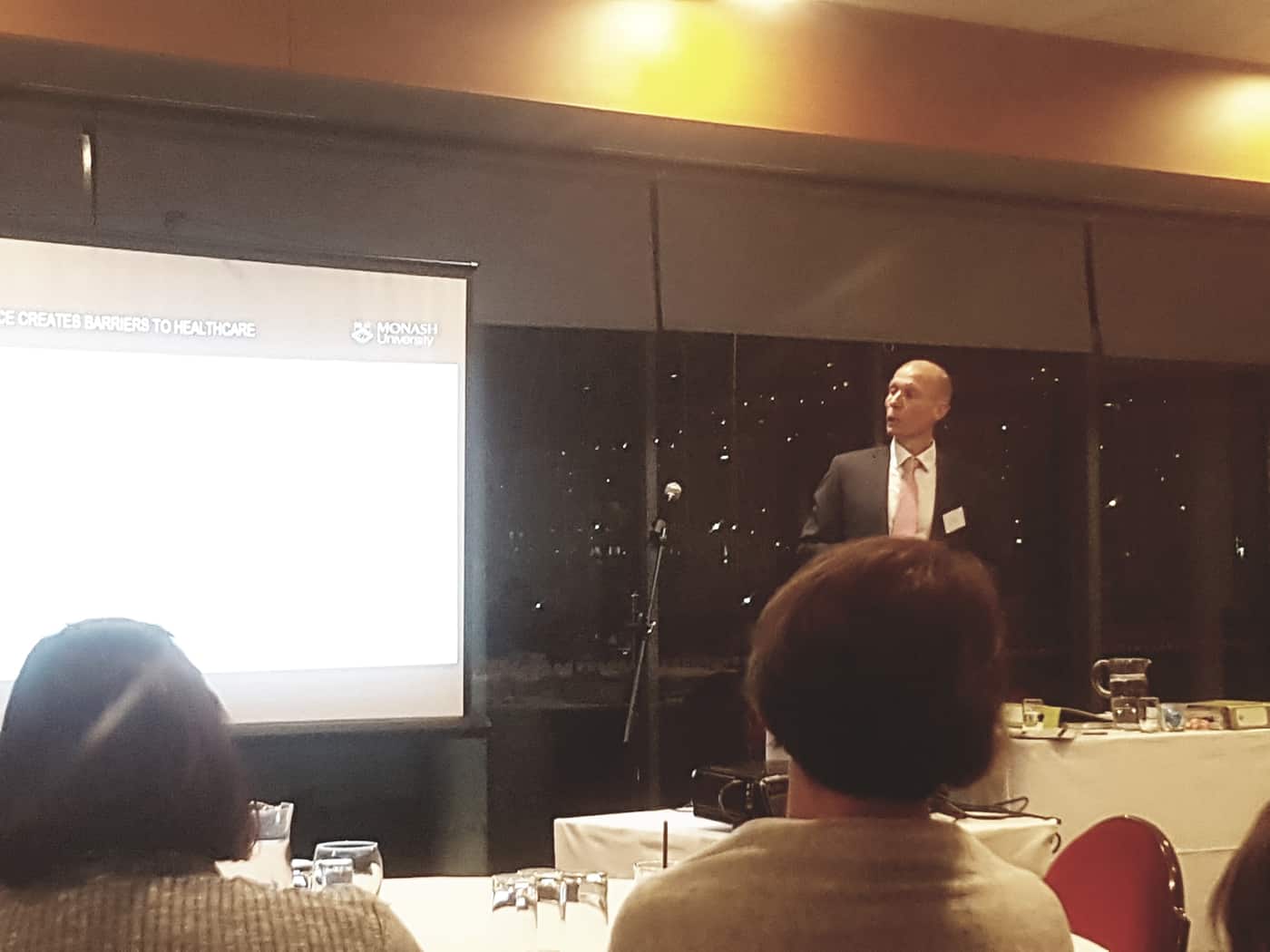
On the eve of a Return-to-Work symposium in Hobart, Alex Collie, challenged the a seminar audience, as all good speakers should.  His analysis of research data has found the following confronting information:

  • “main service delivery mechanism (case management) is ineffective at best, harmful at worst,
Subscribe to SafetyAtWorkBlog to continue reading.
Subscribe Help
Already a member? Log in here

New report provides important data on occupational health

A recent report from the UK Society of Occupational Medicine highlights several issues of note to the occupational health and safety (OHS) professional. But it is also worth looking at the SOM’s media release.

As well as offering financial costs and benefits of good occupational health management the full report also contextualises occupational health:

“The report cites a survey of 1,000 UK employers in which respondents gave their most common reasons to spend on health and wellbeing initiatives as: a motivated and healthy workforce is more productive (41%); to attract and retain staff (25%); to be perceived as a caring employer that takes duty of care requirements seriously (21%). Meanwhile, a survey of 1,000 employees found that they were more likely to choose an employer who took employee health and wellbeing seriously (66%) and would feel they have a duty to work harder for such an employer (43%). The survey results are reflective of the intangible as well as tangible benefits of occupational health.”

Continue reading “New report provides important data on occupational health”

Concatenate Web Development
© Designed and developed by Concatenate Aust Pty Ltd