
Does accessing government assistance need to be so hard?

Nothing is ever easy in farming.  Several Australian States have introduced a rebate scheme to help farmers improve the safety of the quad bikes so the vehicles, also inaccurately called All Terrain Vehicles (ATV), should be made safer. The argument over safety has persisted for many years and has resulted, most recently, in rebates for safety improvements provided by the government.  However, two States – Victoria and New South Wales – have different processes to accessing these rebates and the NSW process seems to deter farmers from applying for the rebates.
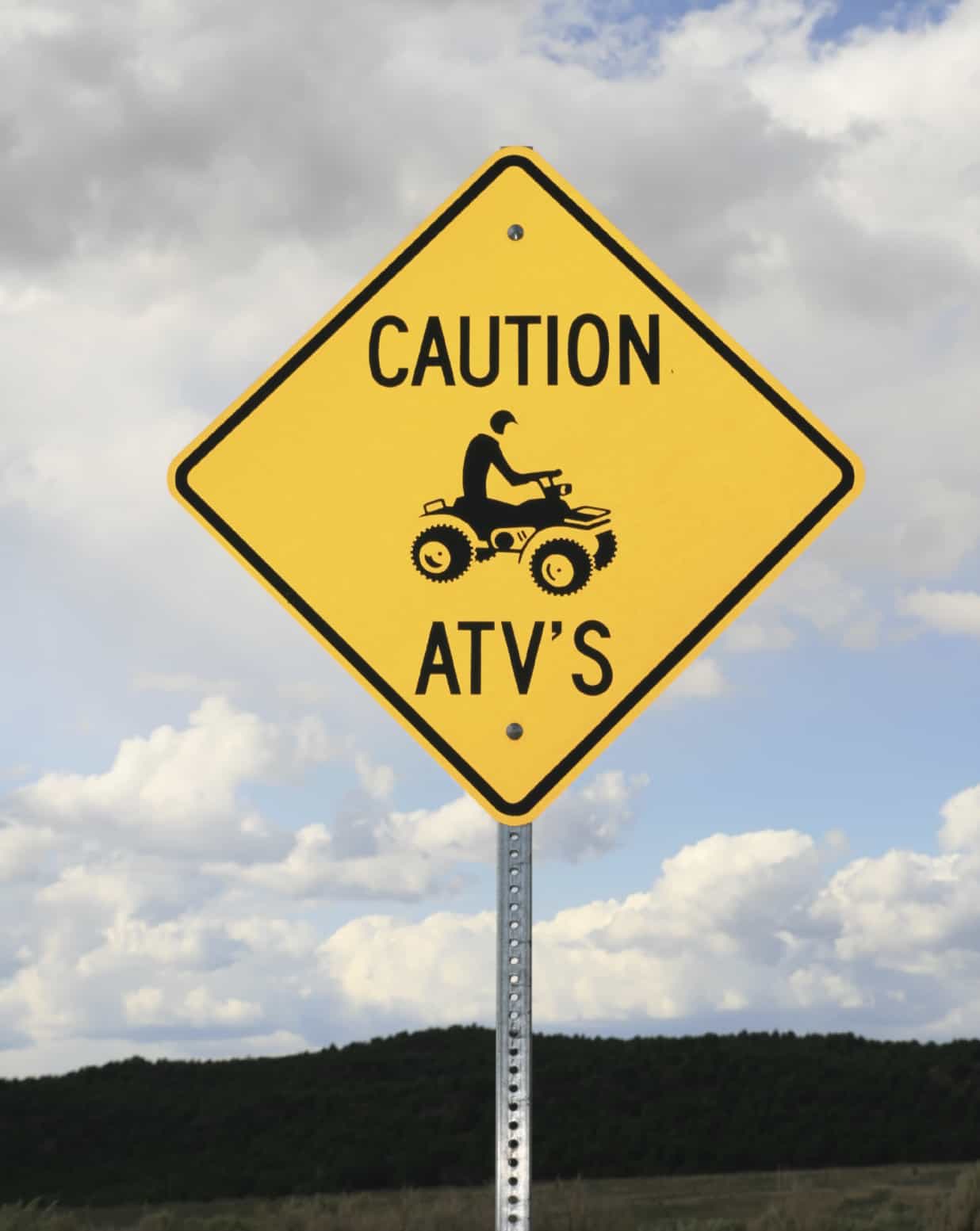
caution ATV signThe Victorian Government’s rebate scheme is administered through WorkSafe who provides a Frequently Asked Questions which is simple and clear.  The dates of activity are listed and, primarily, proof of purchase is the main document for eligibility. Victorian farmers can obtain a rebate for:

“$1200 for the purchase of an alternate vehicle such as a side-by-side vehicle (SSV) or a small utility vehicle (SUV). The alternate vehicle must be designed for use in agriculture and at point of sale have rollover protection and a fitted seatbelt. Sport vehicles and small commercial vehicles, such as utes, are excluded.

Up to $600 for the purchase of up to two operator protection devices (OPD). The OPD must have been designed and manufactured in accordance with approved engineering standards and independently tested to be eligible for the rebate. There are currently two OPD devices that meet this criteria and are eligible for the rebate. They are the Quadbar™ and the ATV Lifeguard.”

The NSW process is funded by SafeWork NSW with a complex set of terms and conditions.  The purchase options seem narrower but the major difference in the two rebates schemes is New South Wales’ insistence that farmers must attend an “educative interaction”.  According to a SafeWork NSW FAQ farmers are required to:

  • “get along to a Farm Safety Day run by SafeWork NSW or one of its program partners
  • visit the SafeWork NSW stand at an Agricultural Field Days
  • request a free on-farm Workplace Advisory Visit and we will come to you
  • attend one of the 100 training events being offered by Tocal College.”

SafetyAtWorkBlog has been told that farmers find this to be condescending and are suspicious of SafeWork NSW’s intentions, particularly in relation to the “free on-farm Workplace Advisory Visit”. Such visits are likely to be SafeWork NSW’s preferred option as there are only a limited number of Field Days available every year. WorkSafe Victoria does not insist on educative interactions as part of the rebate scheme which increases NSW framers’ suspicions.

The Federal Chamber of Automotive Industries (FCAI) recently released a new video to support its claims that Operator Protection Devices (OPD) or Crush Protection Devices (CPD) “are not the answer“.  The FCAI has been out of step with the issue of quad bike safety for many years and it is difficult to sympathise with its position when governments are “endorsing” OPDs through rebate schemes.

The FCAI’s position seems to be shortsighted as the rebates are encouraging farmers to apply a Gordian Knot solution to the bickering over quad bike safety.   Both the NSW and Victorian rebate schemes encourage farmers to purchase side-by-side vehicles (SSV) which, due to the framework over the driver, have no need for the OPDs on offer.  SSVs are more expensive than quadbikes but can be seen as endorsed safer options by the regulators of safety in each of the States.

Having dug in to a contrary position of additional safety measures on quad bikes, the FCAI is getting more out of step with the regulators’ positions and the safe desires of farmers and farming families.  But perhaps criticising the FCAI is unfair, after all, it is a body representing the interests of automotive manufacturers.  Generations have grown up equating motor vehicle manufacturing with safety, ever since “Unsafe at Any Speed” was published in the 1960s, but the FCAI seems different.  It has its own definition of workplace safety that is not in step with government or safety regulators.

Farmers, like all business operators, need to decide for themselves who they trust more for their own safety – regulators or salespeople.

Kevin Jones


Citi’s 2015 Safety Spotlight shines light on some OHS areas

[This article from 2015 was previously password-protected and is now available to all] Recently a couple of media outlets referred to a report produced by Citi into workplace safety issues related to the top 100 companies on the Australian stock exchange.  The report, “Safety Spotlight: ASX100 Companies & More” (not available online), provides a useful…

Subscribe to SafetyAtWorkBlog to continue reading.
Subscribe Help
Already a member? Log in here

Andrew Hopkins supports the abandonment of safety culture

Culture and safety culture are misunderstood and abused terms, according to Professor Andrew Hopkins speaking at the SIA Safety Convention in Sydney today. His perspective as a social scientist reinforces many of the speakers on disruption at yesterday’s sessions. If culture is the characteristic of individuals, culture is transferable or portable outside the workplace but…

Subscribe to SafetyAtWorkBlog to continue reading.
Subscribe Help
Already a member? Log in here

Safety disruption gets context

The second session of the SIA National Convention is flatter than the the first, not because it is not interesting but because it is providing us with the social context for occupational health and safety (OHS) rather than challenging the OHS profession.

Bernard Salt is a very high profile demographer whose job is almost entirely about providing social context to whatever we do. He mentioned OHS specifically only four times and then primarily to do with driving trucks but the age data Salt presented shows the need for improvement in the health and wellbeing of the workforce so that quality of life can extend in line with the extended period of our lives.

gahan-sia-conf-2016Peter Gahan (pictured right, speaking)of the Centre of Workplace Leadership is a regular speaker at the Safety Institute of Australia’s conferences. His outline reflects the theme of this conference by disrupting our sense of security and career.

The challenge comes from how we respond to this unease. If we curl up on the couch to binge watch a show, the career is over. We need to look for the opportunities that the disruption offers but this may require us to reassess, if not throw out, the foundations of our profession or the dreams on which we chose our career.

Richard Coleman is well known in the Australian OHS profession through his prominent safety career. His attraction as a conference speaker was on display because he was able to adjust his presentation to accommodate the examples and context that previous speakers addressed. Coleman focused on the digital disruption, particularly as it affects blue collar occupations. He believes that some of these jobs will go within the next five years.

Coleman’s focus on digital disruption provided a great summary of the OHS application of augmented reality and wearable technology. The latter has the best opportunity for safety improvement, particularly in the area of manual handling. Sensor technology can provide better levels of information and in real time that allows immediate interventions at times of great risk.

What these speakers and the panel are all about is to think creatively and think big. Fantasise about your job and the tasks you do now and whether they will exist in ten years and how you can change them now to prepare for the future. If your job leads to a dead-end, change the job. It seems easier to do this now, than ever before

Kevin Jones

OHS conference hears of a bleak future

What do you do when the first speaker at a safety conference makes a strong argument that occupational health and safety (OHS) activities are likely to be automated out of existence within twenty years?  Dr Drew Rae opened the SIA Safety Convention with just such a statement.  This was reinforced by Andrew Harris of Laing O’Rourke who provided video evidence of an artificial intelligence that could identify that a worker was not wearing the required personal protective equipment.

The Convention’s theme is disruption as this is one of the current business buzzwords and safety people think disruption is a positive experience. But it is possible that disruption will erode the OHS profession IF that profession continues handling its knowledge and supporting its members in the same way.

At the Eric Wigglesworth Memorial Lecture on 5 September, Dr David Borys further disrupted the OHS profession by questioning its knowledge base and although an academic himself and a major participant in the Safety Institute of Australia’s Body of Knowledge, advocated a Body of Evidence  rather than a Body of Knowledge.  What this also did was cut across the core structure of the SIA which is wrapped around academic education.  Borys was very disruptive in a polite way.

The first session of this conference confirms the understanding that the best safety thinking comes from outside the safety profession.  The future of the safety profession will come from how the safety profession responds to change and several speakers have mentioned extinction.

It’s a good start to this conference.

Kevin Jones

Who are the “Gods of Safety”?

Occupational health and safety (OHS) is usually taught around various safety theories that can include pyramids, icebergs, dominoes, cheese and damaging energy.  All of these theories were useful at some point in time to identify a new perspective, to counter an ideology or to explain why people cock-up. But which OHS theory has stood the…

Subscribe to SafetyAtWorkBlog to continue reading.
Subscribe Help
Already a member? Log in here

Editing is an essential element of safety communication

In a comment to a recent blog article Gregor McGhee asked:

“Just out of curiosity can you recommend any books for comparison with respect to presentation, footnotes, references and endnotes?”

Most books related to occupational health and safety (OHS) are written by academics for an academic audience so there are clear referencing protocols and styles with which that readership will be familiar and comfortable.  The challenge comes when academics are asked to write for a lay audience for whom concepts must be explained and backgrounds and context provided.

But there is a similar challenge to OHS regulators who provide guidance material that often derives from academic research but also for the legalities of safety legislation.  SafetyAtWorkBlog was able to talk with Jackie McAdam, a freelance editor, designer and writer who has worked for the UK’s OHS regulator, the Health and Safety Executive (HSE).

Format and Language

In Carsten Busch’s book, he chooses to use endnotes for references but an ABC system for footnotes. This non-conformity is part of the reason the book is a challenging read.Dust jacket 3.3 13.12.01

NIOSH has a program of Research to Practice (R2P) where research grants are given, or work commissioned, on the understanding that the research will also be “translated” into a format and language that allows for the research findings to be applied in the real world.  NIOSH says it:

“…..collaborates with partners and stakeholders to:

  • Identify needs
  • Design, plan, and conduct studies or evaluate technologies into workplace policy, procedure, technology, and/or practice
  • Communicate and transfer NIOSH policy, procedure, or practices to relevant users for implementation in the workplace
  • Evaluate or demonstrate the impact of these efforts on improving worker safety and health.”

Focussing on the communication element of the program fits with the OHS principle of consultation (although the whole R2P program is really consultation) with particular attention to the reader and audience.  NIOSH has provided an excellent roadmap guidebook to assist writing research in this “new” way.

For more practical advice on the style of writing, governments often publish style guides or manuals.  Australia has published such a book for fifty years and the recent 2002 edition remains a mandatory read for most government policy writers.  The American Chemical Society publishes a guide of its own.

The UK Experience – Jackie McAdam

210a64fJackie, can you provide readers with a bit of background of your work with the HSE?

I have worked with HSE on and off since 2005 as both an editor and a designer. It’s important to clarify that these are my thoughts as an individual, but I do have a lot of experience and knowledge of how HSE operates and what the organization deems as important.

Early projects I worked on (which are still available online) include COSHH essentials, Asbestos Essentials and leaflets such as  Working with substances hazardous to health: A brief guide to COSHH.

Who does HSE believe its audience to be? Business owners? OHS Professionals? Consultants? Or All of these?

HSE is well aware that OHS professionals use our guidance and information as a valuable resource, but our editorial style guide emphasises the need to use plain English to make publications accessible to workers and management too.

COSHH essentials, for example, has an initial sheet in each series aimed at managers, but the remaining sheets are intended to be used by everyone. A lot of guidance includes safety checklists for workers to make sure they are protecting themselves.

Despite the view of the UK in some respects as a nanny state, it’s important the workers take responsibility for actions that could put themselves and their workmates in danger. As an organisation, HSE does a lot of work with stakeholders to establish what happens in practice in the workplace. It’s all very well providing a perfect scenario, but that doesn’t happen in real life, and it’s about taking measures that are reasonably practicable and not coming up with a solution that’s disproportionate to the level of risk. I think that’s why our recent strategy events [#HelpGBWorkWell] were so successful at getting feedback from so many stakeholders. [link added]

How important is it to refer to previous editions of OHS documents or should each edition be considered brand new?

We try to discourage links directly to PDF documents in our publications, as the landing page gives vital information on what has changed since the previous version. It could be a change to the law, but sometimes we have just updated some of the references. Even if that information isn’t on the landing page, it should be on the first page of the document so read that first, it isn’t just sales blurb.

What are the most common criticisms of safety guidances from readers?

I don’t always get that feedback directly but I know that it’s crucial that we work with industry experts to get our facts and our language right. HSE’s long-term belief that plain English is crucial to making guidance easy to access has recently become the mantra of www.GOV.UK in marketing  its ‘digital-by-default’ approach. You mentioned Australia’s style manual, I haven’t read it yet, but if you want to compare notes you could check out Gov.UK’s style guide at: https://www.gov.uk/guidance/content-design/writing-for-gov-uk.

There has been evidence that peer pressure prevents workers even reading guidance, so making sure it’s relevant to the target audience is top of the list. That’s about the way it reads, the way it looks and how it’s marketed.

How much “translation” is required and has this amount lessened over your experience?

As an editor with no specialist knowledge in health and safety, or the type of hazards we deal with, I have to check with my authors that I’ve understood the gist of what they are trying to convey before I edit their text. They get to approve every change to make sure I haven’t changed the meaning. My job is essentially to translate the technical jargon into something the person on the street can understand. Occasionally HSE has to use some technical language, but technical doesn’t mean academic; academic styles of writing can put people off. They simply don’t think it’s aimed at them.

I’ve also been asked to ‘translate’ the findings of research reports. For example, RR558 – Taking risks with asbestos: What influences the behaviour of maintenance workers? by the Institute for Employment Studies discusses worksite culture and the reasons that workers don’t recognize themselves as being at risk from asbestos.  The report mentioned a greater concern for others than themselves, so I used language to remind them that the risks they took could affect their workmates or family to try and bring about behaviour change.

Did the HSE MythBusters program affect the writing style or strategy?

To be honest, no! When you work at HSE, you quickly realise how crazy some of these myths are. HSE’s line hasn’t changed, but Myth Busters was one way to get the public, and companies, to recognize when HSE was being used as a scapegoat for someone else’s over-cautious approach.

You mention in your review of Carsten Busch’s Safety Myth 101 that Carsten describes a Safety Culture that has been so misused that it has become a meaningless buzzword in many circumstances. There can be no doubt that this is the case, HSE’s press office is quick to rebut any over-the-top reporting of ‘elf ‘n’ safety gone mad’. Most of this in the UK tends to be in the tabloid press whereas I’ve noticed a change over the years towards more accurate reporting by agencies like the BBC.

Does HSE still produce hard copy editions of publications and guidances?

Not as many as we used to, but yes we do sometimes still print publications if there is enough demand for a printed version.

What about the future of OHS communications?

The future is digital – mostly. Yes, we will still print some publications, but like all things these days, it’s now about the immediacy of social media, responsive communications that can be read on the go on your smartphone rather than opening a book. Everyone expects the answer to any question to be readily available, and OHS is no exception. Essentially, we all want an app that can do that – and there is, for some things. Check out HSE’s asbestos app

When I’m asked what an editor does, which is a surprisingly common question, I do sometimes have to remind myself of how important our role is. We don’t write the stuff, necessarily, but we do make it readable by the right audience.

What about language that just doesn’t really tell you anything, but is just bluster and padding? Politicspeak, jargon, gobbledegook.*

One of the main jobs of an editor is to get rid of all that. Yes, we also make the text consistent, it doesn’t just read better, but it’s easier to follow; you set a precedent at the beginning of the text and you follow it through. We correct the grammar, obviously, but we also make the text make sense! OHS guidance could probably never be called a good read, but it doesn’t have to be a complicated one.

I am not sure that this answers Gregor McGhee’s question as the books mentioned above are not straight comparisons with Busch’s Safety Myths book.  In some ways any safety book from a reputable and established publisher should illustrate the structure and protocols required.  One of my points and why I contacted Jackie McAdam was to emphasise the importance of an editor in any work.

It is useful that Jackie is a graphic designer as well as an editor as this allows her to picture the end result as well as the information contained.  Also she points out the crucial importance of communicating with the writers or source content providers to ensure you don’t misrepresent ideas in the translation from the technical to the readable.

Recently I spoke with Dr Rob Long when he was working through the proofs to his latest book , “Risky Conversations” and he was frustrated with the editing process required but also impressed by the complexity of editing.  Editing is a skill and a trade and one that is becoming less common as more and more of the text production tools become readily available.  But in most circumstances editing will still be a requirement even if it is to provide that final polish to a product or book.

Of course, like workplace safety, the best results come from having this role as early in the creativity and production processes as possible. Engaging an editor early in a project educates that editor on the text’s context, aim and point and builds a collaboration which avoids, mostly, a deadline panic, which can be an occupational hazard for all writers.

Kevin Jones

*[gobbledygook ˈɡɒb(ə)ldɪˌɡuːk,-ˌɡʊk/

noun, informal

noun: gobbledegook

language that is meaningless or is made unintelligible by excessive use of technical terms.]

Concatenate Web Development
© Designed and developed by Concatenate Aust Pty Ltd