Two new free OHS magazines from Australia

Two interesting and useful OHS publications have been released in Australia.  The West Australian Division of the Safety Institute of Australia has published its Australian Safety Matters magazine.  It is freely downloadable and available HERE.

The second is a publication from Workplace Standards Tasmania and relates particularly to OHS issues related to the electrical, gas, plumbing and building industries.  It’s published twice a year and is available for free download HERE.

How the treatment of traumatic brain injuries has changed and the positive role of workers’ compensation

An American workers’ compensation blog, Workers Comp Insider, posted a fascinating article on the workplace-related traumatic brain injuries.  The article discusses a new research paper by Peter Rousmaniere – “Gray Matters: The Employer’s Role in Brain Injury Recovery”.

The original article in Risk Management magazine is also a good example of clear writing on  a complex matter.

Clearly, workers who receive a severe brain injury should not be shuffled away into the Never-Never as is traditional.  There are counselling and rehabilitation techniques available that have originated from many sources, including contemporary wars. Continue reading “How the treatment of traumatic brain injuries has changed and the positive role of workers’ compensation”

Workplace bullying and restorative justice – how to help the families left behind

A feature article on workplace bullying in The Age newspaper on 10 March 2010 has the additional or secondary benefit of again raising the relevance of “restorative justice” to the issue of occupational safety and health.

The main element of the article is the McGregor family who had two children commit suicide over related issues.  The son, Stuart McGregor,  described as being chronically depressed, was being bullied at work.  He confided in his sister, Angela McGregor, over the issues.  Angela had been bullied at school.  Alannah killed herself.  A month later, Stuart followed.

WorkSafe investigated the bullying at Stuart’s place of work, substantiated Stuart’s claims are is determining what further action to take.  The newspaper reports that there may be insufficient evidence to pursue the case through the Courts.

What the reporter, Helen Westerman, does is to relate the grief and hurt of the parents to the potential benefits of the application of “restorative justice” in workplace incidents.   Continue reading “Workplace bullying and restorative justice – how to help the families left behind”

Maybe Australia is looking in the wrong direction on harmonising workers’ compensation

South Australia has pledged to increase competition in its local workers’ compensation scheme in the hope of improving (some say fixing) it.  Most other Australian States have a competitive structure with private insurers.  In a couple of years, those insurers will be battling it out to achieve national coverage as the Federal Government moves to harmonise the State systems.

New data from Canada shows that perhaps Australia needs to take a deep breath and nationalise workers’ compensation for the good of the injured workers and business.

A February 2010 report from the Institute for Work & Health has concluded that

“The public administration of workers’ compensation in the Canadian systems provides a strong economic benefit to employers, arising from the lower administrative costs of a single public agency compared with the costs arising in a competitive insurance market. Continue reading “Maybe Australia is looking in the wrong direction on harmonising workers’ compensation”

When looking to understand psychosocial issues, ask your grandparents

In February 2010, the New York Times ran an article about depression by Jonah Lehrer.  The same article appeared in some of Australia’s weekend newspapers in early March.  Lehrer looks at the issue of depression and considers whether there is a potential upside to the disorder by looking back as far as Charles Darwin for expressions of depression.  He makes a challenging statement:

“…that depression has a secret purpose and our medical interventions are making a bad situation even worse.  Like a fever that helps the immune system fight off infection — increased body temperature sends white blood cells into overdrive — depression might be an unpleasant yet adaptive response to affliction.”

Lehrer goes on to make a case for depression being a possible source of creativity.

He refers extensively to the evolutionary psychology research of Andy Thomson and Paul Andrews who acknowledge that

“… depression is a vast continuum, a catch-all term for a spectrum of symptoms.”

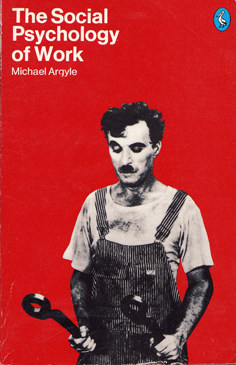
Perhaps, particularly in the relatively recent consideration of depression in workplaces, we are being too narrow and too specific.  Perhaps the case for workplace depression being made by some of the “depression sellers” is too targeted and we need to remind ourselves of the sociology of work, a perspective that seems to have gone out of fashion. Continue reading “When looking to understand psychosocial issues, ask your grandparents”

Workplace bullying data from Denmark

In occupational health and safety (OHS) and other workplace research, Scandinavia is often quoted.   The application of research findings to other nations is of dubious value but often Scandinavian research provides clues to potential OHS hazards or control options.

In February 2010, the European Working Conditions Observatory published online a research report into workplace bullying.  The report says

“Investigating the impact of bullying on psychological stress reactions according to the Impact of Event Scale, the NFA study finds that negative acts which potentially isolate the individual at the workplace, acts directed towards the person and unreasonable workloads induce most psychological stress.” Continue reading “Workplace bullying data from Denmark”

Some families in South Australia blame WorkCover for their partners’ suicides

In January 2010, Today Tonight in South Australia aired a disturbing report about the workers compensation reforms in that State.  It talks to two widows who blame WorkCover SA as contributing to their husbands’ suicides.  One man left a suicide note explicitly blaming WorkCover SA, emphasising his point by jumping to his death from the sixth floor of the WorkCover office building.

The video report is available HERE under the title WorkCover Suicide.

One of those interviewed in the story is Kevin Purse who undertook a report into the SA workers’ compensation system on behalf of SA Unions.   Continue reading “Some families in South Australia blame WorkCover for their partners’ suicides”

Concatenate Web Development
© Designed and developed by Concatenate Aust Pty Ltd