Important safety, environmental, political and personal stories in book on the Morwell Mine fire

Dr Tom Doig has continued to build on his earlier work about the Morwell mine fire, expanding his “The Coal Face” from 2015 into his new book “Hazelwood” (after court-related injunctions, now available on 18 June 2020).

SPECIAL OFFER: The first four (4) new Annual subscribers in the month of June 2020 will receive a copy of Hazelwood.

The Morwell mine fire created great distress to residents in Victoria’s Latrobe Valley, ongoing health problems, and a parliamentary inquiry, but can also be seen as a major case study of occupational health and safety (OHS) laws, enforcement, role and the obligation on employers to provide a safe and healthy working environment that does not provide risks to workers and “protect other people from risks arising from employer’s business”.  The management of worker and public safety is present in almost every decision made in relation to the Morwell Mine fire. The overlay of an OHS perspective to Doig’s book is enlightening.

Subscribe to SafetyAtWorkBlog to continue reading.
Subscribe Help
Already a member? Log in here

How logical is safety? Here’s a fresh perspective

This week I found a research paper in my inbox called “How logical is safety? An institutional logics perspective on safety at work”. The Background and Objective were, respectively:

“Occupational incidents and accidents are still commonplace in the contemporary workplace, despite increased understandings of safety.”

“This article aims to yield new insights into safety-related thinking, decisions and behaviours through the application of an institutional logics perspective.”

As most readers do, I read something and try to link it with ideas, concepts and conversations we have been involved with in the past. My brain tried to fit the use of “institutional logics” with safety culture and then with organisational culture but it did not seem to fit, and I wondered whether I should bother with institutional logics.

Subscribe to SafetyAtWorkBlog to continue reading.
Subscribe Help
Already a member? Log in here

Mental health change needs to break out

On May 15 2020 Australia’s National Cabinet supported the National Mental Health and Wellbeing Pandemic Response Plan developed by the National Mental Health Commission. The focus was on the mental health impacts of the COVID-19 Pandemic but in the text was a reference to a National Suicide and Self Harm Monitoring System developed and run by the Australian Institute of Health and Welfare (AIHW). Given the dearth of valid data on suicide and after an earlier article questioning datasets, SafetyAtWorkBlog posed some questions to the AIHW about the monitoring system.

Subscribe to SafetyAtWorkBlog to continue reading.
Subscribe Help
Already a member? Log in here

Safety wins

The saga of the safety of all-terrain vehicles (ATV) in Australia is coming to a close with Honda announcing that it will not be selling its ATVs in Australia after 10th October 2021. However Honda, one of the most strident opponents of increased safety standards, is belligerent to the end.

In the media announcement of its decision, Honda says that the new safety Standard is impossible to meet on any ATV. This may be true but the quad bike manufacturers refused to accept that rider safety could be improved by redesigning the quad bike, or adding additional safety devices, to reduce the risk of rolling over. Most occupational health and safety (OHS) advocates did not argue about the validity of the safety items and actions recommended by the manufacturers – helmets, dynamic riding training etc – but saw these as supplements to after-sales crush protection devices (CPDs). The manufacturers did not.

Subscribe to SafetyAtWorkBlog to continue reading.
Subscribe Help
Already a member? Log in here

COVID19 and Safety Managers

Several weeks ago, researchers from Griffith University and Queensland University of Technology (QUT) commenced a survey about safety managers and COVID19. The research was called “Resilience in a COVID19 World” and aimed at

“Exploring health and safety measures taken by and for ‘essential services’ workers throughout Australia’s COVID-19 crisis, and how their contributions affect personal and organisational resilience.”

Some initial results are in a recent outline published by Dr Tristan Casey & Dr Xiaowen Hu through The Culture Effect consultancy. There were four key challenges but also significant positives.

Subscribe to SafetyAtWorkBlog to continue reading.
Subscribe Help
Already a member? Log in here

Running before you can walk on COVID19 and Mental Health

On May 15 2020, the Australian Government released a National Mental Health and Wellbeing Pandemic Response Plan. Mental Health has been on Prime Minister Morrison’s agenda since his election a year ago and the mental health sector is not going to be starved of government funds during his tenure.

Mental ill-health has been talked about throughout the current COVID19 Pandemic and has been forecast to increase due to the economic disruption and the requirements for social isolation. To some extent, the low numbers of COVID19 deaths in Australia has allowed it a “luxury” of addressing mental health, but some of the justifications seem not as strong as claimed and the National Mental Health Plan omits any consideration of occupational health and safety (OHS) other than for those in the health industry; the so-called “frontline workers”.

Subscribe to SafetyAtWorkBlog to continue reading.
Subscribe Help
Already a member? Log in here

RSI is a pain in the…..

One example of the “correct” sitting posture ergonomics at a desk while working on a computer. (Not really correct)

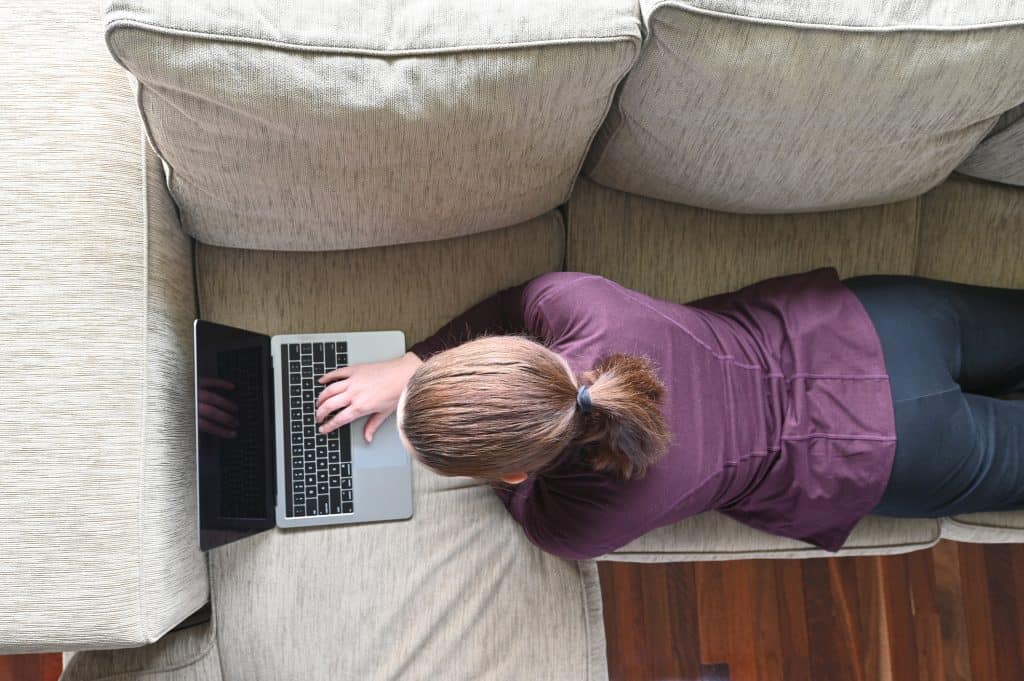
Earlier this year Dr Peter Sharman published a blog article based on a literature review related to Upper Limb Pain and Computer Employment. The ergonomics of desk-based work seems to be dominated by guidance that requires right-angled postures, and other practices that are designed for prolonged use. For most of us, there is the flexibility to move around and break up the tasks but workplace, like call centres, continue; and the recent move to work from home has resurrected many of these workstation advisories. SafetyAtWorkBlog had the opportunity to ask Dr Sharman about his research and his experience supplemented by some clarifying answers by retired consultant in rheumatology and pain medicine, John Quintner.

Subscribe to SafetyAtWorkBlog to continue reading.
Subscribe Help
Already a member? Log in here
Concatenate Web Development
© Designed and developed by Concatenate Aust Pty Ltd