When ATV helmets are “best practice”

A recent media statement from the New Zealand Department of Labour on all-terrain vehicle (ATV) safety is annoying and disappointing.

On 15 September 2009, the Palmerston North District Court today fined farmer Trevor Mark Schroder $25,000 and ordered him to pay reparation of $20,000 to his employee John Haar over an  ATV accident on 26 November 2008 that left Mr Haar with serious head injuries.

Dr Geraint Emry, the DoL Chief Adviser for Health and Safety, says

“…Mr Haar was riding an ATV supplied by Mr Schroder when he apparently drove into a wire used to direct cows into specific areas of the farm.  Mr Haar had not been wearing a helmet and the severity of his injuries increased as a consequence.  Nor had he been told that the wire he rode into had been put across the race.”

atvguide2 coverThe statement goes on to state

“The Agricultural Guidelines – Safe Use of ATVs on New Zealand Farms – advise that the wearing of helmets by quad bike riders is considered best practice.”

SafetyAtWorkBlog strongly knows that New Zealand is very active in ATV safety but finds it hard to believe that the “wearing of helmets…is considered best practice”.  This admits that, in using ATVs, personal protective equipment is the best hazard control option available.

The guidelines mentioned above are from 2003 and do mention ROPS:

“Until such time as there is evidence to the contrary, farmers have the right to choose whether or not they fit ROPS to their ATVs.”

The NZ DoL and, by inference, the Chief Adviser are quoting a 2003 guideline as best practice in 2009?!

Relying on helmets may be the reality but is also an admission of defeat with ATV designers and manufacturer.  In many circumstances ATVs cannot be fitted with roll-over protective structures (ROPS) due to the nature of the work – orcharding for example.  But Australia and New Zealand insist on ROPS for tractors, with similar criteria and exceptions to ATVs.

VWA Farm_ROPs coverIn one ROPS FAQ from the NZ DoL it says

“Evidence both in New Zealand and overseas has shown that the risk of injury in a tractor overturn can be substantially reduced when the tractor is fitted with ROPS of the appropriate standard.”

and

“Where the nature of the operation makes it not practical for ROPS to be fitted to an agricultural tractor, then, under the terms of this code of practice, the General Manager, Occupational Safety & Health Service, may issue a notice excluding the tractor from the requirement to have a ROPS.”

Some States in Australia have had rebate schemes for ROPS for many years.

It is suggested that a better level of driver protection from rollovers is evident on forklifts through the use of seatbelt and an integrated protective structure.  Applying logic to safety is fraught with danger but the rollover hazard is the same whether in a warehouse or a paddock and having only a helmet for a forklift driver would be absurd and unacceptable.  Why is only a helmet considered best practice for ATV drivers?

Rather than comparing ATVs to motorcycles as in this 2003 report, the comparison should be between ATVs and tractors or, maybe, forklifts.

The New Zealand Transport Agency says this about ROPS and ATVs in June 2008:

Many ATVs have a high centre of gravity, and are prone to tipping over when cornering or being driven on a slope. Rollover is the leading cause of injury associated with ATVs – riders can be crushed or trapped under an overturned machine.

If you attach a rollover protection structure (ROPS) to your ATV, make sure it’s securely fastened, doesn’t interfere with rider mobility and doesn’t raise the ATV’s centre of gravity. Contact OSH for guidelines on how to fit ROPS safely, and make sure the ROPS is strong enough to protect you.

So why aren’t ROPS considered best practice by the DoL?

The ATV injury case quoted above is unlikely to have occurred if the ATV had some form of structure around the driver or, admittedly, the wire was more visible or known to the driver.  The relevance in this case was that the helmet most probably reduced the severity of the injury but would not have avoided contact with the wire.

Research is occurring on ROPS for ATVs but the rollover hazard has existed for as long as ATVs have existed.  Are ATVs simply unsuitable for the work they are being used for?  Is the design wrong for workplace use?  Are they being advertised or promoted for inappropriate use?  Should farm workers be encouraged legislatively or financially to fit ROPS?  Perhaps the only safe ATV is a tractor?

Is the requirement for ROPS for tractors, but only helmets for ATVs, an acceptable double standard for workplace safety?

Kevin Jones

New safety campaign – making the invisible visible

hi res moving cement vwaThe last week of October each year is Safe Work Australia Week.  This theme is enacted in each State with their own resources and events.  WorkSafe Victoria is one of the more active of the state regulators and 2009 seems no different.

On 13 September 2009, WorkSafe Victoria will launch a new campaign of graphic advertisements but what makes these different is the injuries result from “simple” work activities.  They are not in high-risk industries where workers may perform high-risk tasks.  These ads concern the (mis)use of an office chair, lifting a bag from a pallet, not using the stairs, slipping on a wet floor and lifting a person.

hi res office chair vwaThere has always been the challenge of how to generate interest in manual handling injuries as they are internal or invisible, and cumulative.  WorkSafe has done well by illustrating the physical consequences of what many dismiss as “taking a fall”.  In fact, the images that are less confronting than the noise of the bones breaking or the hernia appearing.

WorkSafe’s Executive Director, John Merritt, describes the campaign this way

“There’s no ‘blood on the floor’ or spectacular images on the nightly TV news or in the morning paper, yet the consequences of these injuries are enormous for individuals, their loved ones and their employers.

“For business, the average cost of treating these people through Victoria’s workers compensation system averages $45,000 per claim.

“Individuals lose quality of life and many, the capacity to work for at least a short period, some require surgery or have permanent pain and never fully recover.

“For employers productivity is cut, there may be staff replacement costs, retraining and safety improvements to be made after the event. Industries lose people permanently.

“Identifying and preventing these issues has benefits for all.”

Merritt also provides the statistic that  60% of all reported workplace injuries* – more than 17,000 a year in Victoria – involve manual handling.

The new campaign is graphic but it is hard to see how the total costs – social, personal and business – could have been described better.  Having a worker clutch their lower back and grimace with pain has been seen in campaigns and images repeatedly for decades and a new approach was needed.  Making the invisible visible should help.

Kevin Jones

* Based on Victorian Workers compensation claims where people are off work 10 days or more and / or medical treatment costs in excess of $520.

Safety signs – fact and fiction

A while ago I had a gig where one of the aspects of the job was researching how safety signs work, are read and responded to.   Here’s a snapshot of some  facts and fiction about safety signs.

Fact: If people don’t know the reason for a safety sign, they will probably ignore it. A safety sign needs to be seen as a reminder about a danger and the associated injury precautions that should already have been discussed at a safety  meeting or included in training.  Workers need to understand the relevancy of a safety sign, and that includes getting info on what the danger really is.  A related issue is that research on how people respond to road signs found that likelihood of being hurt is a big factor in whether people take notice of a sign.* It’s reasonable to conclude there is a nexus with how people respond to safety signs generally; just telling people what to do is not enough, knowledge is essential.

Fiction:  A safety warning sign is sometimes all that’s needed to cover the safety problem.

Fact: A safety warning sign is never enough to control a danger. If you’ve done nothing more than put up a warning sign to control a risk, it’s odds on you will be breaking the law.  Don’t look at a warning sign as the end of the issue; look at it as the indicator that you know there is a safety problem in an area and that special safety precautions are needed and are in place.   That’s exactly how the OH&S enforcement agency sees them.  That latter point is worth thinking about if your workplace is a place that plasters safety signs up everywhere but doesn’t deliver on actual risk controls.

Fiction: The sign is permanent, so is the message.

Fact:  Safety signs should be changed, repositioned and even re-coloured every now and then to make them noticeable. That old, grime covered sign plonked up on the wall becomes invisible eventually.  People get used to seeing a sign, and the message stops registering.  Try revitalising how the safety messages work.  Try ways to get people to “connect” with their safety signs.  One thing worth trying is to get staff to have a go at spraying up the safety message themselves.  Use the key words on a commercially available sign, but let staff “funk it up” and get creative.  That will make the sign more noticeable, more “real” – a very good thing.  If producing a sign from scratch doesn’t suit, use customised sign options provided by most commercial sign suppliers.

Col Finnie
col@finiohs.com

* There’s a wealth of useful information in the 1998 research paper titled “Signs of trouble to come? A behavioural assessment of the effectiveness of road warning signs – Final Report”, Austin Adams, Jim Bright, Ben Searle, School of Psychology, The University of New South Wales.

NZ proposes new exposure levels on formaldehyde

The New Zealand of Department of Labour is continuing its negotiations on new exposure levels for formaldehyde.

The latest proposed exposure levels for formaldehyde are 0.3 ppm (8 hour TWA) and 0.6 ppm (STEL).  Currently the levels in New Zealand are 1ppm (ceiling).

According to US OSHA, it’s exposure standard is

1910.1048(c)(1)

TWA: The employer shall assure that no employee is exposed to an airborne concentration of formaldehyde which exceeds 0.75 parts formaldehyde per million parts of air (0.75 ppm) as an 8-hour TWA.

1910.1048(c)(2)

Short Term Exposure Limit (STEL): The employer shall assure that no employee is exposed to an airborne concentration of formaldehyde which exceeds two parts formaldehyde per million parts of air (2 ppm) as a 15-minute STEL.

WorkSafe BC says

BC‘s current 8-hour TWA of 0.3 ppm is well below levels capable of causing adverse health effects and protects the worker from the pungent, unpleasant odour of formaldehyde.

NZ DoL is also discussing dropping there exposure levels for soft wood dust from 5mg/m3 to 1mg/m3.

The cancer risks of formaldehyde have been investigated over some time and the weight of evidence shows that this chemical is a probable human carcinogen.

Kevin Jones

Thoughts on tasers and the hierarchy of controls

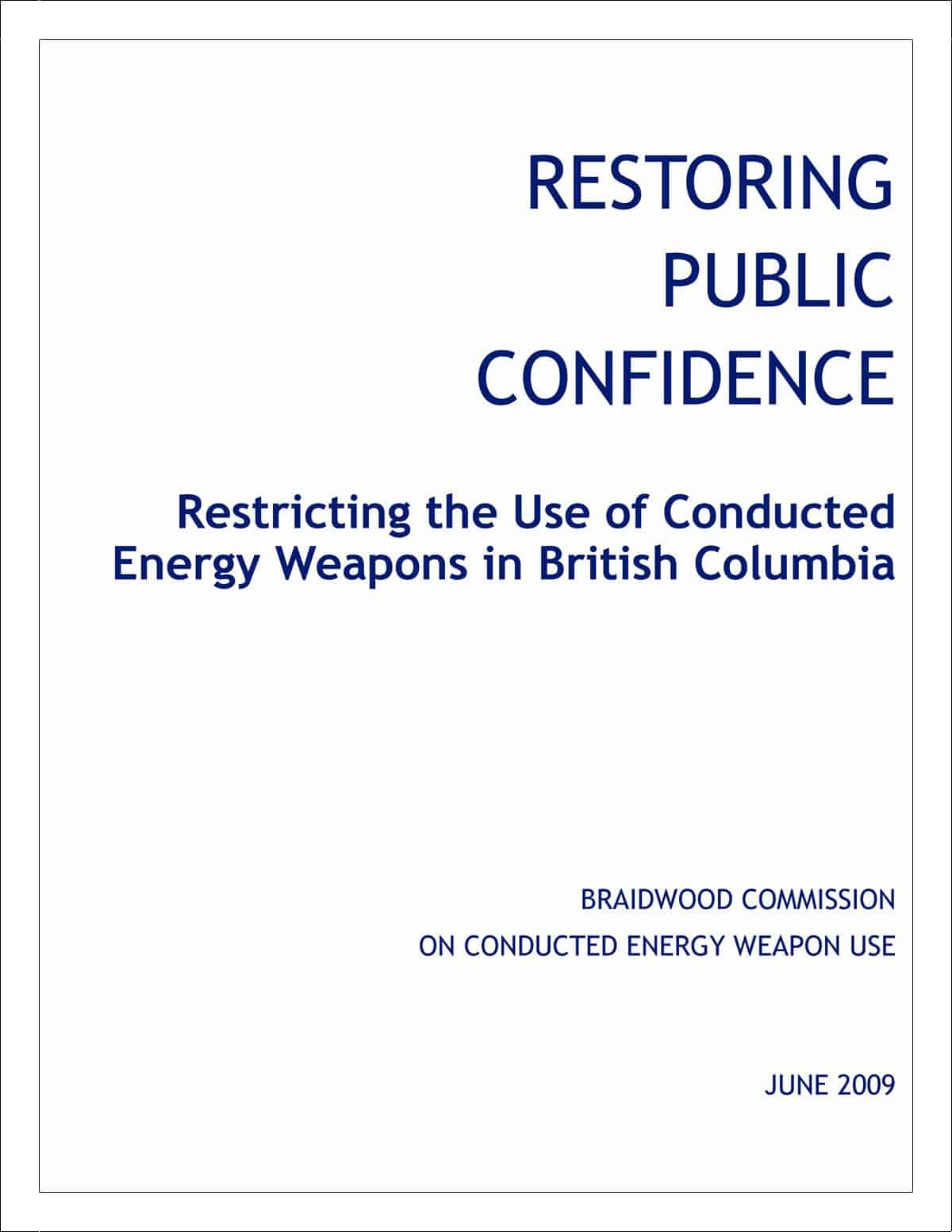
The Braidwood inquiry report into the use of energy weapons (tasers) is readily available on the internet.  Regular readers of SafetyAtWorkBlog would know that I consider tasers to be a item of personal protective equipment (PPE) for enforcement officers.

Phase1Report-2009-06-18 coverDetermining whether PPE is the most appropriate hazard control measure usually involves the application of the Hierarchy of Controls. The hierarchy is not applicable for all workplace hazards, particularly in the control of psychosocial hazards, but it’s a good place to start.

While reading the executive summary of Canada’s Braidwood report, one part in particular reminded me of the hierarchy – page 17.

Although the definitions for “assaultive behaviour” in both use-of-force continuums can be traced back to the Criminal Code’s language for common assault, they also justify use of the weapon when there has been only an attempted common assault, and even when no criminal offence has been committed.  I concluded that the subject behaviour threshold should be met when the subject is causing bodily harm or the officer is satisfied, on reasonable grounds, that the subject’s behaviour will imminently cause bodily harm.  Even then, an officer should not deploy the weapon unless satisfied, on reasonable grounds, that no lesser force option would be effective, and de-escalation and/or crisis intervention techniques would not be effective.

Let’s see if the hierarchy can apply.

Can the subject behaviour be eliminated? – No

Substitution doesn’t seem relevant.

Can we engineer out the threatening behaviour? – Barriers, shields… perhaps but the presence of these items may also inflame the behaviour, increasing the hazard.

Can administrative controls be applied to the hazard? Unlikely, unless the subject was cooperative or able to accept instruction or read signs, in which case, the hazard may not exist.

That leaves PPE, in this case a Taser.

The report places a considerable number of criteria that the enforcement officer must apply prior to using the taser and these should be considered administrative controls but as these apply to the enforcement officer and not the subject, they would not come under the hierarchy of controls.

I welcome readers comments on this rumination on Tasers as PPE, and/or the application of the Hierarchy of Controls to a police situation.

Kevin Jones

I’m left handed. Am I safe?

Recently a New Zealand OHS discussion forum carried a request for people to participate in research to determine whether “handedness” – whether one was left- or right-handed – could be a contributory factor in being injured at work.

The survey period has closed. Robyn Parkin, the researcher, and SafetyAtWorkBlog agreed not to post about the research until now, as Robyn wanted to survey New Zealanders.  Robyn describes her research project as looking at

“…whether New Zealand companies consider handedness as a potential contributing factor for accidents, and if so, what size companies are more likely to consider this factor”

Robyn is concerned that the design of workplaces, workstations and plant may not have considered the way a left-handed person, for instance, may operate a machine, or whether the emergency stop can only be reached with one’s right hand.

Left-handedness exists in around 10% of the population and there are many OHS or community designs that accommodate the needs a similar small minority.  As with many other reseacrh projects, Robyn’s investigation into the potential role of handedness at work causes all of us to look at our own workplaces from a fresh perspective.  And that has got to be good.

Robyn is happy to discuss her research with others by email.

Kevin Jones

The importance of independent advice at Board level

The recent court decision by Judge Gzell on the previous directors of James Hardie Industries generated considerable media attention in Australia for many reasons; a primary reason is that the company is perceived as making its profits at the cost of its employees’ health.  The social and corporate cost of inadequate workplace and product safety management is now clear to everyone, even public policy makers.

Another area of attention has come from how Judge Gzell’s decision has affected the operation of company boards and the roles of directors.  This is hugely important to the big end of town but the rules apply to boards big and small.  In August 2009 Regnan (Governance Engagement & Research Pty Ltd) identified three major points from Gzell’s decision; the third is the one that is most broadly relevant.

“Non‐Executive Directors – Today more than ever, investors need competent directors from diverse backgrounds, and this case highlights the critical role non‐executive directors play in overseeing and interrogating company management.  While the facts of the James Hardie case are very specific and do not create additional responsibilities for directors, it does underscore the value at risk when non‐executives fail to perform their role and highlights the role of independent directors to satisfy themselves through the taking of advice wholly independent of management.” [my emphasis]

The need for independent advice is regularly identified as an important element of effective risk management for all industry and professional sectors.  A board of “yes-men” can do a disservice to an organisation in a very short time.

The OHS professional often seeks a “devil’s advocate” role at senior management level yet to achieve that level of influence one often has to “sell one’s soul to the devil”.  It may be possible to be an independent director who holds strong OHS opinions but one would never achieve such a position unless one could demonstrate business acumen, and business acumen often requires the dilution of principles.

The environmental movement has shown one pathway to corporate influence but it is hard to identify an environmental advocate who has achieved corporate influence while maintaining a grass-roots credibility.  Similarly, at some point in the OHS professional’s career it is necessary to choose between the ideology from which progression has come and the career progression that requires a reinterpretation of that ideology into the corporate mould.

Is it possible to represent core OHS principles at board level without “joining the darkside”?

Kevin Jones

Concatenate Web Development
© Designed and developed by Concatenate Aust Pty Ltd