“reasonably practicable” reduces workers to a cash value

Legal interpretations dominate occupational health and safety (OHS). Understandably, if OHS is only determined by laws, but if the safety of workers is a moral imperative to you, the law is less significant. This latter perspective is rarely voiced, and one of the most important elements of OHS law is compliance “as far as is reasonably practicable” (ASFAIRP). ASFAIRP makes business sense but not necessarily safety sense, especially when one is dealing with the recent phenomenon of work-related mental health.

Some of the most powerful discussions on ASFAIRP and its place in providing safe and healthy workplaces occurred over a decade ago. However, the issue still resonates, and its perspective deserves continuous consideration.

Subscribe to SafetyAtWorkBlog to continue reading.
Subscribe Help
Already a member? Log in here

New workplace mental health info but no new strategy

On May 20, 2021, Australia’s Work Health and Safety (WHS) Ministers to discuss a range of occupational health and safety (OHS) matters. One matter will be the inclusion of a specific requirement on employers that, according to the Australian Council of Trade Unions (ACTU):

“…. would finally require employers to identify and address risks to mental health, in the same way, they are required to with risks to physical health.”

What the ACTU fails to make clear is why this regulatory change is required when the duty to provide a physically and psychologically safe and healthy workplace already exists in the current OHS/WHS laws in Australia.

The ACTU does, however, with the help of the Australia Institute and Centre for Future Work, provide more data on work-related mental health. The union movement is one of the few voices that acknowledge the structural elements of OHS but fails to consider any options other than regulation and, with a federal conservative government in power, it is unlikely to receive an attentive audience.

Subscribe to SafetyAtWorkBlog to continue reading.
Subscribe Help
Already a member? Log in here

OHS needs to get a seat at the ESG table

There has always been an overlap between environmental safety and occupational health and safety (OHS). This has happened not because of any particular similarity between the two disciplines but rather because of company executives’ duties, responsibilities, and accountabilities.

A recent report produced through the Centre for Policy Development (CPD) says this about climate change responses:

“Care needs to be taken to ensure that climate-related targets and analysis are rigorous, underpinned by appropriate governance, strategy and action, reflected in financial statements as required.”

Replace “climate” with “OHS”, and the overlap is clear. This is particularly important at this time when Australia is preparing its next national OHS strategy.

Subscribe to SafetyAtWorkBlog to continue reading.
Subscribe Help
Already a member? Log in here

Prevention is better than cure

The Hazelwood Mine Fire was a public health tragedy with an occupational context beyond the prosecution by WorkSafe Victoria. A clear example of the workplace risks was the fire-fighting efforts and the subsequent health impacts of David Briggs. According to a media release from the Maurice Blackburn law firm, Briggs had his successful WorkCover claim upheld by the Victorian Supreme Court last week.

Briggs has been mentioned several times in this blog’s coverage of the Hazelwood Mine Fire Inquiry and the writing of Tom Doig on the catastrophe. His case should cause some very uncomfortable questions.

Subscribe to SafetyAtWorkBlog to continue reading.
Subscribe Help
Already a member? Log in here

International perspective on bullying and harassment

In April 2021 the International Association on Workplace Bullying and Harassment conducted its 2002 conference online. The conference was enlightening for its inclusivity.

Many Western countries categorise work-related mental health as if they have minimal overlap. Workplace bullying is often seen as its own discipline with its own guidances, analyses and supporting industries. This can be convenient and has evolved from a reactive and often shallow response from Government.

This structure was acknowledged at the conference but many of the presentations ignored it and spoke about worker health, safety and welfare in the broadest terms.

The conference also balanced detailed local research with broad global contexts. This is the first of a series of articles based on presentations at the conference

Subscribe to SafetyAtWorkBlog to continue reading.
Subscribe Help
Already a member? Log in here

The hill that OHS needs to climb for respectability remains a mountain

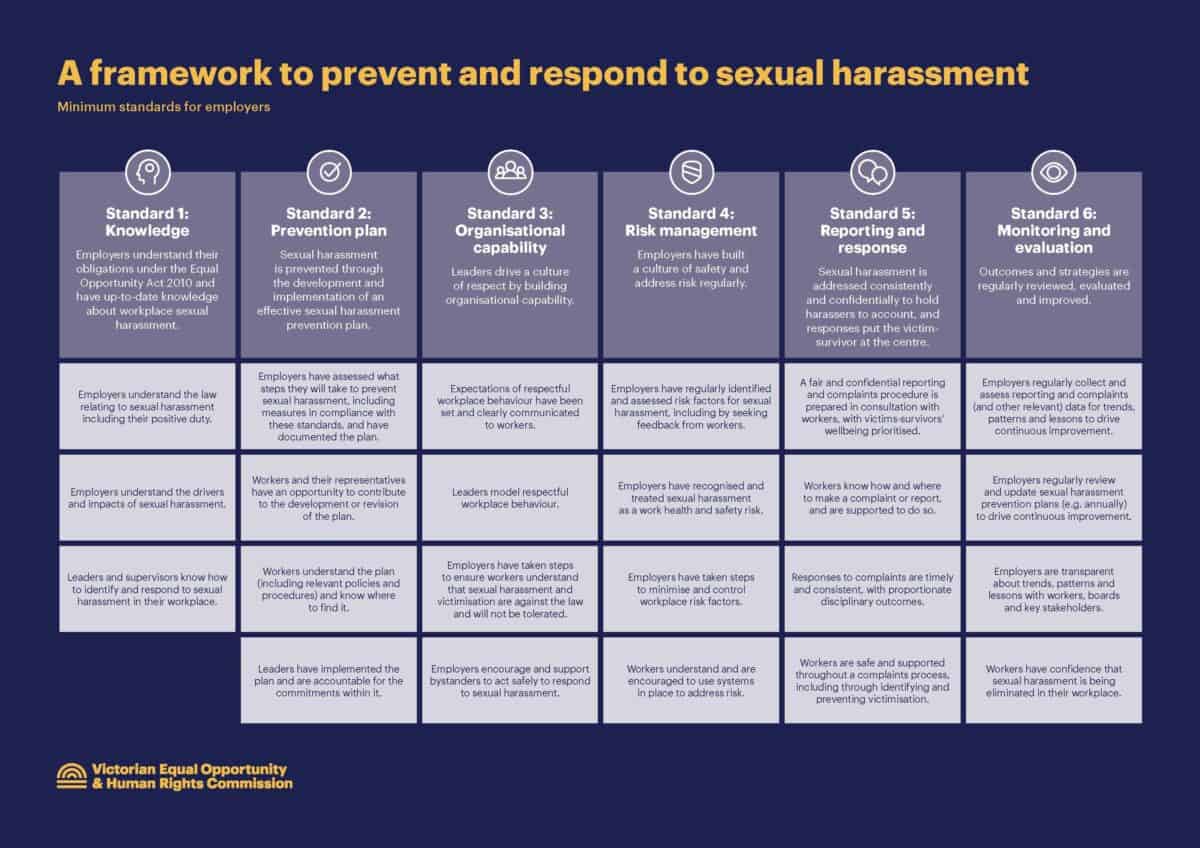
The current Australian debate about sexual harassment at work illustrates the forces ranged against occupational health and safety (OHS) being seen as a legitimate approach to preventing psychological harm. Entrenched Industrial Relations perspectives appear to be the biggest barrier. Such barriers are not always intentional and have evolved over years and decades as cultures and ideologies do. Some of the recent media coverage on the release of the Federal Government’s response to the report of the 2020 National Inquiry into Sexual Harassment in Australian Workplaces illustrates the dominance of industrial relations thinking – part of the reason Sex Discrimination Commissioner Kate Jenkins has described elements of the government’s response as a missed opportunity.

The OHS profession must start to overtly tackle each of these dominant perspectives.

Subscribe to SafetyAtWorkBlog to continue reading.
Subscribe Help
Already a member? Log in here

Should we feel safe or be safe?

A major impediment to establishing safe and healthy workplaces is that there is a widespread expectation for everyone to feel safe at work. Yet, the legislative occupational health and safety (OHS) obligation on employers and workers is for them to be safe. It is a significant difference, for the former addresses perception, and the latter requires action.

Recently the Australian Government responded to a major inquiry into sexual harassment at work. Attorney-General Michaelia Cash, launching the official response with Prime Minister Scott Morrison, said:

“In terms of sexual harassment in the workplace, I think we’d all agree – in fact, it needs to be just a basic fundamental – everybody has the right to feel safe in the workplace.”

Subscribe to SafetyAtWorkBlog to continue reading.
Subscribe Help
Already a member? Log in here
Concatenate Web Development
© Designed and developed by Concatenate Aust Pty Ltd