
It is a common response by businesses and governments to respond to an incident or an issue by imposing a new level of control. Over time, this leads to confusion, clutter and a perception that action is more complex than it could be. Responses to work-related suicide are a good example of this and the recent announcement by the Australian Government of a permanent National Commission into veteran suicides is the latest, but it needs to be more than what has gone before.
Category: risk
What seems odd in China may/should become normal elsewhere
The occupational health and safety (OHS) risks associated with the COVID19 induced working situations are well established although still not easily or readily controlled. Some countries are starting to emerge from the enforced lockdowns and isolations and need to restart work. This emergence will be faced by almost all countries to differing extents and OHS and infection control will be integral to how this occurs.
Recently NPR’s Ailsa Chang spoke with Eva Dou of The Washington Post about the re-emergence of Foxconn in China, a company famous for manufacturing iPhones and for a spate of work-related suicides
Business COVID19 survey could have been clearer and more useful
On April 14, 2020, the Australian Industry Group revealed, in a media release, some details of how its members were responding to the COVID19 pandemic. The survey was described as economic research and, as occupational health and safety (OHS) is mentioned, SafetyAtWorkBlog asked from more details on the OHS-related findings.
The survey found:
“There has been a steep rise in workload as a result of new OH&S policies and procedures around hygiene (34%) and working from home (25%).”
“Employees are also anxious, with 31% of businesses saying there is increased anxiety levels within their workforce.”
Employer rights and OHS
On March 24, 2020, Michael Bradley, a lawyer with Marque Lawyers, wrote about the pressures on employers presented by COVID19 and government restrictions. Bradley touched on occupational health and safety (OHS) but needed to go deeper.
The gig tightrope over a receding tide
The Australia Institute conducted a webinar on Australia’s economic future during and after the COVID19 pandemic. Former Federal Treasurer Wayne Swan and economist Richard Denniss were the featured speakers. Two particular issues were of relevance to occupational health and safety (OHS) – the future of the gig economy and re-industrialisation.
Possible replacements for Safe Work Method Statements
Could improving the situational awareness of workers replace Safe Work Method Statements?
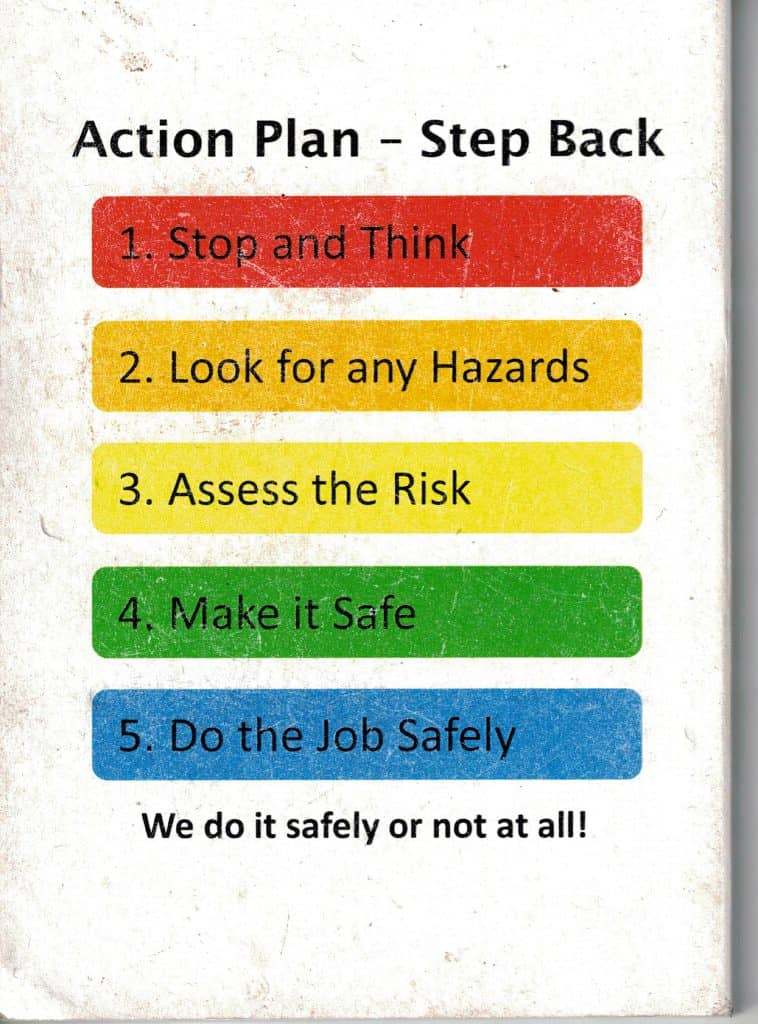
Many Australian occupational health and safety (OHS) professionals rally against the dominance of Safe Work Method Statements (SWMS). The application of SWMS beyond the legislated high-risk construction work parameters increases the amount of safety clutter and misrepresents OHS as being able to be satisfied by a, predominantly, tick-and-flick exercise. But critics of SWMS are rarely pushed on what, if anything, should replace SWMS? SafetyAtWorkBlog asked some experts and looked closer at the issue.
COVID19 distraction increases OHS risks
Safeguard‘s Peter Bateman seems to have summarised the role of occupational health and safety (OHS) in this time of COVID19 well in his March/April Editorial. Why are OHS advisors still needed?