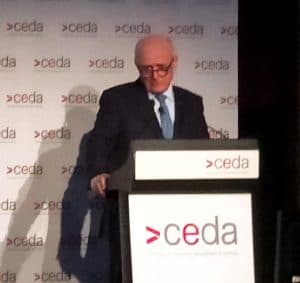
Bill Shorten reflects on the Esso Longford disaster

Tonight, SafetyAtWorkBlog will be attending the launch of a new book that includes personal stories about the 1998 Esso Longford explosionWorkers’ Inferno.  The book is being released on the 2oth anniversary of the explosion that killed two workers, injured many others, disrupted gas supplies to the State of Victoria, resulted in a then-record fine for occupational health and safety (OHS) breaches and generated a Royal Commission.  It is also, perhaps, the best example of a company trying to blame the worker for a major incident.

The Federal Opposition leader, Bill Shorten, was an official of the Australian Workers Union at the time and today he published an opinion piece Continue reading “Bill Shorten reflects on the Esso Longford disaster”

A bad day for ACCI at the Senate Inquiry into Industrial Deaths

Jennifer Low, Associate Director of the Australian Chamber of Commerce and Industry addressed the Senate Inquiry into Industrial Deaths in Perth on August 30 2018.  Much of her presentation would be familiar to occupational health and safety professionals as it reflects the ideological position that the ACCI has put to countless inquiries over almost 20 years.  It is fair to say that the ACCI did not have a good day at the Inquiry.

Low’s presentation commenced with a restating of the general commitments to safety and that the ACCI and its members hold the importance of OHS as a “fundamental belief”. This was followed up with

“Our employer network feels strongly that the prevention for workplace incidents, injuries and fatalities is a shared responsibility.” (page 1, emphasis added)

This

Subscribe to SafetyAtWorkBlog to continue reading.
Subscribe Help
Already a member? Log in here

Safety Culture debates could be psychologically unsafe


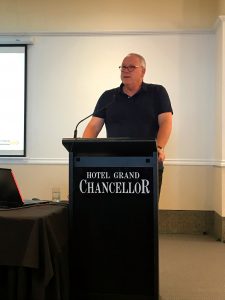
Tristan Casey and Andrew Hopkins speaking at SafetyConnect conference

Professor Andrew Hopkins is one of Australia’s most prominent critics of how the term “Safety Culture” is used by the occupational health and safety (OHS) profession and businesses generally.  Last week, Dr Tristan Casey followed Hopkins’ presentation at a Brisbane safety conference and was put on the spot as his presentation was not really compatible.  This happens at conferences and diversity of thought should be applauded but it is difficult for the second speaker and can be confusing for the audience.

Hopkins addressed seven propositions, each of which, challenge the management of OHS

Subscribe to SafetyAtWorkBlog to continue reading.
Subscribe Help
Already a member? Log in here

Power in simplicity – SafetyCONNECT

Twelve months after the NSCA Foundation resurrected its occupational health and safety (OHS) conference program, SafetyCONNECT has settled into to a comfortable niche.  This year’s conference, in an established Brisbane location has attracted around 140 delegates and almost 20 exhibitors.  Perhaps most importantly is they have been able to attract entertaining and challenging local and international speakers. Continue reading “Power in simplicity – SafetyCONNECT”

The banks are having their culture changed for them and OHS needs to watch and learn

Occupational health and safety (OHS) is easy.  Change is hard.  OHS can identify  workplace hazards and risks but it is the employer or business owner or Person Conducting Business or Undertaking (PCBU) who needs to make the decision to change. All of this activity occurs within, and due to, the culture of each workplace and work location.  OHS lives within, and affects, each company’s organisational culture but a safety subculture is almost invisible, so it is worth looking at the broader organisational culture and there is no better show, at the moment in Australia, than The Royal Commission into Misconduct in the Banking, Superannuation and Financial Services Industry (the Banking Royal Commission).

Public submissions are littered with references to culture but it is worth looking more closely at what one of the corporate financial regulators said in a submission in April 2018.  The Australian Securities and Investment Commission (ASIC) wrote:

Subscribe to SafetyAtWorkBlog to continue reading.
Subscribe Help
Already a member? Log in here

People Risk = OHS for Human Resource professionals

The Governance Institute of Australia hosted a discussion about “Corporate culture and people risk — lessons from the Royal Commission”.  The seminar was worthwhile attending but there was also moments of discomfort.

The reality was that The Royal Commission into Misconduct in the Banking, Superannuation and Financial Services Industry was not discussed in any great detail as it was treated as a ghost hovering behind the discussion but not a scary ghost, almost a ghost of embarrassment.

And it seems that “People Risk” is what the Human Resource (HR) profession calls occupational health and safety (OHS) when it can’t bring itself to say occupational health and safety.

Subscribe to SafetyAtWorkBlog to continue reading.
Subscribe Help
Already a member? Log in here

It’s not about doing the least possible but about doing the best

It is almost impossible to underestimate the impact that Australia’s Royal Commission into Misconduct in the Banking, Superannuation
and Financial Services Industry is already having on the corporate cultures of Australian businesses.  The effective management of occupational health and safety (OHS) relies on effective consultation, trust and respect just as does any other element in a company’s organisational culture.

The media on August 13 2018 has been

Subscribe to SafetyAtWorkBlog to continue reading.
Subscribe Help
Already a member? Log in here
Concatenate Web Development
© Designed and developed by Concatenate Aust Pty Ltd