The 21st World Congress on Safety and Health in Singapore has closed. The next will be in 2020 in Toronto Canada. But before the closing ceremony the range of symposia continued. One discussed best practice in occupational health and safety (OHS) and I had the chance to speak about the downside of Zero Harm. The…
Category: safety culture
New OHS management elements in ISO45001
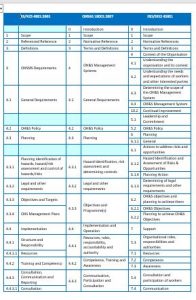
Following yesterday’s article on the impending international occupational health and safety (OHS) management Standard, ISO45001, some readers have asked for more details. David Solomon, the Head of the Australian International Delegation of ISO45001 provided a table that compares the elements of ISO45001 with AS4801 and OHSAS18001.
According to Solomon there are several elements that are new to ISO45001, ie. not included overtly in AS4801:
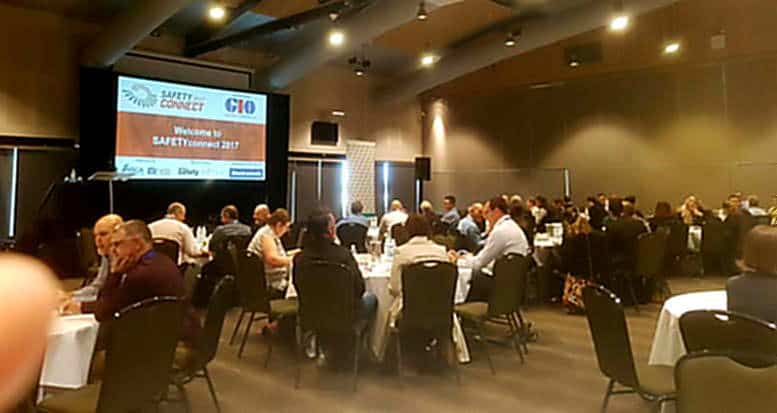
SafetyConnect conference connects
This week’s SAFETYconnect conference hosted by the NSCA Foundation in Sydney had a very good strike rate of interesting speakers on its first day. Only one speaker missed the safety mark – it was as if they had been handed a marketing presentation instead of safety and, regardless of the safety audience, give it anyway.
This conference was notable for the way that the ‘safety differently’/Safety II movement has moved into mainstream safety management. The most obvious example of this was a presentation by QantasLink.
Reviewing fundamentals is part of cultural change
The most recent stuff-up by the Commonwealth Bank of Australia has strengthened calls for a Royal Commission into Australia’s finance and banking sector. This is of interest to workplace safety professionals because it contains the liveliest current discussion about corporate cultures – how flawed ones are supposedly behind the errors and how proactive ones are supposed to be the solution.
Occurring at the same time is a growing social movement that is recalibrating occupational health and safety (OHS) to see workers as humans of value rather than units of labour.
Paralleling all of this is increased attention on the sociology and psychology of work, perhaps linked to a decline in the neoliberalism of the past forty years. As Australia enters the time of OHS conferences and Work Safe Month in October, it may be worth considering a couple of fundamental questions, such as absolute safety, AFAIRP, and invisible hazards.
What First Aid can say about a workplace culture
The Australian Financial Review for 31 July 2017 included an article (paywalled) reporting on unfair dismissal proceedings involving a first aid officer, Audrey Gatt, at Crown Resort‘s casino and entertainment complex in Melbourne, Australia. The article includes allegations by Gatt that First Aid was withheld from injured workers and patrons.
Important research into domestic violence strengthens OHS context
It is useful to consider corporate wellness and mental wellbeing programs in the context of work-related suicides. By considering what many consider a worst-case scenario, the effectiveness of these programs can be tested. The increased attention on domestic violence and its relationship to work over the last few years in Australia can play a similar role. New research on “intimate partner violence” provides mental health scenarios for which safety professionals need to be prepared. Continue reading “Important research into domestic violence strengthens OHS context”
The challenges of Todd Conklin
Earlier this month SafetyAtWorkBlog published an article based on an anecdote by Todd Conklin about a glove. There was much more that Conklin shared at the SafeGuard conference in New Zealand. Below are several of his slides/aphorisms/questions that may challenge the way you think about managing occupational health and safety (OHS) in your workplace.