
The bookshops I visit often have two sections of books marked Business and Management. These categories are interchangeable for occupational health and safety (OHS) purposes, but the shopowners and/or publishers differentiate. Both categories have self-help books – leadership varieties, how to be a better manager, how to make lots of money really quickly (without apparently anyone being exploited!!). Books discussing mental health are in both categories, and three, in particular, seem to show the potential for improvement in mental health and the self-imposed limitations to achieving this.
Category: safety
Better mental health context image
[Originally published on December 1, 2020]
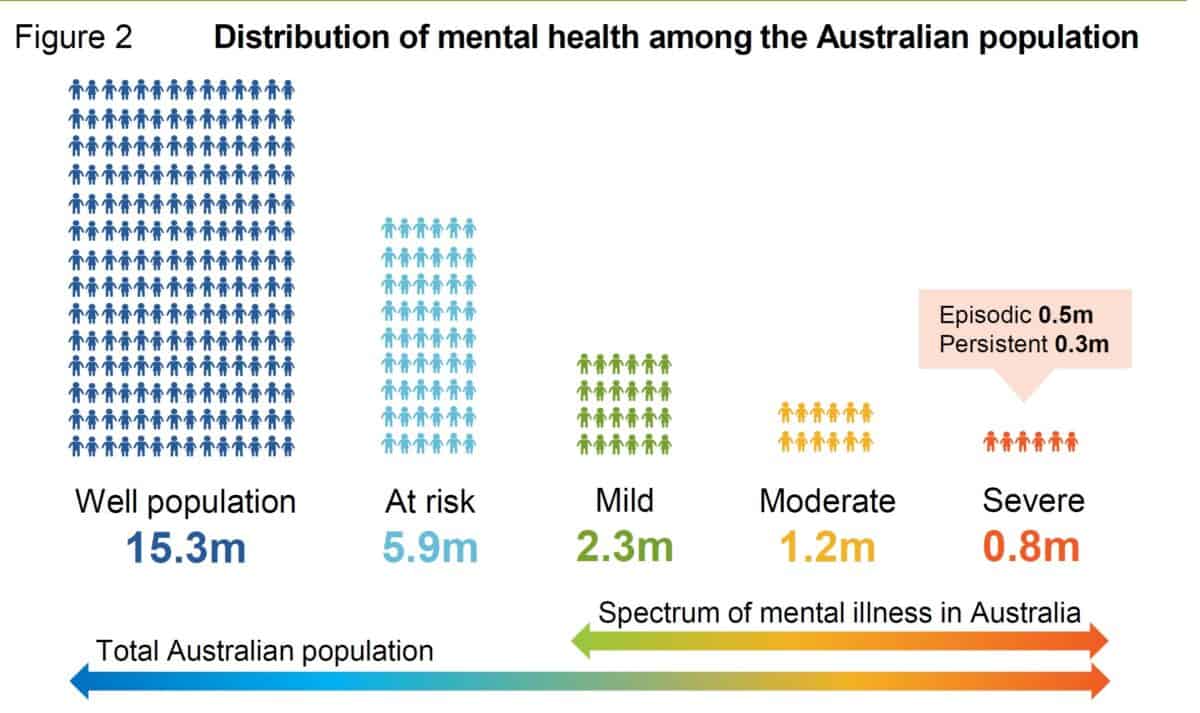
Last week, I wrote about the misrepresentation of mental health in a common graphic about the “mental health spectrum”. If only I had had time to read the Productivity Commission’s report into its inquiry on mental health. On page 10 is this image which provides a more accurate context for mental health in Australia.
Continue reading “Better mental health context image”
Resilience training is not dead, but it is coughing up blood
[This article was submitted to The Age (and elsewhere) as a soft counter to so many workplace articles about health and safety that never include content from an occupational health and safety (OHS) specialist. It was never used, even though rewrites were requested.
So it gets used here and in support of this curious month of October where, in Australia, there are two separate monthly themes – Mental Health and Work Health and Safety. That these themes continue to be separate says heaps about the culture in each of these sectors]
Australian jurisdictions are amending their workplace health and safety (WHS) legislation to specify that the unavoidable duties and obligations of employers must now include the psychological health of their workers and not just physical health. These reasonable and long overdue moves are manifesting in new laws, and new guidances supported by new International Management Standards. The kicker in these changes is that, at least in Victoria, employers will no longer be able to rely solely on awareness training or resilience training to manage workplace mental health. This position could, and should, challenge traditional mental health trainers and lobbyists to recalibrate their workplace strategies.
Continue reading “Resilience training is not dead, but it is coughing up blood”
HWSA on psychological health at work
The Heads of Workplace Safety Authorities (HWSA) is a strange concoction. It operates separately from Safe Work Australia but has some overlapping memberships. According to SWA, HWSA:
“is made up of representatives from work health and safety regulators across Australia and New Zealand. They work together to promote and implement best practice in work health and safety in the areas of policy and legislative matters, education and enforcement. Our CEO attends HWSA meetings as an observer.”
In March this year, SafetyAtWorkBlog put some questions to HWSA about psychological risks in the workplace, a topic that has heated up over the last couple of years. The intention was to obtain an idea about HWSA’s “best practice” perspective. The responses were okay but limited, as one can see below.

Australia’s mental health industry is in transition
Dr Ian Hickie is a well-respected and knowledgeable advocate of mental health. His CV shows extensive experience in this area since the 1980s. Recently Dr Hickie spoke to the Australian Financial Review about EY’s announcement of a review into its workplace culture following the death by suicide of one of EY’s employees at their offices. The article (paywalled) seems to show a change in traditional approaches to mental health in workplaces, but the change needs to be much more significant and broader.
Pressure on local government over procurement and OHS
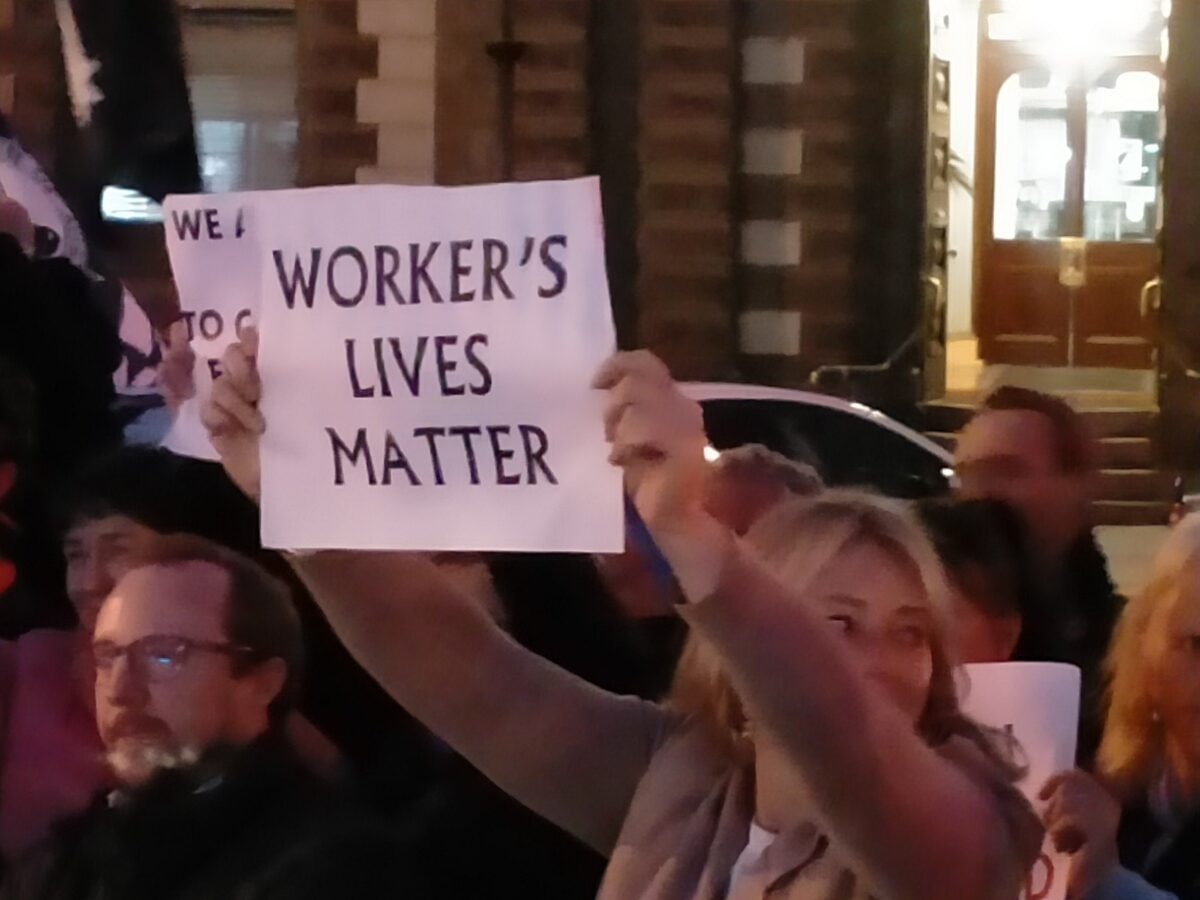
On a chilly night in Ballarat, over a hundred people gathered outside the Town Hall, within which the City Council was meeting, to let the Council know that the awarding of millions of dollars of ratepayers’ money to a local company that admitted to breaching occupational health and safety (OHS) laws and that led to the deaths of two local workers was not acceptable.
The event seem coordinated by the local Trades Hall Council, for the usual inflatable rat and fat cat were next to the ute, which was blasting out protest songs. Almost all the speakers were trade unionists, although one was Andy Meddick from the Animal Justice Party. The protest may not have achieved the changes that many speakers called for, but as is the case with these types of events, Council has given some ground with a likely review of the OHS procurement criteria.

60th Anniversary Central Safety Group Lunch
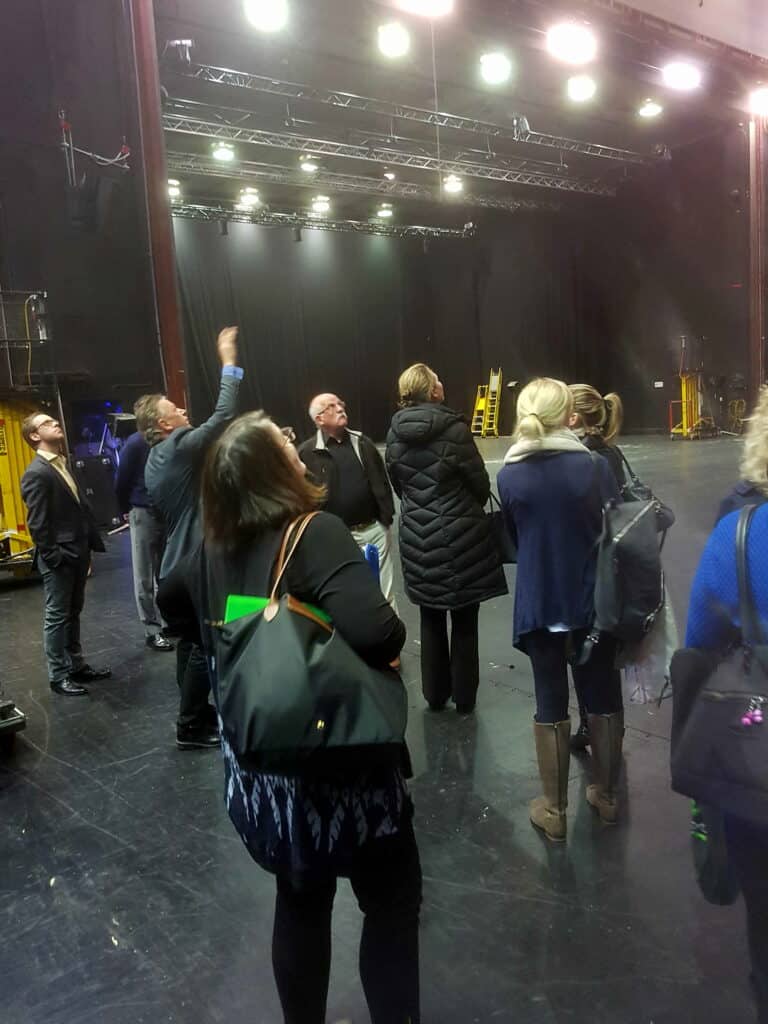
In the olden days, PC (Pre-Covid), a group of occupational health and safety (OHS) professionals, advocates, and the curious, would meet on the second Tuesday of each month in-person in various locations in and around the City of Melbourne to connect, chat, complain, sympathise and learn about OHS. The Central Safety Group also held annual visits to infrastructure projects under construction, tea factories, TV stations (pictured above), Arts Centres (pictured below), brothels (no pictures taken) and other workplaces to better understand the complexity of managing people’s safety and health.
In the middle of Work Health and Safety Month, CSG is holding a special celebratory lunch in the Victorian Parliament House Dining Room on October 14. (Book HERE) This event is open to anyone interested in all facets of OHS and will have special guest speakers, including:
- David Caple AM – world-renowned Ergonomist,
- Dr Narelle Beer – Executive Director of WorkSafe Victoria, and
- Barry Naismith – OHS specialist, writer and local OHS historian
The Central Safety Group has been operating continuously for 60 years, making friends, making connections, rendering assistance and, for every one of those meetings, hearing directly from local and international experts. The CSG is open to anyone on a casual basis, but, of course, a (low-cost) membership is encouraged.