Ardent Leisure charged with safety breaches

The big occupational health and safety (OHS) news in Australia on 21 July 2020 was the prosecution of Dreamworld‘s parent company, Ardent Leisure, for breaches of the Work Health and Safety legislation over the deaths of four customers who were riding the Thunder River Rapids Ride four years ago. The prosecution has been expected for some time and is likely to take many months. More details will emerge as they did in the Coronial Inquest that slammed Dreamworld’s safety reputation.

In this article, I look specifically at the statement that Ardent Leisure sent to the Australian Stock Exchange (ASX) as it is in an interesting example of mea culpa, OHS under-investment and damage control.

Subscribe to SafetyAtWorkBlog to continue reading.
Subscribe Help
Already a member? Log in here

Important gig economy report unlikely to affect change

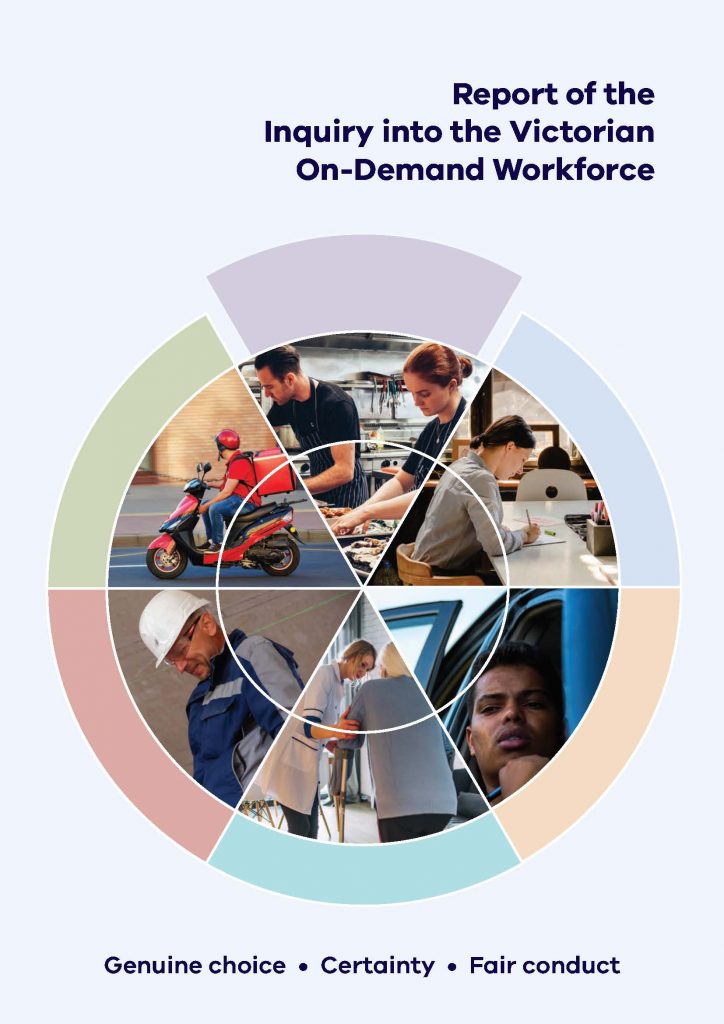
Then current coronavirus pandemic has disrupted workplaces around the world with those most effected being low socioeconomic sectors, including those working on a casual basis or in precarious, gig occupations. Last week the Victorian Government received the final report from its Inquiry into the Victorian On-Demand Workforce. This report is likely to be crucial in assisting the government to develop a safe and healthy strategy for the post-pandemic world of work.


Subscribe to SafetyAtWorkBlog to continue reading.
Subscribe Help
Already a member? Log in here

Are OHS laws part of the safety clutter?

A major barrier to change is that Australia, as a whole, has never subjected its occupational health and safety (OHS) laws to a detailed analysis to determine whether the legislation and the supportive documentation works. To be clearer, Australia has never subjected its laws to a “safety clutter” analysis. No one seems to have tried to determine if the laws have any positive benefit on operational safety?

Subscribe to SafetyAtWorkBlog to continue reading.
Subscribe Help
Already a member? Log in here

“Justice Tempered” – ethics and abuse

Recently the Finance Sector Union (FSU) released a small study on ethics and capitalism. The report illustrates how poor corporate ethics and greed created a disregard for the mental health of the finance industry’s workers as well as the financial and mental health of its customers.

The report – “Justice Tempered – How the finance sector’s captivity to capitalist ethics violates workers’ ethical integrity and silences their claims for justice” – was written by John Bottomley, Brendan Byrne and John Flett. Although it is based on detailed interviews with only eight finance sector workers, the authors use these conversations as a catalyst for broader discussions of ethics with extensive cross referencing of relevant, books, publications and, especially, the findings and report of the Royal Commission into Misconduct in the Banking, Superannuation and Financial Services Industry.

Subscribe to SafetyAtWorkBlog to continue reading.
Subscribe Help
Already a member? Log in here

We’ve got Industrial Manslaughter laws, now what?

So, Victoria now has Industrial Manslaughter laws. Now what? Within days of the activation of these laws a worker died at the Thales worksite in Bendigo. This location is covered by the Federal Work Health and Safety laws, but this has not stopped social media from mentioning Industrial Manslaughter. It seems now that every work-related death will be assessed through the IM lens. It may be that the threat of jail should always have been the starting point for occupational health and safety (OHS) penalties and investigations but initial responses to the IM laws have been mixed, and some seem to be more interested in what, in the past, has been a sideline to the IM discussion – deaths, in work vehicles, suicides and industrial illness.

Subscribe to SafetyAtWorkBlog to continue reading.
Subscribe Help
Already a member? Log in here

Old v New, or is it just Thinking?

Sacunas Old v New

Business management, including safety management, talks about “step changes”, new paradigms and a lot of jargon.  Part of the use of this language is an attempt to manage progress and change in small comprehensible chunks.  But it can also expose business owners to short-term fads, giving rise to frustration and cynicism about occupational health and safety (OHS).

One example of the step change mindset was on display several years ago in LinkedIn where the image above was posted, sadly, with no context. The before/after structure of this graphic is often used in the management of workplace health and safety.

Subscribe to SafetyAtWorkBlog to continue reading.
Subscribe Help
Already a member? Log in here

Two steps forward, one backward

The latest media release from the Australian Institute of Health and Safety (AIHS) shows a remarkable maturity and a newfound ability to be inclusive and topical.

The AIHS, in conjunction with several other occupational health and safety (OHS) related organisations, developed and released an important guidance on respiratory protection masks for the work environment. Not only is this super topical but the effort has the support of the Australian Council of Trade Unions (ACTU), an organisation that, historically, has been reluctant to support OHS initiatives from outside trade union resources.

The primary purpose of the media release is to push the Federal Government for “the urgent establishment of a register for approved respirators (aka face masks)”, but this may be too simplistic and too narrow a focus especially when the issue of face masks is a critical part of the Governments’ plans to “reopen” the economy.

Subscribe to SafetyAtWorkBlog to continue reading.
Subscribe Help
Already a member? Log in here
Concatenate Web Development
© Designed and developed by Concatenate Aust Pty Ltd