

The Chartered Institute of Personnel & Development (CIPD) has released an important survey of their members about health and wellbeing at work. Amongst many of the findings is that “Stress continues to be one of the main causes of absence” and that “Heavy workloads remain by far the most common cause of stress-related absence…” So how are CIPD members reducing the heavy workloads? They’re not. 78% of respondents are using Employee Assistance Programs (EAPs) to “identify and reduce stress”. Options like hiring additional staff or reducing the workload do not even chart. OMG!
Category: stress

OHS context in many mainstream news stories, if you look
Occupational health and safety (OHS) is rarely reported on in the mainstream newspapers but every week OHS is there, adding a contect to a scandal or subtext to a public health risk. Last weekend was no different. The Guardian of September 16, 2023 reported on a review of personal relationships by BP, a prison escape, deaths from air pollution, a more relaxed approach to work, shoplifting and customer aggression, and more.

RUOK? needs a refresh
RUOK? Day is held in September each year in Australia. The workplace suicide awareness campaign has been very successful, but over time, I have observed a decline in effectiveness, certainly at the local communication level. It may be a victim of its own success as almost all awareness campaigns struggle to maintain their original freshness. Perhaps it is time for a change. Perhaps that change is being forced upon us.

Burnout is the new Stress
Burnout will continue to be a trend for discussion papers and marketing brochures for some time to come. A recent one, from Udemy Business is a good example of discussion without action. If we were to replace the word “burnout” with “stress”, the paper could easily have been produced over twenty years ago.
Many of the data sources will be familiar – Gartner, Gallup, McKinsey, Deloitte. The Gallup Research included these top five causes of burnout:

There’s more to the Right to Disconnect than just ignoring the boss
The Australian Labor Party (ALP) conference has endorsed the concept of the right-to-disconnect, according to an article in The Australian. Sadly, the reporting on the change has a dismissive tone on what is an attempt to address the increasing costs of mental health at work. Readily accessible and recent survey data on the right-to-disconnect could have been used for a fuller analysis.
Journalist Ewin Hannan wrote:
“..what it means to act like a man and what it means to work safely..”
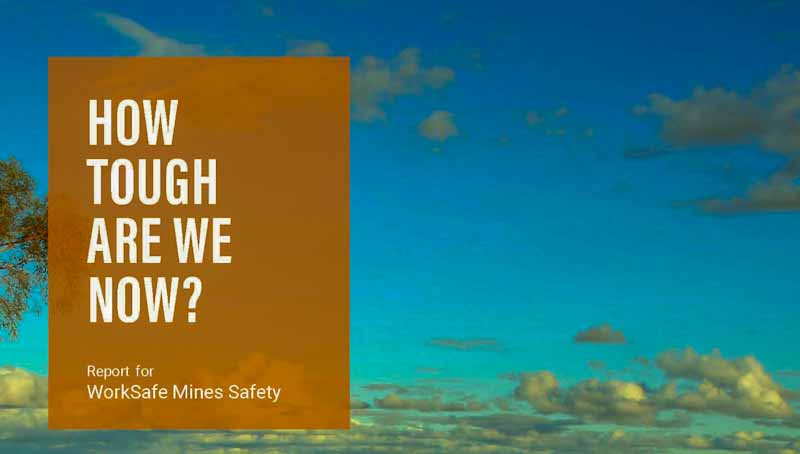
Ten years ago, I was enlightened by a presentation on masculinity and occupational health and safety (OHS) by Dean Laplonge at a safety conference in Canberra. He has continued researching that interconnection, and visiting WA and recently released his latest report written for WorkSafe WA after a series of “roadshows”.
After years of scandals in what has been described as the epitome of toxic masculinity, the West Australian mining industry claims to have changed its culture and created a psychologically safer work environment. Culture-As-Usual was not an option after multiple exposures of work-related suicides, sexual assaults, and harassment uncovered by independent and parliamentary inquiries. Laplonge revisited Western Australia and reported on the progress.
Good book that misses important OHS perspectives
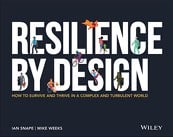
I buy at least one new book related to occupational health and safety (OHS) every week. Yes, I have a big pile of unread or, half-read books. Every now and then, one stands out, and “Resilience by Design” did just that. Initially, it was about the formatting, but then the content grabbed me. It is not a “straight” OHS book, and much of it focuses on individual interventions, but there is enough content to further the OHS discussion about psychosocial hazards and provide insight into the non-OHS perspectives of this growing area of safety management.