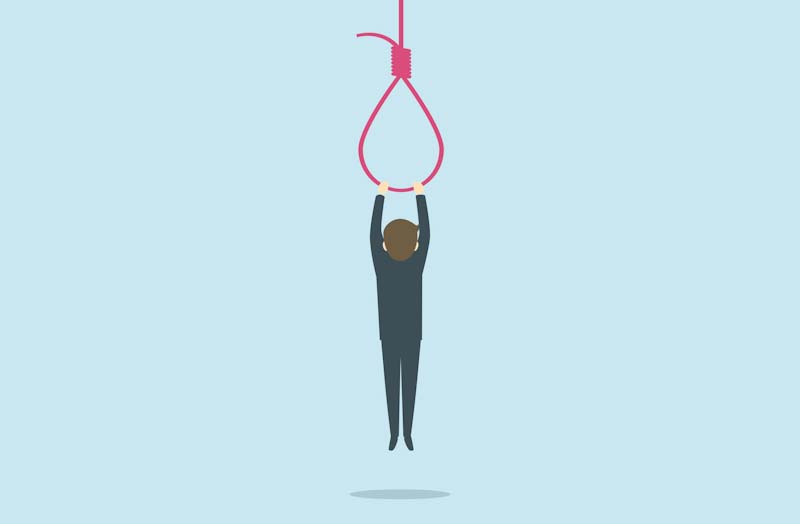
Recently the Victorian Government proposed six-monthly reports on psychologically hazardous incidents from employers to the OHS regulator, WorkSafe. The aim is to improve the pool of data available to the government in order to tailor harm prevention and reduction initiatives and a red tape campaign from employers is expected. These incident summaries are not the same as reporting a Notifiable Incident to WorkSafe but the notifiable incidents categories are overdue for a review and, maybe, an expansion.
Category: stress
Is red tape justified?
One of the interesting features of the Psychological Health regulations proposed by the Victorian Government last month is the requirement for employers to provide regular six-monthly reports on psychological incidents.
The Regulatory Impact Statement (RIS) states that:
“…the proposed regulatory amendments will require employers to keep written records of prevention plans for prescribed psychosocial hazards and impose reporting requirements on medium and large employers.”
page 9
Will workplace psychological regulations work?
Recently the Victorian Government released its proposed Occupational Health and Safety Amendment (Psychological Health) Regulations supported by a 106-page Regulatory Impact Statement (RIS) written by Deloitte Access Economics. Public consultation and submissions are welcome up to the end of March 2022.
These regulations have been promised by the Victorian Government for some time and are likely to be debated in Parliament later in this (election) year. The RIS raises substantial questions, but the Regulations stem from primarily a political decision, so those political promises need to be examined.
This is the first of a series of articles on psychological health and the proposed regulations over the next few days.
If the research is clear, why aren’t employers reacting?
Excessive working hours are harmful. This uncomfortable truth was recently spoken by the Harvard Business Review. The changes to prevent this harm is obvious to most of us involved with health and safety but remains uncomfortable to everyone else.
In an article called “The Research is Clear: Long Hours Backfire for People and for Companies, Sarah Green Carmichael posits three reasons for overwork:
Working Hours and Leadership
The workplace issues of excessive hours, unpaid overtime and the negative mental health and social disruption effects are becoming more commonly discussed but not, necessarily, fixed. A persistent example of these workplace hazards is the sitting of Parliament.
Parliamentarians are not always good examples of leadership and nor are they good managers of their workplace responsibilities, as shown by the response to sexual harassment and alleged assaults in the Federal Parliament House. A less controversial example of their management is the flexible hours applied to the passing of, usually contentious, legislation.
Trade Unions, Cost, Exploitation and Responsibilisation
Trade unions have been the longest and strongest advocates on occupational health and safety (OHS) in Australia. Still, their political influence is falling slower than its declining membership due to structural legacies, of which the tripartite OHS consultation is one. The trade union strategy for OHS was to monetise it so that changes in OHS could be the catalyst for or on which it can piggyback industrial relations (IR) reform. A recent review of the work of Professor Michael Quinlan and a video from United States economist and author Robert Reich illustrates elements of this process.
We know how to prevent burnout but we have little desire to change
Probono Australia is reporting that employee burnout is on the rise. Burnout is increasingly being used as an alternative term for mental ill-health or stress at work. The report on which the writer based their article is not surprising, but the recommendations are. The subheading for the article is:
““Structural and cultural shifts, not wellness initiatives, are needed to address the chronic workplace stress of burnout.”
But the article also pulls together other workplace mental health factors:
“The rise of digitisation has brought with it a need to ‘always be on’ and, with that, employee work-life balance has become harder to maintain. It was this type of ‘24/7 access to employees’ thinking, the study found, that led to burnout.”