Caution. Misery (and Enlightenment) Ahead.

Having been born in the north of England, I enjoy watching movies and TV shows from there, even though I need subtitles sometimes. As a child watching Ken Loach’s film Kes for school, I thought that I could easily have been that kid standing in a cold muddy soccer pitch on an estate not far from our commission house. (I have been told our previous house was demolished because it was in a block of slums) So Loach’s latest film sounded interesting and given that it depicted life in the precarious and “gig” economy, I recently joined the hundreds in the audience at the Melbourne International Film Festival to watch “Sorry We Missed You”.

I really enjoyed the film but found the story very upsetting. It’s taken me almost a week to starting writing this article and the trailer still makes me cry, so I am split on whether to recommend you see the film.

Continue reading “Caution. Misery (and Enlightenment) Ahead.”

What’s the fuss? Stay focused on safety

The debate about quad bike safety has gone global with the United States telling the World Trade Organisation that the imposition of operator protection devices (OPDs) on general quad bikes (those not used for recreation or sport) may be a trade barrier. To some this would appear silly, and the argument has little to do with worker safety, but this action by the US impedes progress on safety.

Recently the Victorian Coroner made findings into the quad bike-related death of 69-year-old farmer Gustaav Walta in September 2017. The finding is not yet publicly available but the story of Walta’s death sounds very familiar.

One evening around 6pm Walta advised his friend that he was putting the sheep away. His friend did not receive the regular phone call the next morning and drove to the property finding a quad bike that had rolled over and Walta’s body in an adjacent paddock. It was determined that Walta had died from severe chest injuries caused by the quad bike incident, that he had been ejected from the bike, the bike rolled over him and he then had tried walking to a neighbour’s property before he collapsed and died.

The chronology in the Findings is not very clear on Walta received his chest injuries but what is clear is that, like so many before, the quad bike had not been fitted with an OPD and that Walta had not been wearing a helmet.

Subscribe to SafetyAtWorkBlog to continue reading.
Subscribe Help
Already a member? Log in here

Long commute times need to be factored into OHS structures

The mainstream media reported on the release of new demographic statistics from the latest HILDA survey (Household, Income and Labour Dynamics in Australia). Most of the attention is on the increasing commuting times to and from work in the urban centres. Traffic is not usually an occupational health and safety (OHS) issue but traffic congestion reduces the effectiveness of our social recuperation and recovery structures and work/life balance initiatives.

Subscribe to SafetyAtWorkBlog to continue reading.
Subscribe Help
Already a member? Log in here

Safety remains a muddle in Australia’s trucking industry

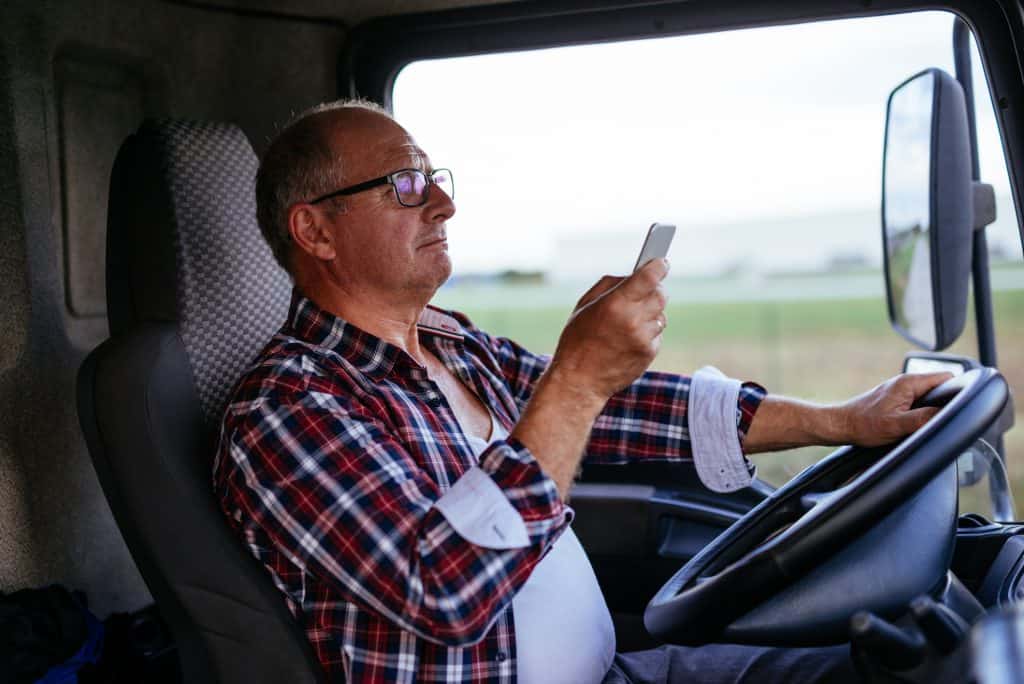
SafetyAtWorkBlog believes the fact that commercial vehicles are also workplaces remains under-utilised in Australia. There are hints that this position is shared by others and that the analysis of occupational health and safety (OHS) in the transport sector is maturing. An Issues Paper released in May 2019 by the Productivity Commission (PC) as party of the review of the 2009 National Transport Regulatory Reform program looks at potential safety outcomes.

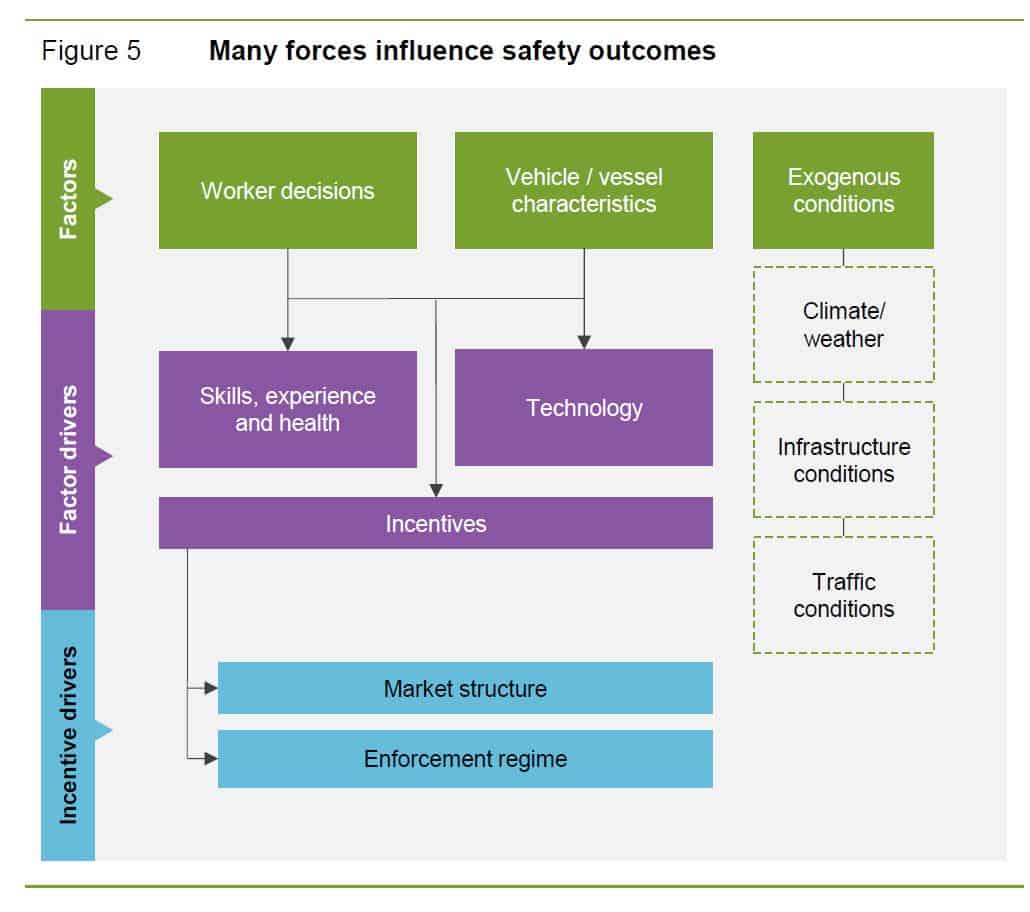
In each of the sectors within the reform program – heavy vehicles, rail and maritime – safety improvements, enhancements and improvements were expected. The PC accepts the multidisciplinary and multi-factorial elements of OHS:

“…. the national laws and regulators are only one influence on safety outcomes. The multiplicity of influences on safety outcomes raises challenges for measurement of the contribution of the national system to any changes in safety outcomes since the system was introduced. The Commission envisages that the direct net benefits from safety related reforms must be assessed by the use of simple methods such as benchmarking (including to other countries) and other descriptive analyses. For example, Hassall (2014) estimates the accident rate (broken down by accident severity) per 100 million kilometres.”

page 12

(Given that the PC has a separate inquiry into mental health, it will be interesting to see if this perspective is consistent across different sectors)

Subscribe to SafetyAtWorkBlog to continue reading.
Subscribe Help
Already a member? Log in here

Bereaved families group demands changes

Documents related to the development and implementation of Industrial Manslaughter laws in Victoria and seen by SafetyAtWorkBlog say that the Department of Justice and Community Services will draft a policy paper on the laws prior to the proposed Industrial Manslaughter Bill being presented to Parliament in October or November. October’s Work Health and Safety Month promises to be lively this year.


Participants in the Workplace Fatalities and Serious Incidents Reference Group had expressed concerns about the phoenixing of companies after a workplace fatality and that workplaces where deaths have occurred should be treated as a crime scene that:

“…should not be operational until a full investigation is complete”

Subscribe to SafetyAtWorkBlog to continue reading.
Subscribe Help
Already a member? Log in here

Grab bag of OHS issues – heavy vehicles, mental health, bullying and fatigue

There are a few occupational health and safety (OHS) matters in Australia that happened in the last week that are of note. SafetyAtWorkBlog has put together a quick list of those matters of interest.

Big Mental Health Challenge

“The Australian Capital Territory has appointed its first “dedicated psychological health officer [who] will equip workplaces with the tools and resources needed to support the social and emotional wellbeing of working Canberrans.

The psychological health officer will provide employees, managers and supervisors with support such as information sessions, accessible resources and training programs. WorkSafe ACT inspectors will also receive training and access to ongoing mentoring for responding to psychological hazards.”

Subscribe to SafetyAtWorkBlog to continue reading.
Subscribe Help
Already a member? Log in here

More background to the conspiracy claims around safety on level crossing removal worksite

Earlier this years SafetyAtWorkBlog wrote about accusations of a conspiracy between WorkSafe Victoria, Victoria Police, and construction company McConnell Dowell, made by a trade union radio program “The Concrete Gang“. The accusations have been mentioned in mainstream media. SafetyAtWorkBlog has obtained more details of the incident.

Subscribe to SafetyAtWorkBlog to continue reading.
Subscribe Help
Already a member? Log in here
Concatenate Web Development
© Designed and developed by Concatenate Aust Pty Ltd