Two apocryphal Santa safety tales

Safety Lesson 1 – Check Santa’s Constitution

As a child I lived across the road from a carpet factory.  This huge factory had a wide paddock next door that, for a time, had two golf fairways and greens and a chicken farm.  This paddock was the scene of the annual Christmas Party and, although my parents had no association with the factory, some of the neighbourhood kids wangled our way into the work’s Christmas Party.

One year the company chose to have Santa arrive by helicopter.  We could hear the noise from some way off and a landing site in the paddock had been roped off.  It didn’t take long for the noise from the children, already hyperactive on sugary drinks in a hot Australian Summer, to match the helicopter’s noise as the children ran to the roped area.

The helicopter lands, the propellers wind down as the children’s cheering increases.  Continue reading “Two apocryphal Santa safety tales”

Submission on Labour Hire disappoints on OHS

cover of Ai_Group_LabourHireandInsecureWork__November 2015_Final2The public submission phase for the Victorian Government’s inquiry into labour hire and insecure work closed last week.  Public hearings have occurred this week and will continue in February 2016. One industry association, the Australian Industry Group has released its submission.  Its discussion  of occupational health and safety (OHS) of labour hire workers and suppliers is very disappointing.

Representing Members

The AiGroup says, in its submission that

“The interests of both groups [labour hire companies and users of labour hire], as well as the interests of the broader community, are best protected by ensuring that a competitive market is maintained for the provision of labour hire services, and that impediments to competition are removed.” (page 4)

It could be argued that the competitive market has allowed unscrupulous labour hire suppliers to succeed as they have been offering the cheapest labour.  These suppliers have succeeded, mostly, because there is a ready market for opportunities to maximise profit by reducing the legal rights of workers.  A competitive market may help fix the problem but it is also a problem that it helped create. Continue reading “Submission on Labour Hire disappoints on OHS”

Missed lessons from work-related traffic incidents

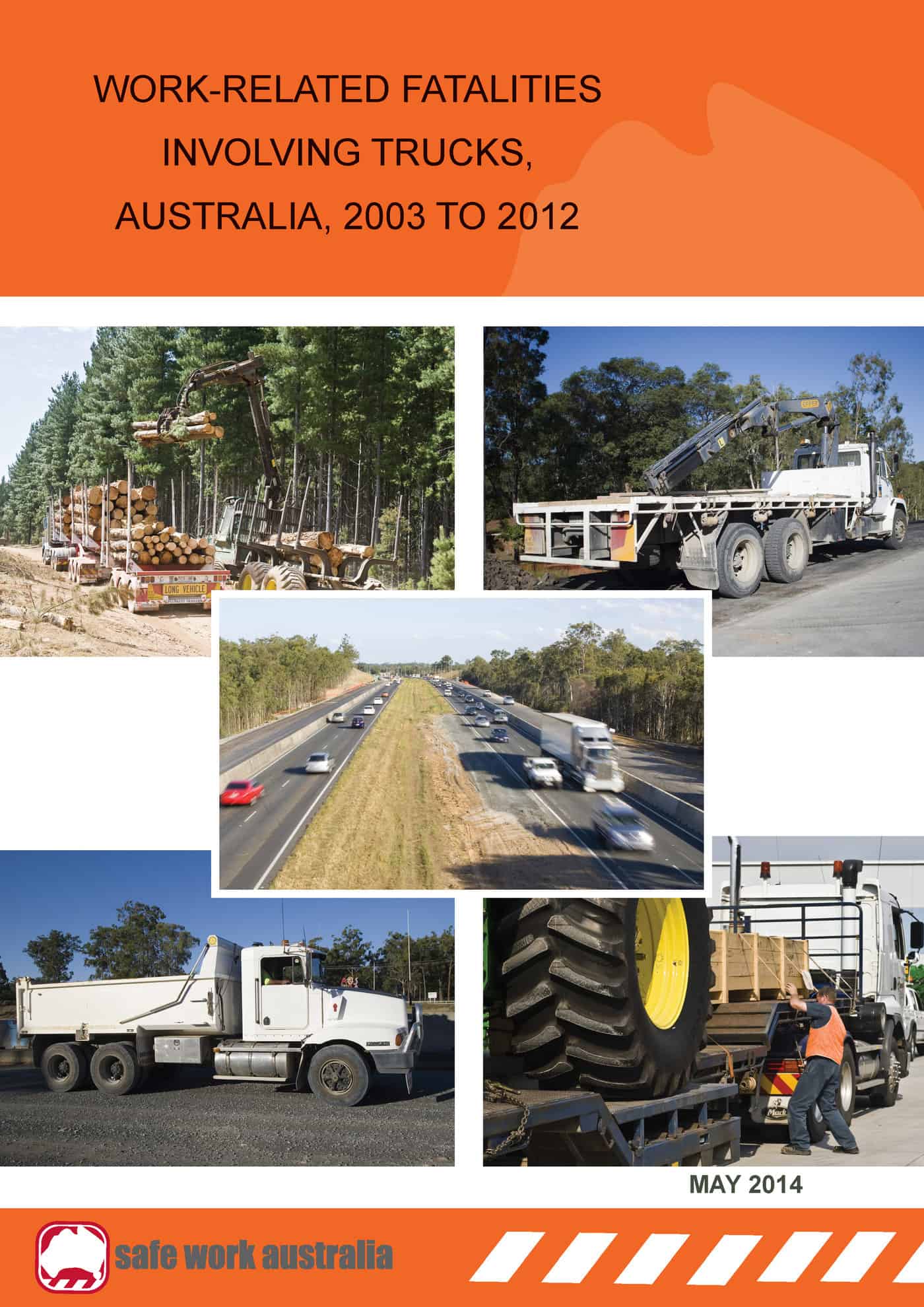
Cover of Work-related-fatalities-involving-trucksIn early 2014 a truck driver drove his vehicle into an intersection, collided with a car resulting in the death of four out of five members of one family. The truck driver, Jobandeep Gill, has been sentenced to 10 years jail.  Video of the incident site shows a company name on the side of the van.  It is not possible to determine who Gill was driving for or what his employment status was but, regardless of this, it seems a work vehicle was involved in the death of four people, and therefore occupational safety laws (OHS) may have been broken.

It is accepted by OHS regulators that a truck is a workplace for the driver and that OHS responsibilities of all workers include

“… take reasonable care for the health and safety of persons who may be affected by the employee’s acts or omissions at a workplace…” (Section 25 of the Victorian OHS Act 2004)

On 25 November 2015, Dr Rwth Stuckey stated at an ISCRR seminar that:

“WRR (work related road) crashes [are the] leading cause of traumatic work-related fatality & injury in most westernised countries.”

So why don’t OHS regulators follow-up WRR crashes by interviewing the truck owners or the employers of the drivers?  Perhaps statistics don’t support Dr Stuckey?

Subscribe to SafetyAtWorkBlog to continue reading.
Subscribe Help
Already a member? Log in here

A possible change in approach on quad bike safety

The Federal Chamber of Automotive Industries (FCAI) is an integral stakeholder in the improvement in the safety performance of quad bikes. However, some of its past strategies have been belligerent, divisive and have limited the safety debate.  There are hints that the FCAI’s communication strategy has changed and this can only be for the better.

On October 1, 2015, FCAI issued a media release that was a gentle questioning of the Star Safety Rating program recently advocated by quad bike safety advocates and researchers.  The FCAI says that the research on which the rating system is based

“…does not correlate with real world performance is premature and needs to be further explored.”

Continue reading “A possible change in approach on quad bike safety”

Death from a well-known hazard – culture is only part of the answer

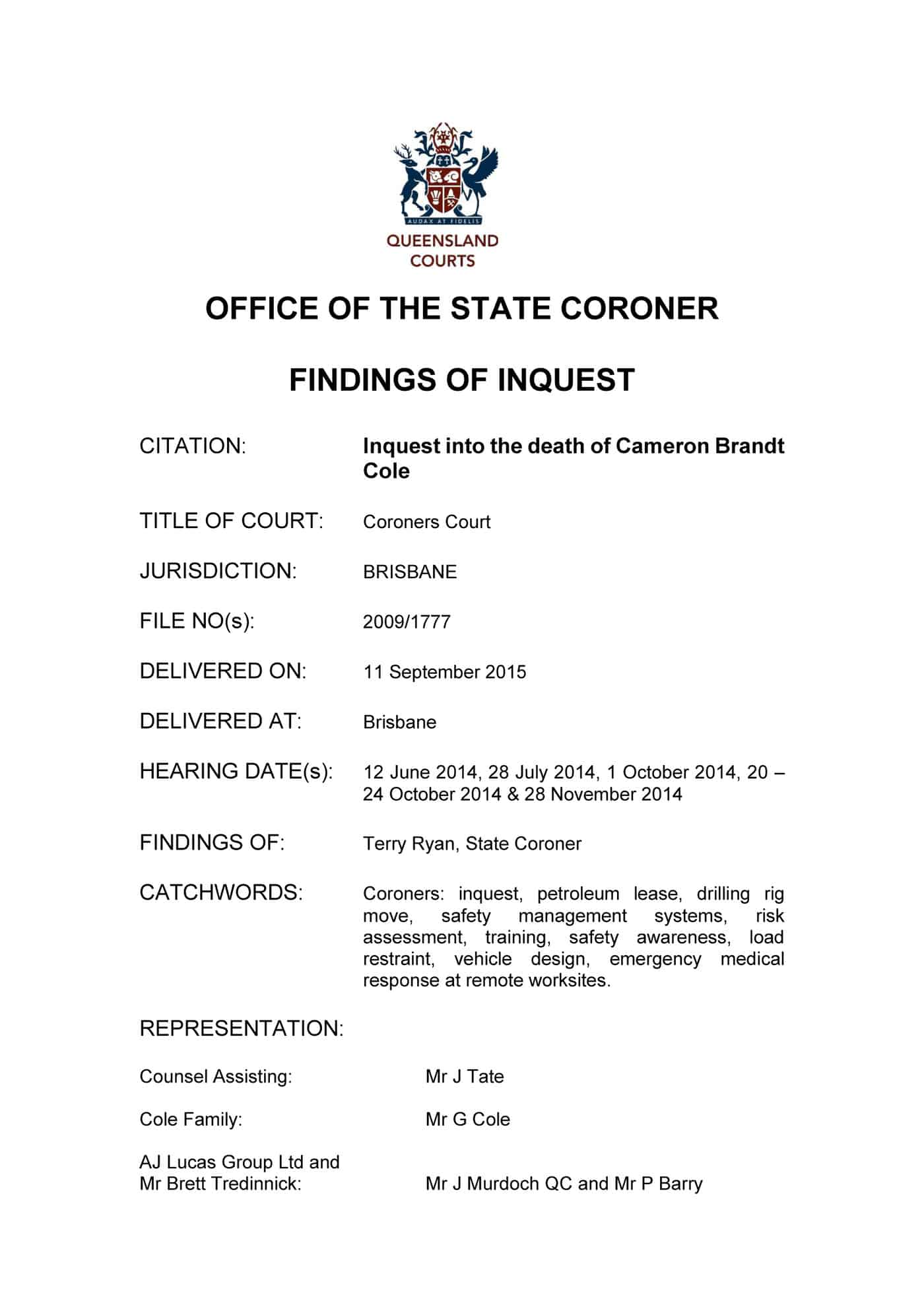
Cover of cif-cole-cb-20150911A coronial finding in Queensland in September 2015 illustrates how daily activities can lead to tragedy but also the role of safety culture.

According to one media report, in investigating the 2009 death of 24-year-old Cameron Cole who was hit as a pipe rack fell from a truck, the Queensland Coroner, Terry Ryan, found that

“…the semi-trailer had been over packed, not properly secured and there was no exclusion zone around the vehicle when the load was being released.”

From this event the Coroner makes many recommendations about the safety management of work practices at that time.  Many of these reflect common work practices that exist to this day on many Australian worksites.

Subscribe to SafetyAtWorkBlog to continue reading.
Subscribe Help
Already a member? Log in here

Quad bike safety discussion is maturing

New research into quad bike safety by the University of New South Wales (UNSW) shows increasing maturity in the discussions on the safety of quad bikes and farms. According to a 2 September report on Australian ABC radio, more attention is now needed for quadbike rider’s actions, workplace conditions and choices.

The attention on the suitability and design of quad bikes has dominated the safety debate over the last few years.  There is no doubt that the design of quadbikes could have been made safer, or that new vehicle models offer better stability or that Operator Protection Devices (OPDs) offer a safety improvement.

The focus on riders has been almost exclusively about “active riding” techniques and the use and suitability of personal protective equipment, such as helmets. Continue reading “Quad bike safety discussion is maturing”

5 experts in 60 minutes

Host: ISCRR's Jason Thompson
Host: ISCRR’s Jason Thompson

The Institute for Safety, Compensation and Recovery Research (ISCRR) has tried a new format for its occupational health and safety (OHS) seminars.  It is not a lunch with a single presenter and it is not a Three-Minute Thesis.  It is five safety researchers in one hour, seven minutes per person and a single question from the floor – and it worked. Continue reading “5 experts in 60 minutes”

Concatenate Web Development
© Designed and developed by Concatenate Aust Pty Ltd