Source data from within the quad bike safety stoush

SafetyAtWorkBlog was able to contact the Federal Chamber of Automotive Industries’ Rhys Griffiths this afternoon seeking clarification of the FCAI’s withdrawal from quad bike safety discussions reported yesterday.  Prior to withdrawing, a document was read to the quad bike safety working group.  The document has not been released publicly but below is the gist.

Further down the page is an edited version of the letter that the Australian Centre for Agricultural Health and Safety (AgHealth) has reportedly sent to “290 rural motorcycle dealers”.  According to Rhys Griffiths being quoted in The Weekly Times, this letter

“”…basically says dealers could be looking at law suits for not fitting devices on ATVs…  This is in direct contradiction to the manufacturers’ recommendations, so the dealer is caught in the middle.” Continue reading “Source data from within the quad bike safety stoush”

Quad bike manufacturers walk out of safety working group

In early 2010, Australia’s Heads of Workplace Safety Authorities (HWSA) established a trans-Tasman working party to look at the safety issues of quad bikes, often called all-terrain vehicles.  The working group is in the final stages of its report and a major motorcycle industry representative has not liked the findings and has apparently withdrawn from the working group.  A report on the increasing tensions was published in  this week’s The Weekly Times.  SafetyAtWorkBlog has been told that the quad bike industry representative has walked out in protest.

Let’s look at what HWSA said about the working group in May 2010:

“HWSA Chair, John Watson, said every farming fatality leads to immeasurable suffering in close-knit rural communities and these figures are not acceptable.
“The working group is expected to deliver solutions to safety problems associated with use of quad bikes on farm properties and raise awareness of practical risk controls,…
“The group will look at issues that include design, safety equipment, training and instruction, aftermarket accessories, safe use and point of sale,….
“The joint program of work will be delivered through an Industry Solutions Program where industry and regulators work together to address high risk safety issues – an initiative that has successfully provided practical solutions to a number of issues across many industries.
“The working group is focused on producing tangible and sustainable safety outcomes across the farming and agricultural industry where quad bikes are commonly used….”
Of significance in that media release is that Chief Executive of the Federal Chamber of Automotive Industries (FCAI) Andrew McKellar said

“It is our objective that all quad bike users are well informed of the manufacturer’s recommendations in relation to the safe use of these vehicles…”

The sticking point in the working group was, according to The Weekly Times, that

“”…the committee was expected to back the recommendation to “consider fitting an anti-crush device”, the strongest position yet for roll-over protection.”

The committee did recommend this and apparently the FCAI walked.  Attempts have been made to contact the FCAI to confirm their action and their objections. Continue reading “Quad bike manufacturers walk out of safety working group”

Farm deaths require radical approach

WorkSafe Victoria has reported  that of seven recent work-related fatalities, three have occurred in regional areas on farms.  The most recent death was misreported as involving a quad bike.

In a media release issued on 10 May 2011, WorkSafe’s Ian Forsythe said,

“Safety’s not just about what WorkSafe does. It’s about employers, workers and the wider community taking ownership of it not just for themselves, but the wider community.

It is imperative that regional Victorians, whether they are employers, self-employed or workers to stop and think about what is ultimately important to them and what they can do to prevent more tragedies affecting them and their communities.”

Over the last 20 years WorkSafe has tried a wide variety of safety campaigns in rural farming communities.  Some have Continue reading “Farm deaths require radical approach”

Australian IR Minister mentions international OHS conventions action

Chris Evans, the Australian Minister for Workplace Relations issued a media statement on 28 April 2011 concerning the World Day for Safety and Health at Work.  As well as some generalities about OHS harmonisation and government commitment, he said

“The Australian Government is also in the process of ratifying the ILO Asbestos Convention 1986 (convention 162) and the ILO Protocol of 2002 to the Occupational Health and Safety Convention 1981 (Protocol 155).

These ILO instruments will give Australians a world class OHS regime, by entrenching best practice in protecting our community from the harmful effects of asbestos and enhancing data collection and publication to support policy making and research.

“Australia has long been a member and supporter of the ILO in its efforts to promote safe work environments and raise the quality of labour and social standards throughout the world,” said Senator Evans.” [links added]

This seems a positive move but it is significant that no deadline for ratification is identified by Minister Evans.  There are also a couple of obvious limitations or problems with these conventions and protocols. Continue reading “Australian IR Minister mentions international OHS conventions action”

Industry action confuses quad bike sellers

Last week, Honda quad bike dealers were supplied with the safety code provided by the Federated Chamber of Automotive Industries. This code outlines research that shows some roll over protection (ROPS) devices may increase the risk of injury.  A major ROPS identified in recent reports is the QuadBar, a device that may be “set to become an industry standard” for quad bike safety according to one media report.

Last week, SafetyAtWorkBlog heard that some Honda quad bike dealers, who also stock the QuadBar, feared that the distribution of the FCAI Industry paper was an indication that the continued stocking of the QuadBar may threaten the retention of their Honda dealership. Continue reading “Industry action confuses quad bike sellers”

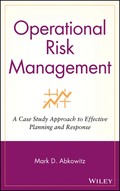
Operational Risk Management – a timeless book, sadly

For several years now Mark Abkowitz’s book “Operational Risk Management” has been sitting on my “to-read” shelf.  Given my recent wish for a case study approach to leadership and given the Fukushima nuclear issues, the book caught my attention.

Books that analyse disasters are far superior to watching real-time disasters because the distress is minimised, the analysis can be dispassionate and time can provide a more detailed context.  (The quickness of production of some of the books about the BP/Gulf of Mexico suffered from the curse of topicality)  Books provide a distance that the constant exposure to “disaster porn” does not.

Operational Risk Management looks at many at many disasters from the last 30 years but the disasters are not only industrial and process disasters, although Chernobyl and Bhopal are covered. Continue reading “Operational Risk Management – a timeless book, sadly”

People enter the quad bike ROPS debate

A week on from Australia’s The Weekly Times using its front page to open a debate about roll over protection structures (ROPS), the debate has continued in the letters and op-ed pages of The Weekly Times.

Dr Yossi Berger of the Australian Workers Union asks the valid question in his opinion piece – should all the responsibility for quad bike incidents be placed on riders or can manufacturers do better?  If injuries and deaths on quad bikes continue to occur after rider-focused control measures have been advocated and encouraged for many years, isn’t it time to look at more than PPE and administrative controls?  As Albert Einstein is alleged to have said:

“The definition of insanity is doing the same thing over and over and expecting different results.”

Rhys Griffiths of the Federal Chamber of Automotive Industries says in his piece that the quad bike manufacturers are frustrated that low-cost, in safety-speak, administrative controls are not being applied by riders or endorsed by safety regulators.  The control measures recommended are likely to have positive safety impacts but these could be improved further by the integration of a ROPS.  However Griffiths says that :

“Roll Over Protection Systems are not the answer”.

I agree but safety is rarely about “the” answer.  Better outcomes are mostly achieved by a combination of controls that can accommodate the varying work characteristics. Continue reading “People enter the quad bike ROPS debate”

Concatenate Web Development
© Designed and developed by Concatenate Aust Pty Ltd