Wellness programs – Do They Work?

Many companies operate wellness programs at work. Some of these claim to reduce the likelihood of work-related injury or ill health. Others are aimed at reducing chronic health risks such as obesity, heart disease and more. A recent book from the United States encourages us to be sceptical of such programs and ask about employers’ purposes in introducing such programs. The book is called “Calling Bullshit – The Art of Scepticism in a Data-Driven World” and offers important insights beyond workplace wellness.


Subscribe to SafetyAtWorkBlog to continue reading.
Subscribe Help
Already a member? Log in here

Is it time for a Department of Safety?

The COVID19 pandemic is a public health challenge but what happens when workplaces are integral to the control and spread of the virus? This overlap between public health and occupational health is complicated and unlikely to be resolved in the short term, however, it can fixed in the longer term. The crisis in the Australian State of Victoria (where this author lives) offers an example of this complexity, but also an opportunity for positive change, perhaps even, a Department of Safety.

Subscribe to SafetyAtWorkBlog to continue reading.
Subscribe Help
Already a member? Log in here

“Soldier On” should be “F### Off”

Many workers continue to work when sick. This is called presenteeism and in a time of infection pandemic, is a major problem. Many countries have addressed the COVID19 risks of presenteeism by requiring people to work from home if they can. In Australia, the message is not totally working with people ignoring the rules for various reasons.

However, presenteeism also has a deeper cultural and institutional origin that has been exploited by some and downplayed or ignored by others.

Continue reading ““Soldier On” should be “F### Off””

More data means a stronger case for change in workplace health and safety

SafetyAtWorkBlog tries to include links to original data and reports wherever possible. Last week the Australian Institute of Health and Welfare (AIHW) released its 2020 data insights report. There is a lot in it, and some relates to workplace risks. Perhaps the most useful section is the chapter of Social Determinants of Health (SDH). For those readers for whom this is a new concept, this chapter is obligatory reading.

SDH is crucial to understanding how occupational health and safety (OHS) risks fit with non-work, or social, activities, government policy decisions and economic pressures. The beauty of the AIHW take on SDH is that it based on Australian data.

Subscribe to SafetyAtWorkBlog to continue reading.
Subscribe Help
Already a member? Log in here

Ardent Leisure charged with safety breaches

The big occupational health and safety (OHS) news in Australia on 21 July 2020 was the prosecution of Dreamworld‘s parent company, Ardent Leisure, for breaches of the Work Health and Safety legislation over the deaths of four customers who were riding the Thunder River Rapids Ride four years ago. The prosecution has been expected for some time and is likely to take many months. More details will emerge as they did in the Coronial Inquest that slammed Dreamworld’s safety reputation.

In this article, I look specifically at the statement that Ardent Leisure sent to the Australian Stock Exchange (ASX) as it is in an interesting example of mea culpa, OHS under-investment and damage control.

Subscribe to SafetyAtWorkBlog to continue reading.
Subscribe Help
Already a member? Log in here

Important gig economy report unlikely to affect change

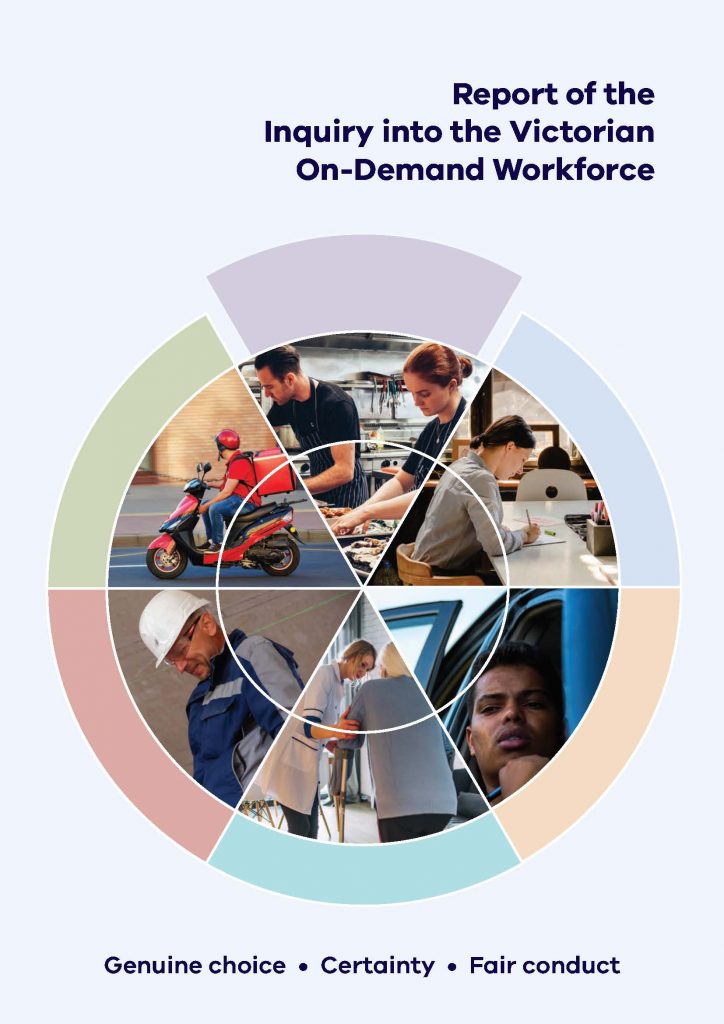
Then current coronavirus pandemic has disrupted workplaces around the world with those most effected being low socioeconomic sectors, including those working on a casual basis or in precarious, gig occupations. Last week the Victorian Government received the final report from its Inquiry into the Victorian On-Demand Workforce. This report is likely to be crucial in assisting the government to develop a safe and healthy strategy for the post-pandemic world of work.


Subscribe to SafetyAtWorkBlog to continue reading.
Subscribe Help
Already a member? Log in here

What to do when someone “cracks the shits” over safety

It is established that several major manufacturers of quad bikes have “cracked the shits” (ie had a tantrum) and now refuse to sell their vehicles to the Australian market. How to respond to this type of action is to restate the facts and this is exactly what the Australian Competition and Consumer Commission (ACCC) did this month when it released its Quad Bike Safety Standard fact sheet.

Subscribe to SafetyAtWorkBlog to continue reading.
Subscribe Help
Already a member? Log in here
Concatenate Web Development
© Designed and developed by Concatenate Aust Pty Ltd