More safety in politics

Here’s a quick summary of several mentions of occupational health and safety (OHS) in the various Parliaments in Australia over the last week or so.

Answers to Questions on Notice

In Parliamentary Committees, speakers often put questions “on notice” as they do not have the answer at hand. Often these questions fade from memory but answers do appear, usually. A good example has been provided in the South Australian Parliament on September 11, 2009 with the Treasurer, Rob Lucas, providing answers to questions from Estimates Committee B on July 24 2019. For the number junkies out there, according to Hansard, in 2018/19 SafeWork SA:

Subscribe to SafetyAtWorkBlog to continue reading.
Subscribe Help
Already a member? Log in here

Aim for prevention, to affect real change

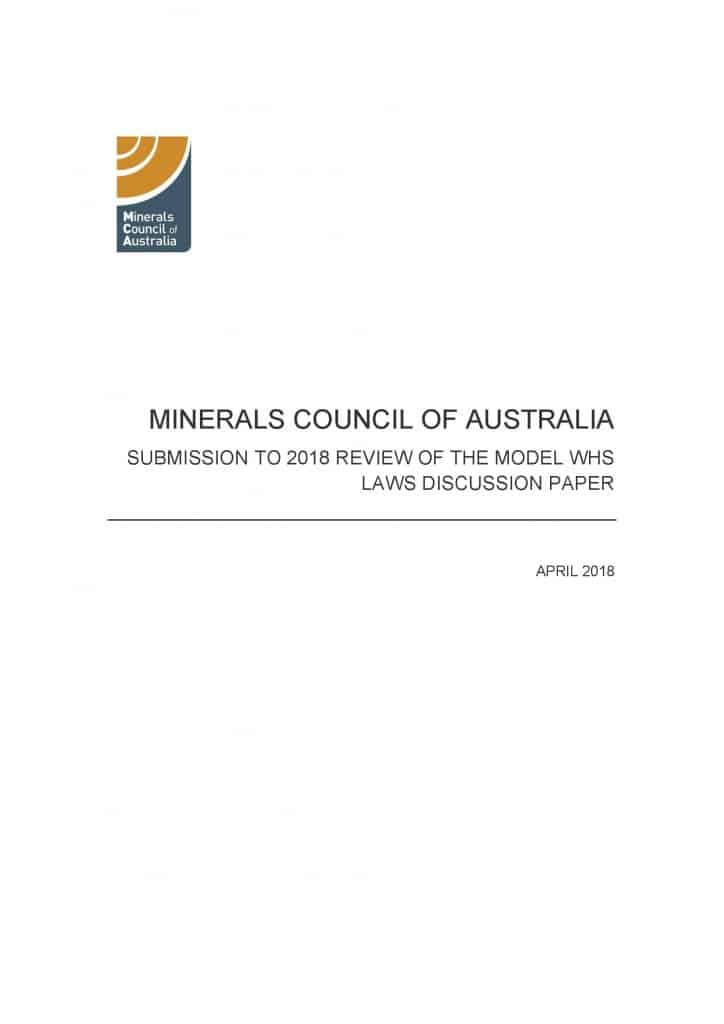
The Minerals Council of Australia (MCA) has released its submission (not yet online) to the Safe Work Australia’s (SWA) review of the Regulatory Impact Statement on the recommendations from the Boland review of the Model Work Health and Safety laws. It is comprehensive but contains little that is new. An interesting interpretation of the submission comes from considering how the MCA’s recommendations prevent harm, for prevention is the challenge.

Subscribe to SafetyAtWorkBlog to continue reading.
Subscribe Help
Already a member? Log in here

Listening anew to the voice that has always been there

The growth of visible and prominent customer services, such as those in the collective term of “gig economy” – has coincided with an increased consideration of alternative socioeconomic structures and broader political diversity, especially in the UK and to a lesser extent Australia and New Zealand. One manifestation of this change is an emerging consideration of Co-operatives and worker ownership. This may seem outside the occupational health and safety (OHS) purview of this blog but co-operatives often allow workers more input into business operations and therefore more influence on OHS standards and management. However, should this influence come from increased worker wealth or is OHS more fundamental than money?

Subscribe to SafetyAtWorkBlog to continue reading.
Subscribe Help
Already a member? Log in here

Industrial Manslaughter campaign messages need scrutiny

Recently the State Secretary of the CFMEU Construction & General WA, Mike Buchan, wrote in Construction Weekly about the need for Industrial Manslaughter laws in Western Australia. There are several points made that deserve some assessment and clarification.

He starts by stating that current occupational health and safety (OHS) laws are inadequate. This may be the case, but as Nicole Rosie from WorkSafe NZ has, supposedly, said “you can’t regulate your way to safety”. What may be inadequate is people’s compliance with OHS laws, and there may be many reasons for this non-compliance – ignorance, illiteracy, lack of enforcement by government, complexity of laws and guidance, and/or a total disregard. According to Buchan, and the wider trade union movement, Industrial Manslaughter (IM) laws are supposed to fix this inadequacy.

Buchan writes that

“The penalties that are handed down, even when a builder is found guilty of negligence, have been a disgrace in the face of the extraordinary loss of life and the suffering of families left behind.”

Subscribe to SafetyAtWorkBlog to continue reading.
Subscribe Help
Already a member? Log in here

Accountability, responsibility and possible jail time

Lawyers speaking at occupational health and safety conferences can be a bit hit-and-miss. Some are interested in minute complexities of law. Others are not comfortable talking about legal technicalities with non-lawyers. The presentation also depends on what the conference delegates want, and this can differ from day to day. But sometimes, a conference hears from a lawyer who not only practices law but reads the newspapers and seems the understand the social context of their work.

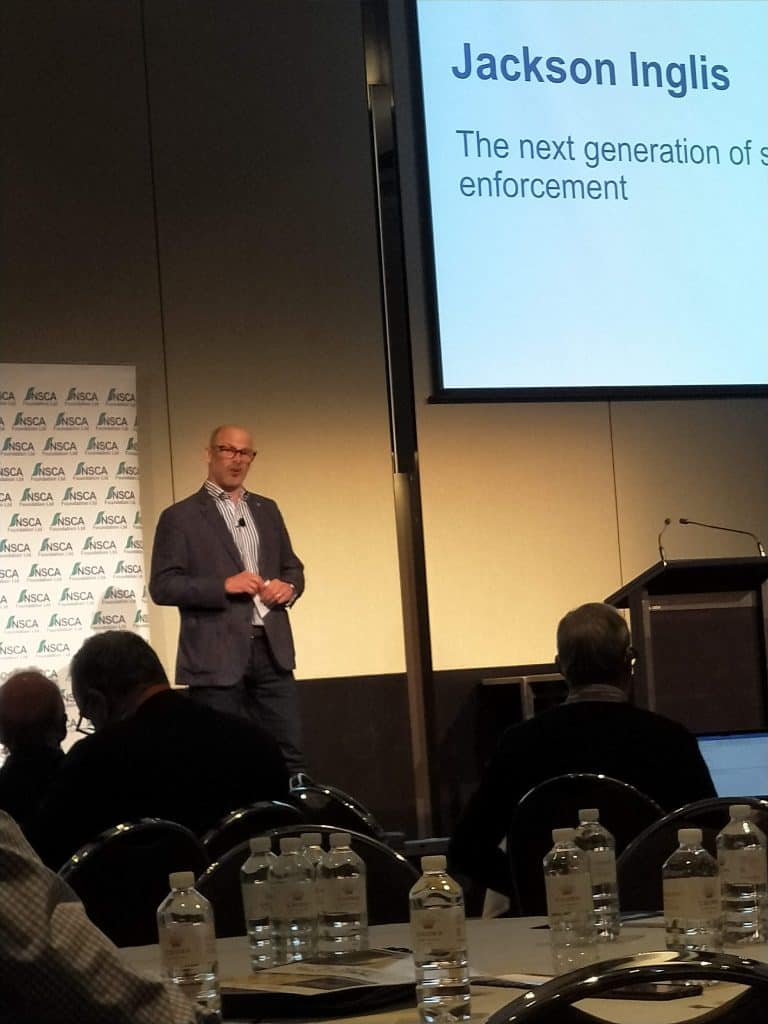
Last week, the SafetyConnect conference benefited greatly from a presentation by Jackson Inglis of Sparke Helmore (pictured above).

 If you have any information about safety-related issues or incidents, remember that SafetyAtWorkBlog operates a confidential and anonymous information tipline at https://safetyatworkblog.whispli.com 
Subscribe to SafetyAtWorkBlog to continue reading.
Subscribe Help
Already a member? Log in here

Asia, maturity, grief, zero and data-collecting mouthguards – the SafetyConnect conference

Zero Harm is hardly ever mentioned in Australia’s academic occupational health and safety (OHS) conferences, except maybe with a little snigger. But it was prominent at the NSCAV Foundation’s SafetyConnect conference in late August 2019. This was partly because this conference has more of a commercial bent compared to other conferences but also because several international speakers from Asia were able to clarify what was meant by the term.

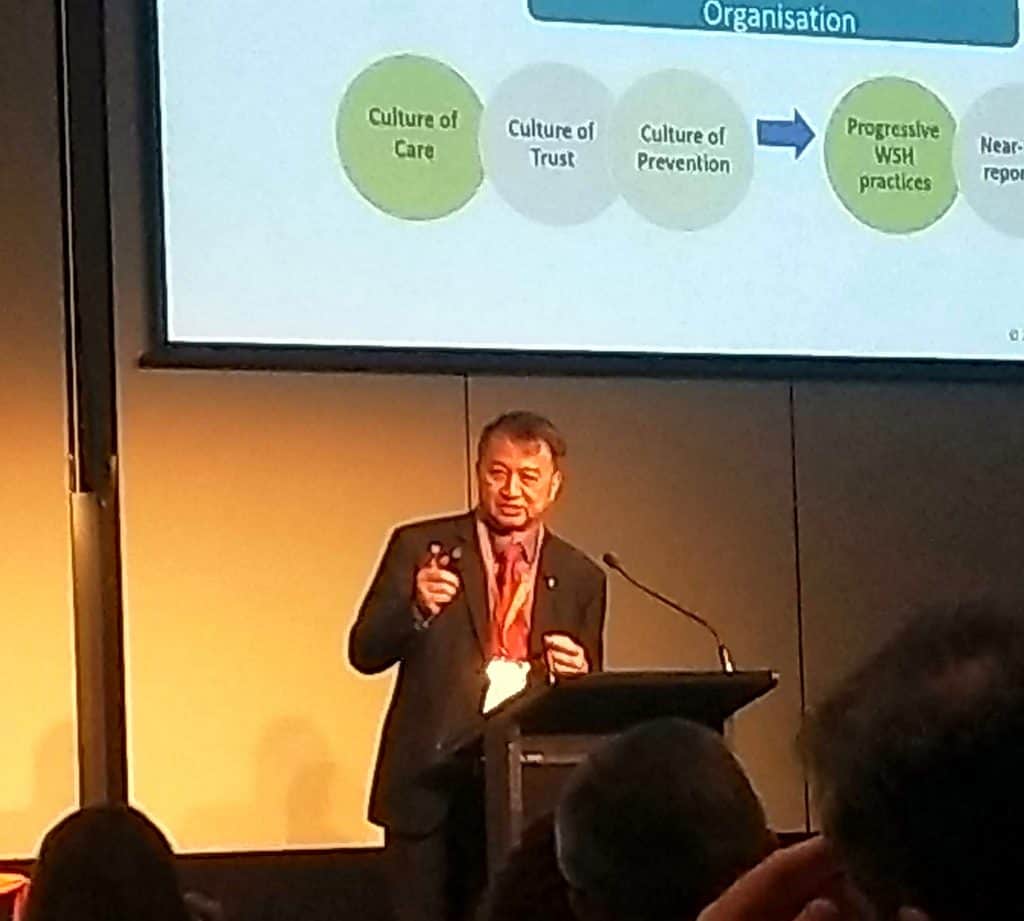
This conference had an enviable number of prominent Asian OHS professionals and engineers. One of them Ho Siong Hin (pictured above) explained the application of Vision Zero by the Singaporean government and business community.

Subscribe to SafetyAtWorkBlog to continue reading.
Subscribe Help
Already a member? Log in here

New evidence of mental health effects on the relatives of deceased workers

Australian seems to be leading in the investigation of the (secondary) familial and social impacts of work-related death. New research from Lynda Matthews, Michael Quinlan and Philip Bohle to be publicly released soon focused on the mental health of bereaved families after a relative’s death. They found

“At a mean of 6.40 years post-death, 61 percent of participants had probable PTSD (Post Traumatic Stress Disorder), 44 percent had probable MDD (major depressive disorder), and 43 percent had probable PGD (prolonged grief disorder).”

Continue reading “New evidence of mental health effects on the relatives of deceased workers”
Concatenate Web Development
© Designed and developed by Concatenate Aust Pty Ltd