Expenditure data needs more depth

An August 2018 report from Ontario’s Institute for Work and Health (IWH) opens stating:

“Whilst the financial cost of work-related injury and illness are well known, limited information is available on what employers spend to control or eliminate the causes of work-related injury and illness.”

This is questionable. The cost of traumatic injuries may be well-known and the cost to business may be well-known but only if one exempts the cost of work-related psychological health, as this survey seems to do, and only if one considers the related business costs as almost entirely workers’ compensation. There is a

Subscribe to SafetyAtWorkBlog to continue reading.
Subscribe Help
Already a member? Log in here

HR and Legal have failed to address sexual harassment. Could OHS do better?

2019 is likely to be the year when the deficiencies and advantages of the occupational health and safety (OHS) approach to the prevention and management of the psychological harm produced by work-related sexual harassment will contrast (clash?) with the approach used by the Human Resources (HR) profession.  For many, many years OHS has failed to implement the control measures that the available research and guidance recommended.  For the same length of time, HR has largely focused on addressing the organisational consequences of accusations of sexual harassment displaying a preference for legal action or to move the accuser out of the organisation.

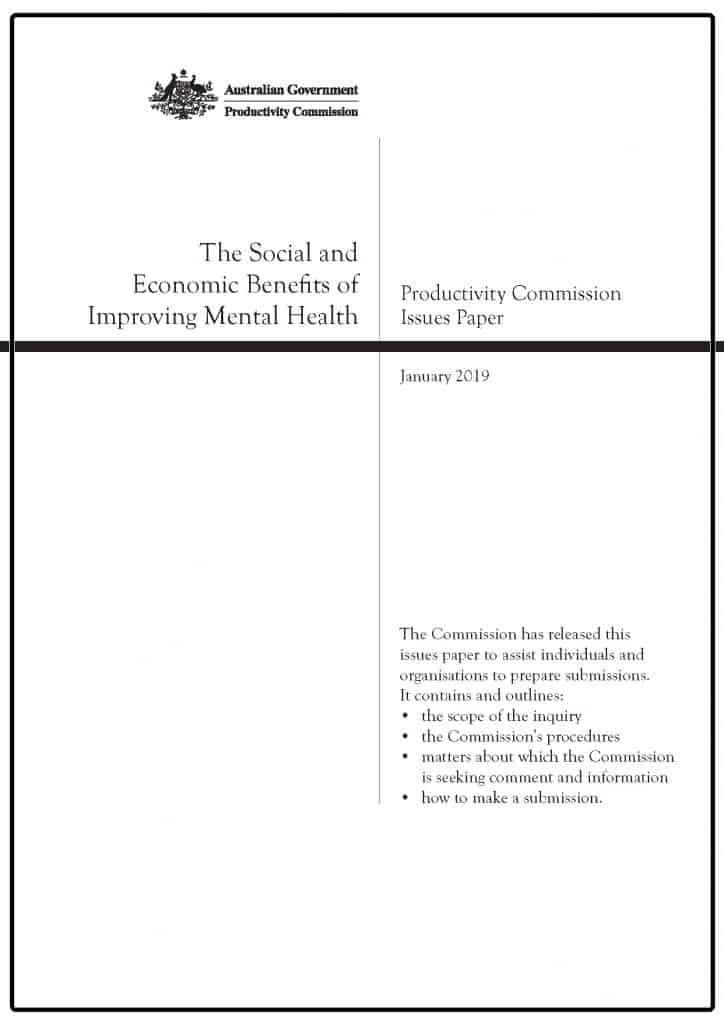
These approaches persist but there is some hope that recognition of each others’ role and purpose can bridge the ideological demarcations.  Australia’s inquiries into work- and non-work-related harassment have the potential to change the way psychological harm is seen, managed and, maybe, prevented.

Subscribe to SafetyAtWorkBlog to continue reading.
Subscribe Help
Already a member? Log in here

The Shock of the New

The Australian Human Resources Institute (AHRI) has recently published an article about the significant Human Resources trends for 2019. The trends identified include

  •  “A Change of Government”
  •  “Gig Economy Classification”
  •  “Sexual Harassment”
  •  “Technology Trends”

SafetyAtWorkBlog will be more specific in its occupational health and safety (OHS) “trends” for 2019.

Subscribe to SafetyAtWorkBlog to continue reading.
Subscribe Help
Already a member? Log in here

Workplace suicides require organisational analyses

Some media reports on the recent suicide of another Australian Federal Police (AFP) officer indicate a change away from the dominant perspective of addressing the individual worker rather than institutional factors.

This article is not denying that suicide is a personal decision.  It is an act that most of us do not understand and struggle to do so; this is partly because, unless a note is left or the person spoke to another about their intentions, we can never be sure why someone takes their own life.  As a colleague explained to me, we try to rationalise an irrational act, or at least an act that seemed rational to the person at the time.

The Australian Federal Police has had several

Subscribe to SafetyAtWorkBlog to continue reading.
Subscribe Help
Already a member? Log in here

Addressing the invisible causes of visible harm

The trade union movement was instrumental in showing that workplace bullying was a pervasive problem in Australian workplaces.  Many Codes of Practice and guidances for workplace bullying and occupational violence were written shortly after the action by the Australian Council of Trade Unions almost two decades ago.  But, for some reason, although sexual harassment was mentioned in those early documents, it never received the attention in occupational health and safety (OHS) circles that, in hindsight, it should have.

Perhaps a more sustainable and effective strategy would be to focus on the “harassment” rather than the “sexual”, or in

Subscribe to SafetyAtWorkBlog to continue reading.
Subscribe Help
Already a member? Log in here

A good 2018 before a busy 2019

At the end of each year it is the customary to reflect on what has happened. SafetyAtWorkBlog is no different so here are some of the blog’s achievements

It entered its second year under a subscription model and the numbers continue to grow. The corporate subscription has changed a little and this year a corporate subscriber joined with an allowance of up to 50 readers. Hopefully more will take up this option in the future.

According to one statistical dataset, up to today, the SafetyAtWorkBlog has had Continue reading “A good 2018 before a busy 2019”

Concatenate Web Development
© Designed and developed by Concatenate Aust Pty Ltd