
 Recently a Young Safety Professional network in Queensland conducted a debate or discussion about the role of risk assessment in occupational health and safety (OHS). Naomi Kemp posted an article about the event titled “To risk assess, or not to risk assess: that is the question“. Risk assessments offer an entry point to broader discussions of liabilities, risk, red tape, complacency, communication and state of knowledge. But of most relevance to OHS compliance is that risk assessments are part of the legal obligation to consult.
Category: Uncategorized
Hi-viz and safety – it’s all about the context
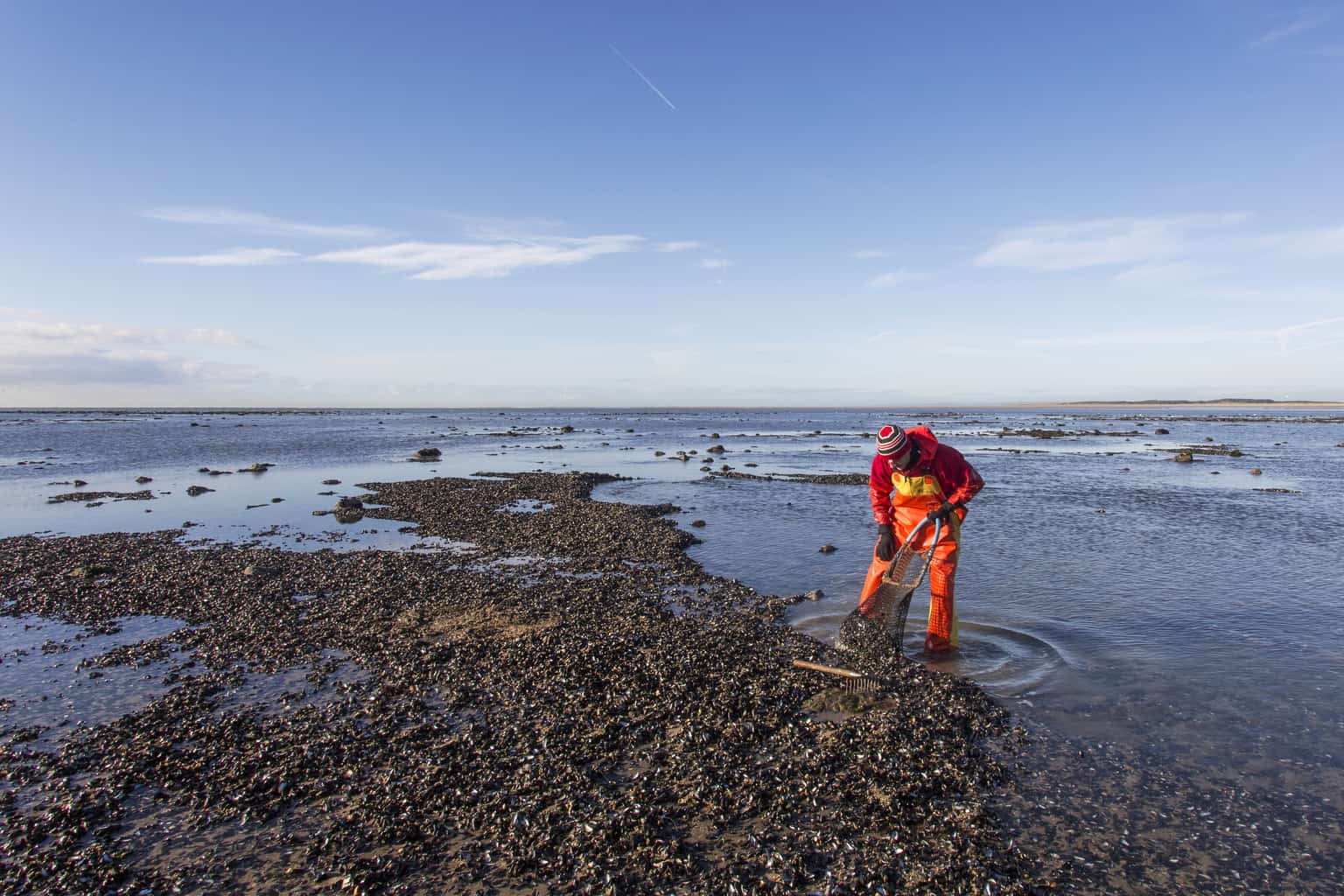 High visibility clothing has spread from the work site to the public arena and, as such, has complicated the reasons for hi-viz clothing. However the fundamental underpinning of high-viz is to contrast against the surrounding environment. This contrast does not only relate to clothing but also signage.
Several years ago, a couple of women from Tasmania visited the offices of SafetyAtWorkBlog to discuss the practicality of hi-viz vests for toddlers and small children. The hi-viz logic of the work site is easily applied to the public park or farms. A contrasting colour to the trees or bushland would make it easier to identify someone, like a wayward child. On a work site, the hi-viz is more about identifying a hazard, whether that be a person, an overhead wire or a work boundary.
More activity needed on safe driving at work
 In Australia a driver can achieve a “full”, unrestricted licence for driving a car from one’s early 20s following a test conducted by a State regulatory authority. This driver’s licence is renewed each ten years but without any retesting or assessment of competency, even though the road rules, environment, traffic volumes, car design and personal technology would have changed in that time.
Should an employer allow an employee to drive a company or work-related vehicle without determining a driver’s suitability and level of driving competence?
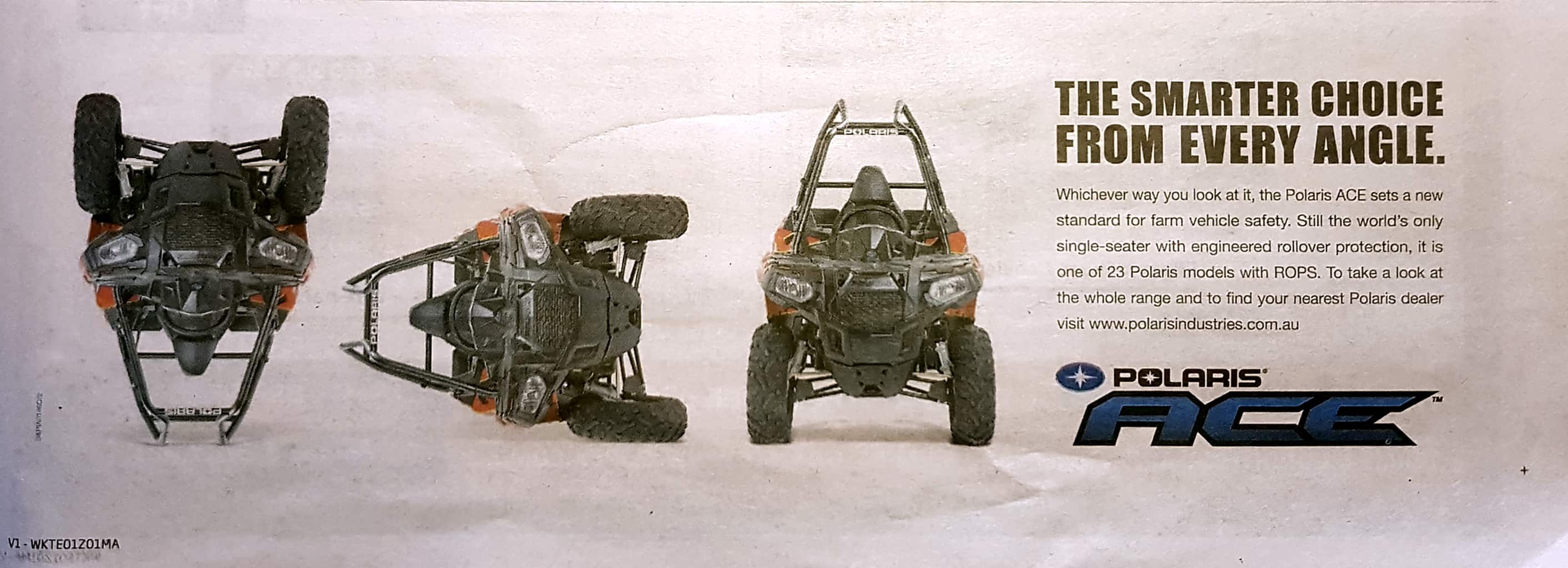
Ads for quadbikes show the safety changes
As a companion piece to SafetyAtWorkBlog’s recent article on quad bike safety it is worth looking at the latest hardcopy edition of The Weekly Times, an influential agricultural newspaper in Australia. It is useful to look at how quad bikes are being depicted in the advertising and some of the content, as online versions have different adverts. The content will vary, of course, from edition to edition but a snapshot sample is interesting.
Quad bike safety gets messy – disagreements, Supreme Court writs and stars
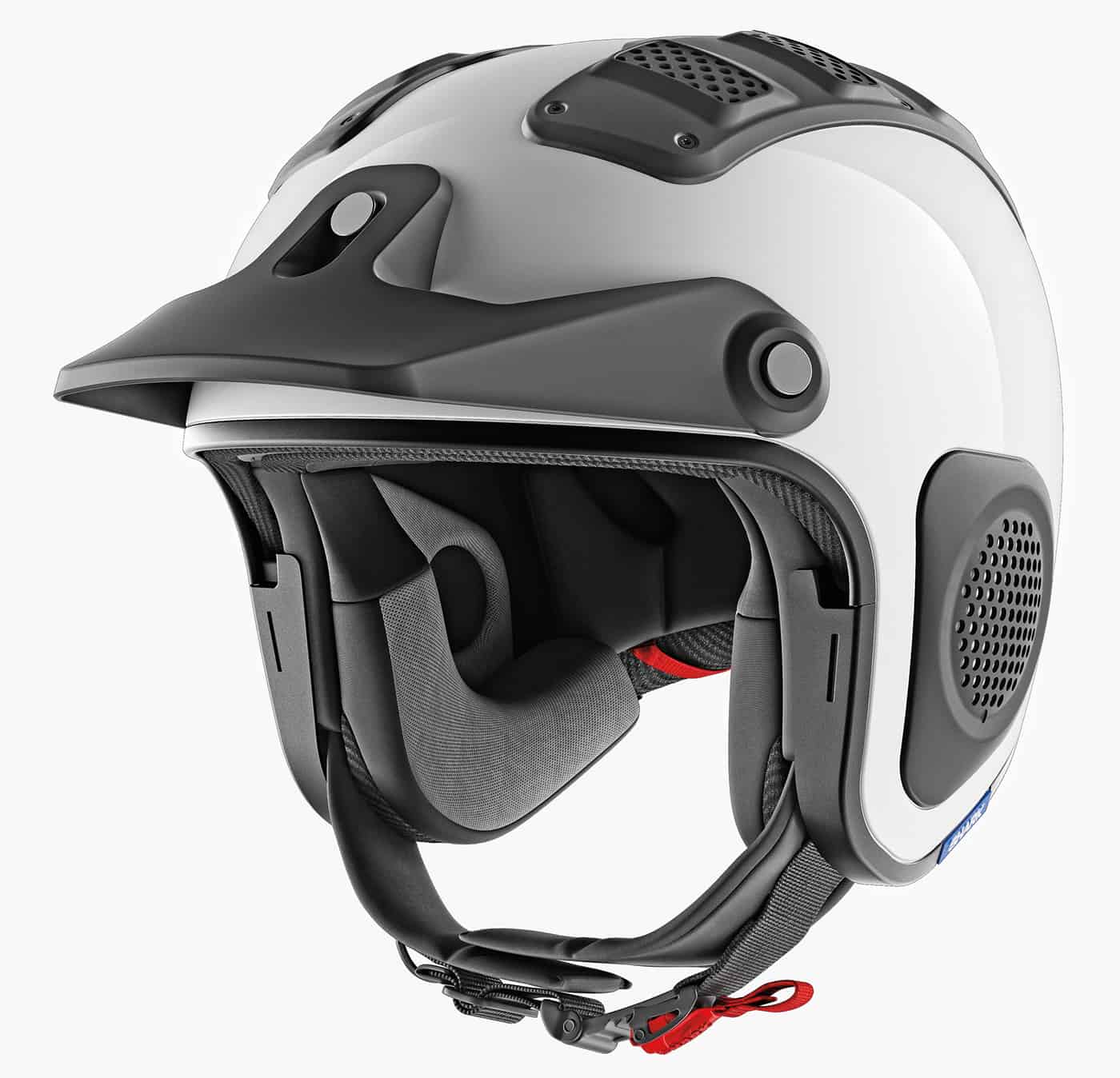 Over the last couple of weeks in Australia, the arguments over the safety of quad bikes (sometimes called All Terrain Vehicles (ATVs)) has become messy. The National Farmers’ Federation (NFF) is in favour of Operator Protection Devices (OPDs) but the Victorian Farmers’ Federation (VFF) is not. Doctors and farmers are calling for a five-start safety rating for quad bikes. One researcher says such a scheme is ready to go. The manufacturers’ industry representative, Federal Chamber of Automotive Industries (FCAI) says no it’s not but here’s a new helmet to wear.
Around all of this is remarkable silence about legal action launched against the Victorian occupational health and safety (OHS) regulator, WorkSafe, by Honda, Yamaha, Suzuki, Kawasaki and BRP over WorkSafe’s interpretation of a legal safety duty.
All the while farmers in some States are continuing to access generous safety rebate schemes. Continue reading “Quad bike safety gets messy – disagreements, Supreme Court writs and stars”
Autonomy, safety, diversity, equality and productivity

Discussion about gender in the workplace peaks each year around International Women’s Day on March 8. Occasionally there is renewed localised interest when an issue pops up but the issue of gender permeates our thoughts, our planning and our conduct all the time.
Recently, SafetyAtWorkBlog had the chance to ask some questions about gender and diversity and the relevance to the workplace and the occupational health and safety (OHS) profession to Alena Titterton (pictured above), a fascinating workplace relations lawyer with the Australian offices of Clyde & Co.
Gender diversity seems to be more prominent than diversity generally. Should gender diversity be given priority over, or be separated from, other categories such as ethnicity or sexuality?
Analysis of the WorkSafe Legislation Amendment Bill raises concerns
 Several readers have expressed curiosity over the WorkSafe Legislative Amendment Bill currently in the Victorian Parliament and mentioned by lawyer Steve Bell last week. Bell pointed to a couple of issues in the Bill and gave the impression that the Bill was aimed at tidying up some administration. Several of the issues raised in the Bill deserve contemplation.
The Bill is still not through Parliament. The next stage of the process will occur on April 5, 2017 but the Minster’s