Scissor Lift death findings clarify the context of OHS

If all you knew about occupational health and safety (OHS) was what you read in the physical or online newspapers , you would not know anything about safety management – or maybe anything positive.  It takes being involved with managing safety in the real world to understand how OHS operates in the real world.  But even then we only learn from our own experiences.
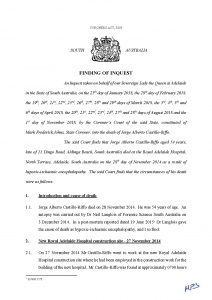
The 92-page coronial finding into the death of Jorge Castello-Riffo, released last week, is a tragic and detailed case study of OHS in the real world and should be obligatory reading for OHS professionals and those trying to understand the push for increased OHS, penalties and  corporate accountability.  Below I look at just one section of the Coronial Findings in this article – the Coroner’s responses to a set of proposed recommendations.

Subscribe to SafetyAtWorkBlog to continue reading.
Subscribe Help
Already a member? Log in here

Families get a good deal from the Industrial Deaths inquiry

Photo credit: Workplace Safety Services

Will the recommendations of the Senate Committee’s inquiry into industrial deaths benefit relatives of deceased workers? Yes, mostly.

It seemed like relatives gained greater access to this Senate Committee than in other inquiries.  Some public hearings were held with only relatives presenting.  This is a major change.  The transcripts of the 2012

Subscribe to SafetyAtWorkBlog to continue reading.
Subscribe Help
Already a member? Log in here

Politics on display in final report of Australia’s Industrial Deaths inquiry

The Australian Senate inquiry into Industrial Deaths has released its findings in a report called “They never came home—the framework surrounding the prevention, investigation and prosecution of industrial deaths in Australia“.  For those who have followed the inquiry, there are few surprises but the report presents big political challenges, particularly as a Federal Election must occur no later than May 2019.

It has been increasingly common for such Senate reports to include, not necessarily, a Minority Report, but an alternative perspective on some issues.  Sometimes these reports show dissent in the Committee but more often than not these are statements that are aimed

Subscribe to SafetyAtWorkBlog to continue reading.
Subscribe Help
Already a member? Log in here

Political tennis on silicosis begins

Pictured from Dr Ryan Hoy’s ANZSOM presentation

It was reported on October 11 2018 that Australia’s Health Minister, Greg Hunt, has called for:

“… state workplace regulators to immediately investigate risks to the health of stonemasons, and stop unsafe work practices.”

Some reports have said that a statement was issued:

“Mr Hunt issued a statement saying he and the Chief Medical Officer would raise the issue at a health COAG meeting in Adelaide on Friday. He said the meeting would be asked to consider whether a national dust diseases register should be developed.”

However the Minister’s Office has advised SafetyAtWorkBlog that no formal statement has been made.  This makes it a bit hard to determine what exactly he is asking for on the prevention of silicosis but the States have begun to respond.

The Victorian Minister for Health,

Subscribe to SafetyAtWorkBlog to continue reading.
Subscribe Help
Already a member? Log in here

CFMEU steps up the OHS pressure

SafetyAtWorkBlog has dipped into the occupational health and safety (OHS) and political issues around the death of Jorge Castillo-Riffo in Adelaide in 2014.  On October 4 2018, the CFMEU issued a media release outlining the recommendations it made to the Coronial inquest into Castillo-Riffo’s death.  They deserve serious consideration:

  • Mandatory coronial inquests should be held into all deaths at work, with a mandatory requirement for the reporting of any action taken, or proposed to be taken, in consequence of any findings and recommendations made;
  • Families should receive funding to be represented;
  • An independent safety commissioner should be established in SA whose duty it is to review, comment and provide recommendations concerning the safety record of companies who tender for government construction contracts work over $5 million;
Subscribe to SafetyAtWorkBlog to continue reading.
Subscribe Help
Already a member? Log in here

Bill Shorten reflects on the Esso Longford disaster

Tonight, SafetyAtWorkBlog will be attending the launch of a new book that includes personal stories about the 1998 Esso Longford explosionWorkers’ Inferno.  The book is being released on the 2oth anniversary of the explosion that killed two workers, injured many others, disrupted gas supplies to the State of Victoria, resulted in a then-record fine for occupational health and safety (OHS) breaches and generated a Royal Commission.  It is also, perhaps, the best example of a company trying to blame the worker for a major incident.

The Federal Opposition leader, Bill Shorten, was an official of the Australian Workers Union at the time and today he published an opinion piece Continue reading “Bill Shorten reflects on the Esso Longford disaster”

Is OHS suffering from policy AND structural capture?

The Grattan Institute has released a report about the political influence of lobbyists.  Understandably the media is giving the report a lot of attention, particularly as it identifies lobby groups that have more access to politicians than other groups and how public interest policies have failed after intense lobbying. But the report also addresses the matter of “policy capture”.  Although the report analyses the activities of lobbyists, perhaps research could be undertaken into the high level of policy influence on workplace health and safety matters from a tripartite consultative structure that no longer reflects the Australian workforce.

In its Overview the Grattan Institute writes:

Subscribe to SafetyAtWorkBlog to continue reading.
Subscribe Help
Already a member? Log in here
Concatenate Web Development
© Designed and developed by Concatenate Aust Pty Ltd