
The politics of industrial relations will be a crucial element of Australia’s Federal election due later this year. The Federal Government has already used workplace safety as a reason for the reintroduction of the Australian Building and Construction Commission (ABCC). The trade union movement’s latest response is a campaign launched on April 10, 2016 accompanied by an online video. Continue reading “Trade unions temper language on ABCC safety role”
Category: union
Australia’s ABCC argument is not about safety
Australia’s Prime Minister Malcolm Turnbull is on a pathway to an election. On March 21 2016, the Prime Minister wrote to the Governor-General to continue a convoluted process sparked by the Senate’s refusal to pass laws that will allow the reintroduction of the Australian Building and Construction Commission (ABCC). One of the justifications for the need to pass the laws is to improve workplace safety, as in the excerpt below for the Prime Minsiter’s letter. This position is unjustified.

Continue reading “Australia’s ABCC argument is not about safety”
Labour Hire Inquiry submissions address OHS, sort of
The Victorian Government has concluded the public hearing section of its inquiry into Labour Hire. Industrial Relations Minister Natalie Hutchins has said in a media release that
“Evidence has been put to the inquiry suggesting widespread underpayment of award wages, tax avoidance, nonpayment of superannuation, poor occupational health and safety practices, maltreatment of workers and backpackers on visas, and, in some instances, allegations of illegal conduct.”
This article focusses on the occupational health and safety (OHS) evidence provided through the
“We want to build this OHS safety army”
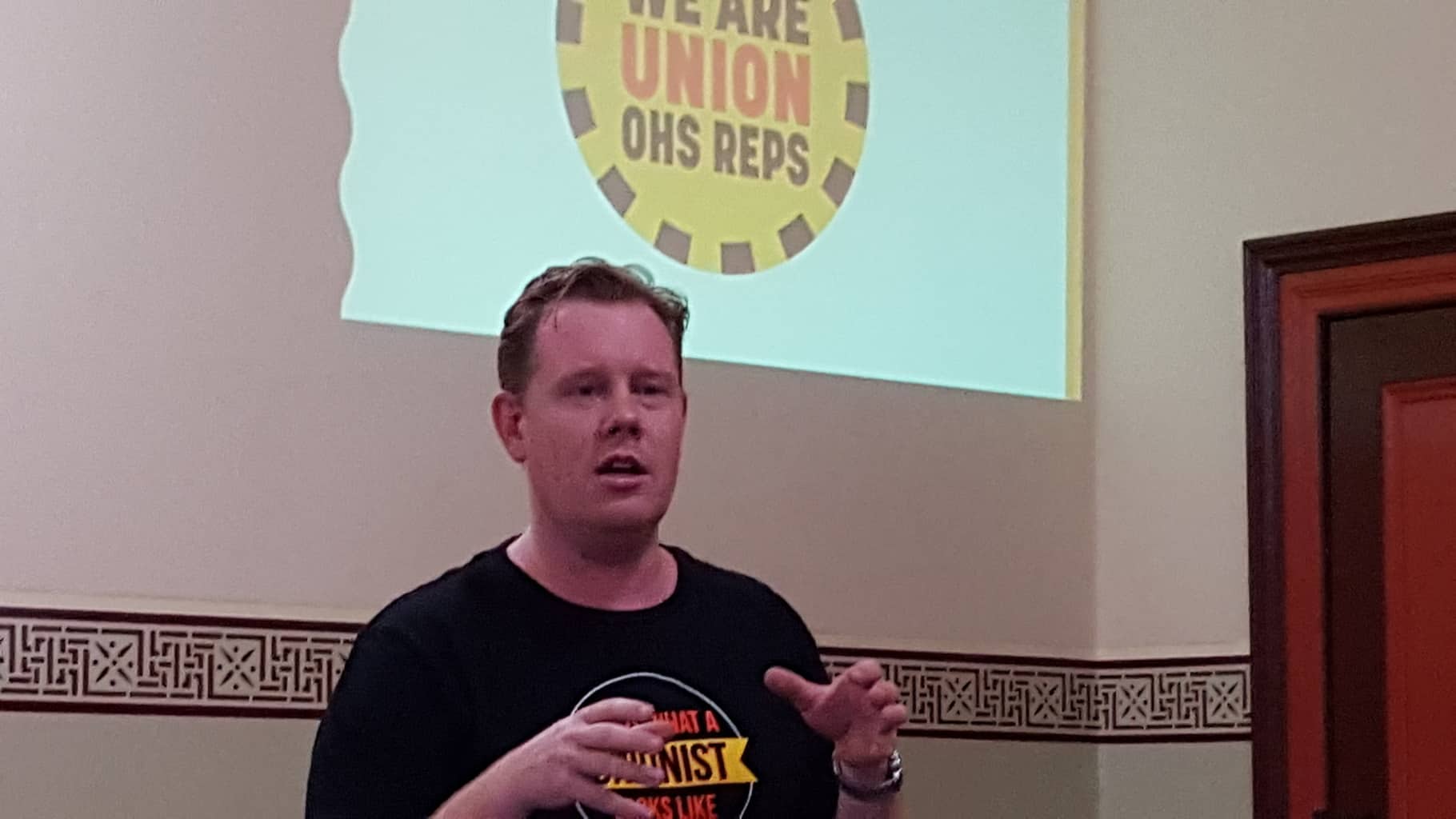 Luke Hilakari became the Secretary of the Victorian Trades Hall Council (VTHC) in late 2014. He has spoken at the 2015 Workers’ Memorial ceremony and in February 2016 he launched a new campaign focussing on occupational health and safety (OHS). Continue reading ““We want to build this OHS safety army””
Victoria announces a new OHS review
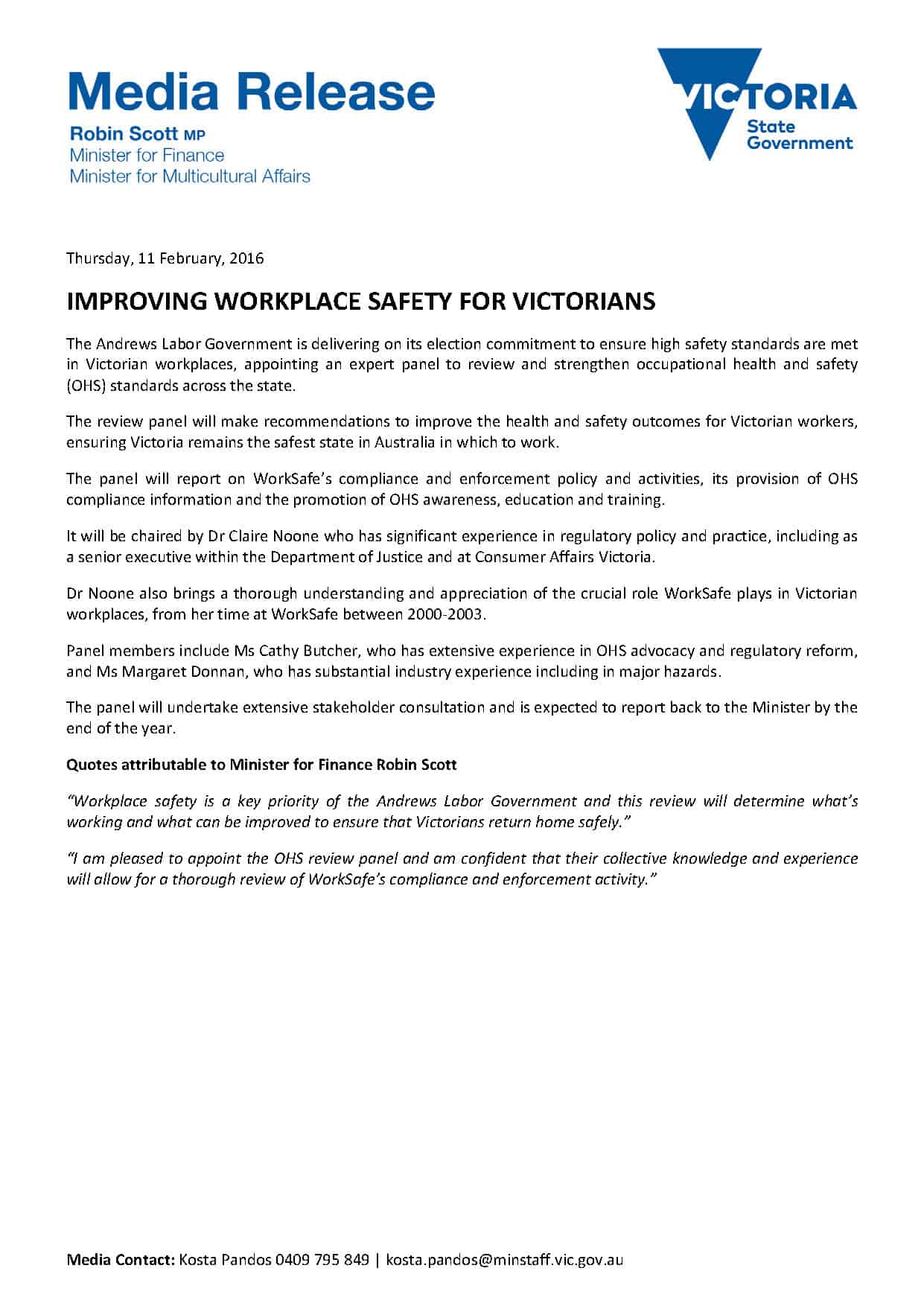 On 11 February 2016, the Victorian Government announced a review into occupational health and safety (OHS) but you would hardly have noticed. The media release gained little attention in any of the mainstream press and yet its terms of reference are quite broad. It will be interesting to see how the review panel sets its agenda.
But, hang on, wasn’t there already some sort of review into WorkSafe Victoria?
Australian politicians not “playing well together” on OHS
Occupational health and safety (OHS) returned to the Australian
Can OHS achieve change in a neoliberal world?
The operation of the European Union is a mystery to everyone outside the EU and to most people in the EU. Any organisation that juggles the legislation of over 20 countries has a thankless task but some of the work being undertaken by occupational health and safety (OHS) advocates provides a clarity on power relationships between employers and workers. I never tire of reading articles and editorials by Laurent Vogel of the European Trade Union Institute. Below is an excerpt from his editorial in the Autumn-Winter 2015 edition of HesaMag: Continue reading “Can OHS achieve change in a neoliberal world?”