Gender, OHS and Checklists

The topicality and importance of many issues highlighted in early 2020 have disappeared. One of them was the issue of sexual harassment in the workplace and Libby Lyons, Director of the Workplace Gender Equality Agency, has released the speech she intended to give at the, now cancelled, Commission on the Status of Women meeting at the United Nations. Lyons said this about sexual harassment and employers:
Subscribe to SafetyAtWorkBlog to continue reading.
Subscribe Help
Already a member? Log in here

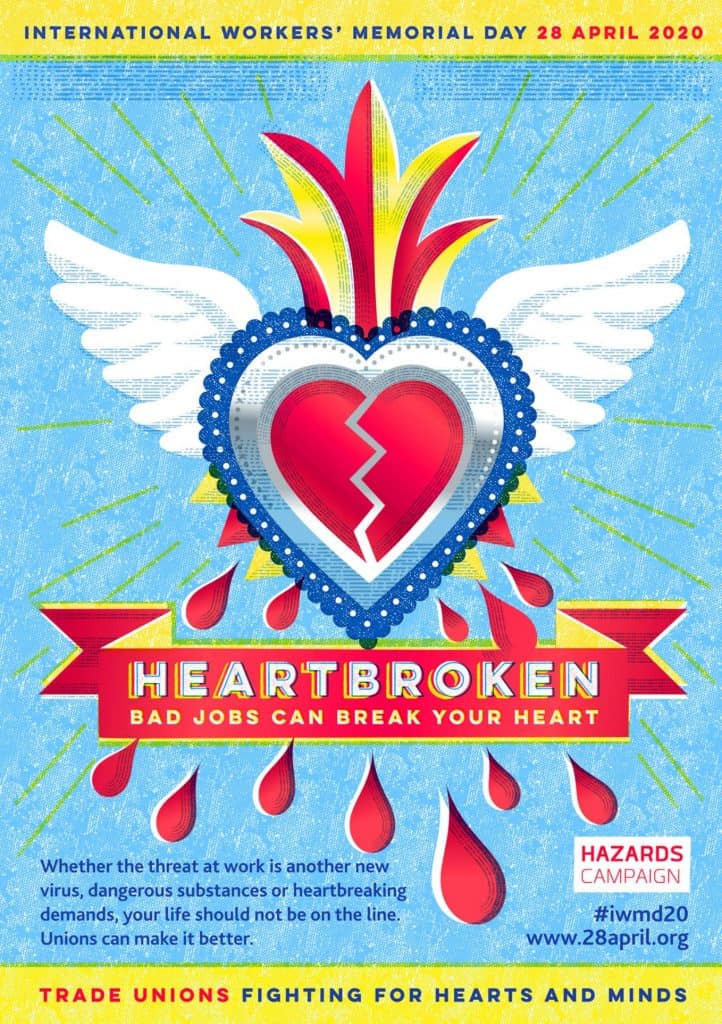
What of International Workers Memorial Day in 2020?

ILO’s World Day on Safety and Health at Work occurs each year on April 28. Events are centred around monuments and places in capital cities and towns, speeches about the importance of occupational health and safety (OHS) are made and symbolic gestures are given.

The World Day is intended to be an acknowledgement of the importance of OHS for all workers and people of all political stances. The aim is to focus on workplace deaths, and the practical actions to prevent those deaths, not the politics of those deaths, but far more prominence is given to the trade union movement’s International Workers Memorial Day held on the same day.

So how will these memorial days work in this year of COVID19?

Subscribe to SafetyAtWorkBlog to continue reading.
Subscribe Help
Already a member? Log in here

The concept of “Coercive Control” should be applied to workplace violence

“Coercive control” is getting attention in New South Wales in relation to domestic violence but there are similarities to workplace behaviours such as sexual harassment and bullying.

The Chief Psychiatrist of Victoria’s “guideline and practice resource: family violence” says

“Family violence is understood as a pattern of repeated and
coercive control, aiming to control another person’s thoughts, feelings and actions.”

page 5
Subscribe to SafetyAtWorkBlog to continue reading.
Subscribe Help
Already a member? Log in here

Accountability in all that we do

“The way we do things around here” is a rough explanation to what many people mean by culture and, especially, a workplace safety culture. A culture is built or strengthened through personal interaction, conversations, relationship and a shared responsibility. Part of this is an expectation that workers will look out for each (which is also a legislative obligation), and crucial to this is the concept of the “ethical bystander“.

But recently this concept was applied in a new way in an American Court when a woman, Lisa Ricchio, who was kept and sexually assaulted repeatedly in a hotel room, sued the hotel alleging that the hotel owners financially benefited from the crime.

Subscribe to SafetyAtWorkBlog to continue reading.
Subscribe Help
Already a member? Log in here

Look closely at the camel rather than the straw

There are strong parallels between the National Inquiry into Sexual Harassment in Australian Workplaces and others addressing workplace issues, such as the Victorian Royal Commission into Mental and the Productivity Commission’s mental health inquiry, but there is also a connection to the Royal Commission into Banking and Financial Services which has focused the minds of some of Australia’s corporation s and leaders into examining their own workplace cultures and, for some, to reassess the role and application of capitalism.

This is going to become even more of a critical activity as the National Sexual Harassment Inquiry completes its report prior to its release in the first month or two of 2020.

Cultural analysis, and change, is often best undertaken first in a microcosm or specific social context. The experiences of sexual harassment of rural women in Australia is one such context, a context examined in detail by Dr Skye Saunders in her book “Whispers from the Bush“.

Subscribe to SafetyAtWorkBlog to continue reading.
Subscribe Help
Already a member? Log in here

Grab bag of OHS issues – politics, dust, occupational violence and international HR

Workforce lifecycle framework

Over the last week or so, as the Australian Parliament resumes operating, the Liberal/National Government is trying to reduce the influence of “militant” unions through its “Ensuring Integrity” Bill but opponents say this may affect the management of occupational health and safety (OHS).


The Federal Department of Health has established a National Dust Disease
Taskforce
to develop a national approach to the prevention, early identification, control and management of dust diseases in Australia largely, it seems in response to silicosis but Black Lung had to have some influence.


Subscribe to SafetyAtWorkBlog to continue reading.
Subscribe Help
Already a member? Log in here

Family violence at work, looking at trees instead of forest

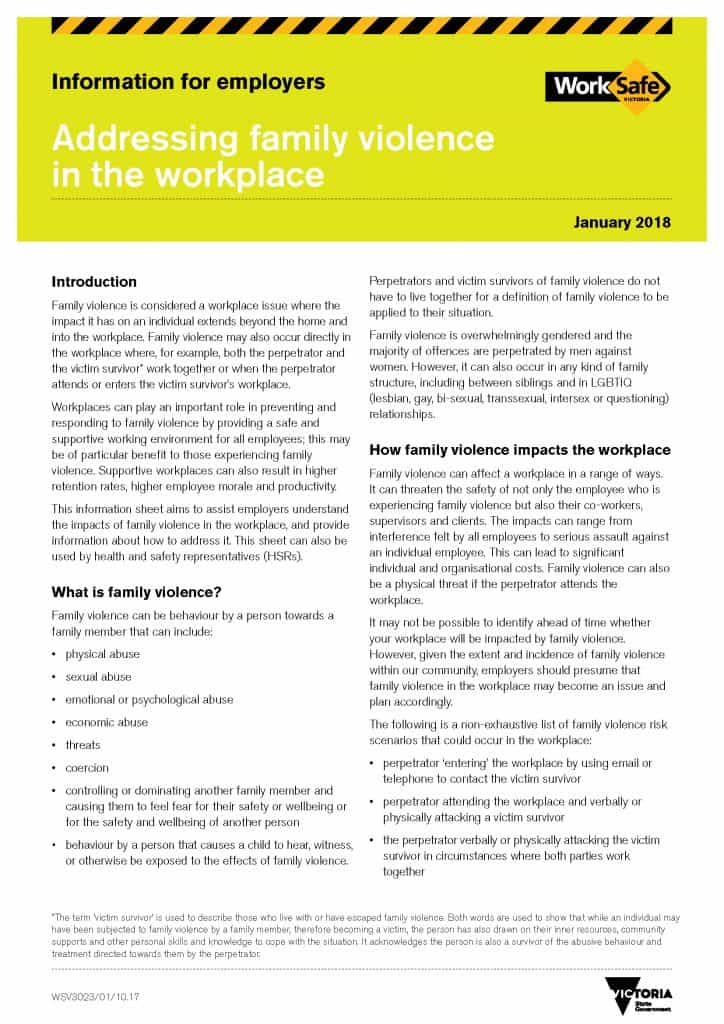
Victoria’s Minister for Workplace Safety, Jill Hennessy, has released a media statement about the occupational health and safety (OHS) context of family violence, referencing a WorkSafe Victoria guidance note from January 2018.

Hennessy is quoted saying:

“Employers have a legal obligation to provide a safe workplace for their employees – and that includes doing whatever they can to support workers experiencing family violence.”

But what level or type of support is expected from employers? Family violence is damaging and insidious but also a crime. It is also a subset, or maybe a special type, of workplace violence as is evident by WorkSafe’s reference to its broader violence publication at the end of the family violence guidance note. The publication, A guide for employers Preventing and responding to work-related violence, outlines the employers duty of care, which includes prevention.

Subscribe to SafetyAtWorkBlog to continue reading.
Subscribe Help
Already a member? Log in here
Concatenate Web Development
© Designed and developed by Concatenate Aust Pty Ltd