
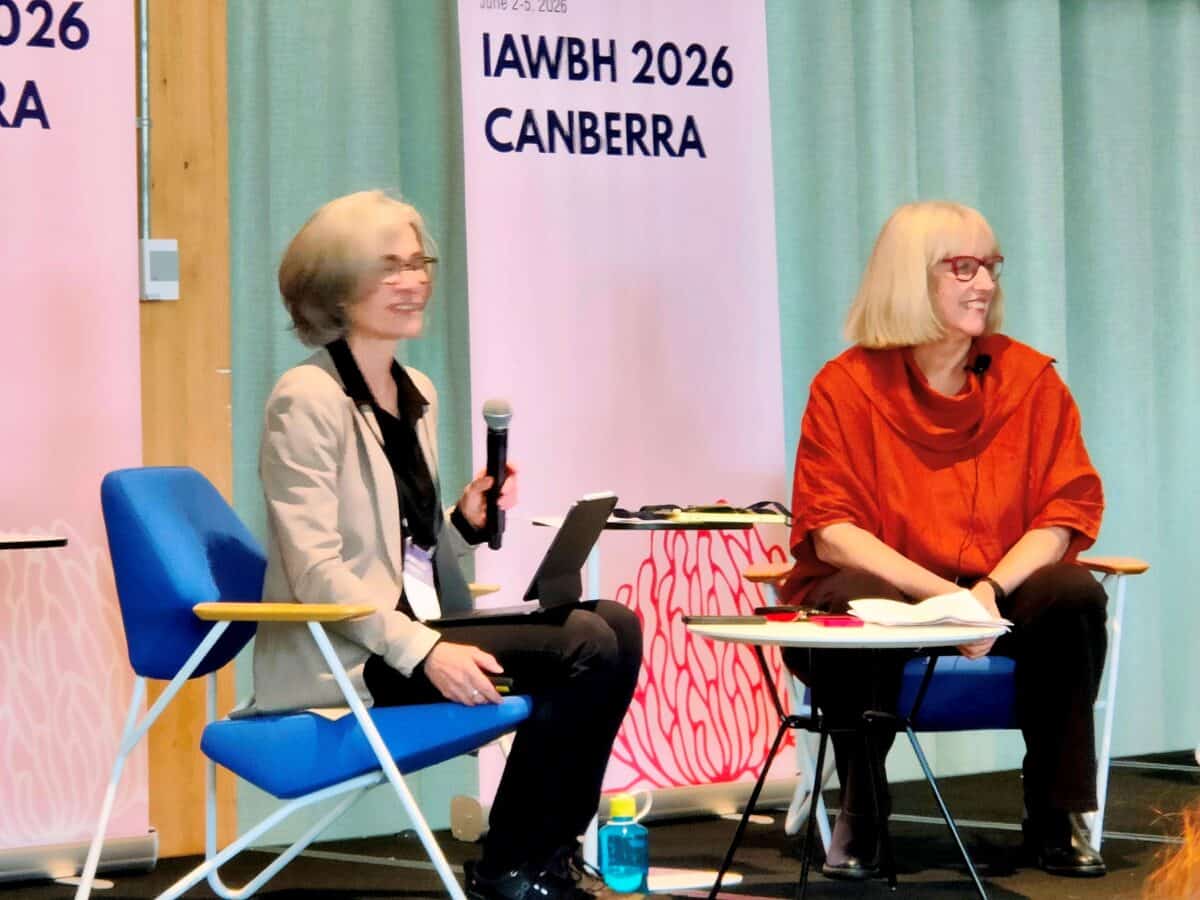
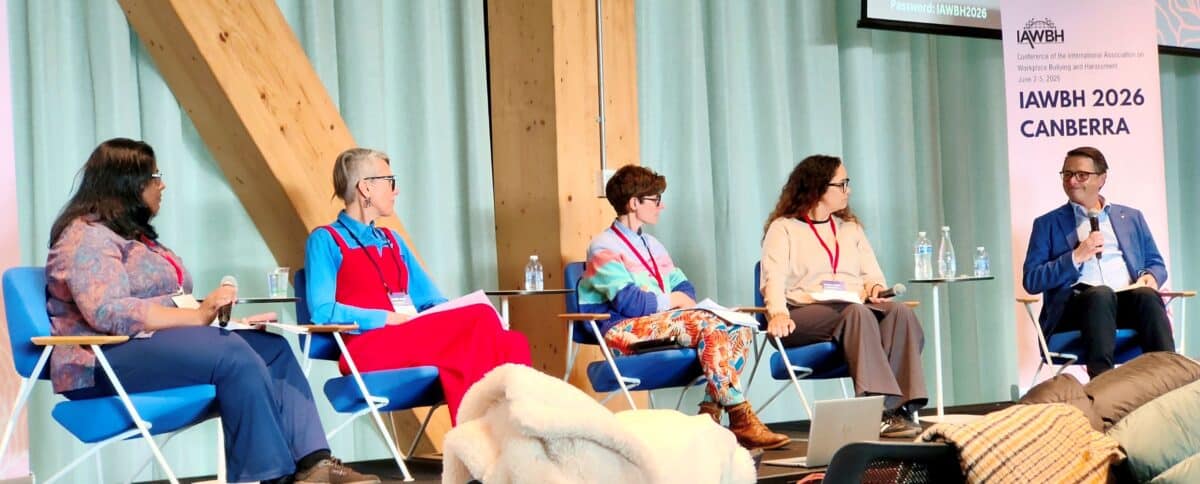
The Human Resources and Human Rights sectors in Australia are increasingly realising how useful the occupational health and safety (OHS) structures, laws and processes can be to preventing harm related to bullying, sexual harassment and gender-based violence. Recently, a joint presentation by Dr Rachel Cox from Canada and Associate Professor Belinda Smith from Australia (pictured above) highlighted this cross-sectoral awakening.
Category: wellbeing
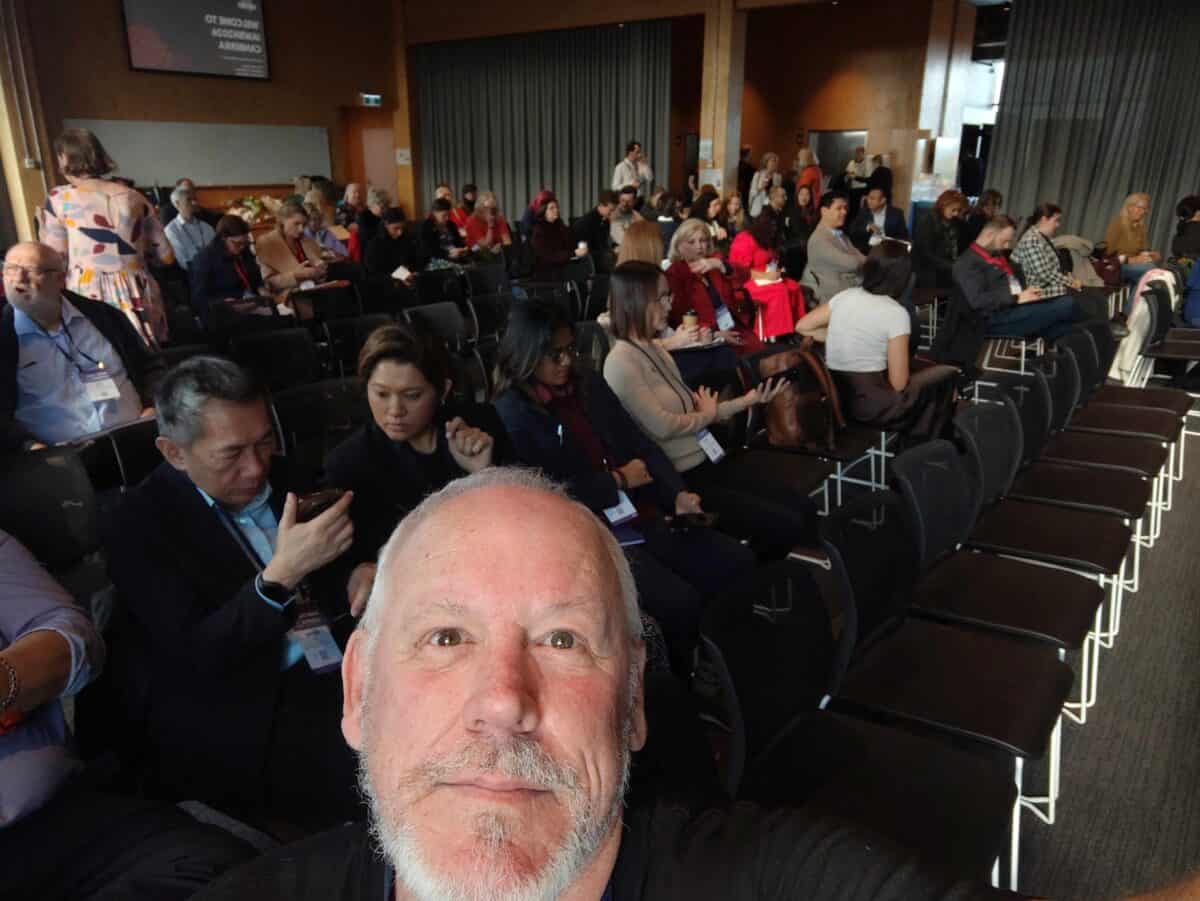
From Complaints to Control—IAWBH2026 and the Quiet Revolution in Psychosocial Safety
The 2026 conference for the International Association on Workplace Bullying and Harassment (IAWBH) was held in Canberra in June 2026. I was always curious about how prominent the term “psychosocial hazards” would be at this conference. It seems that most of the world still talks about workplace bullying and harassment and sexual harassment separately from the psychosocial, but the occupational health and safety (OHS) approach seems to be in the ascendant.
Below is my take (part 1 of 2) on the conference sessions I attended and the issues raised. (I missed the half day of Day 3). I have tried to use a generic, informative tone for a broader readership.

Breaking the cycle of inquiry and inaction in emergency services reform
This week saw the release of an inquiry into the workplace culture of the New South Wales police force. The findings were damning, but even though all Australian jurisdictions have police forces, the report received little attention beyond NSW, perhaps because we have heard it before. Coincidentally, this report was published one week after Carlo Caponnechia told an international workplace bullying and harassment conference that similar inquiries around the world have found similar cultural faults.
To address contemporary occupational health and safety (OHS) and community expectations, many businesses need to redesign their operations and organisational structures. The emergency services organisations should be given top priority.
The Gap Between Leadership Theory and Practical Prevention of Workplace Harm
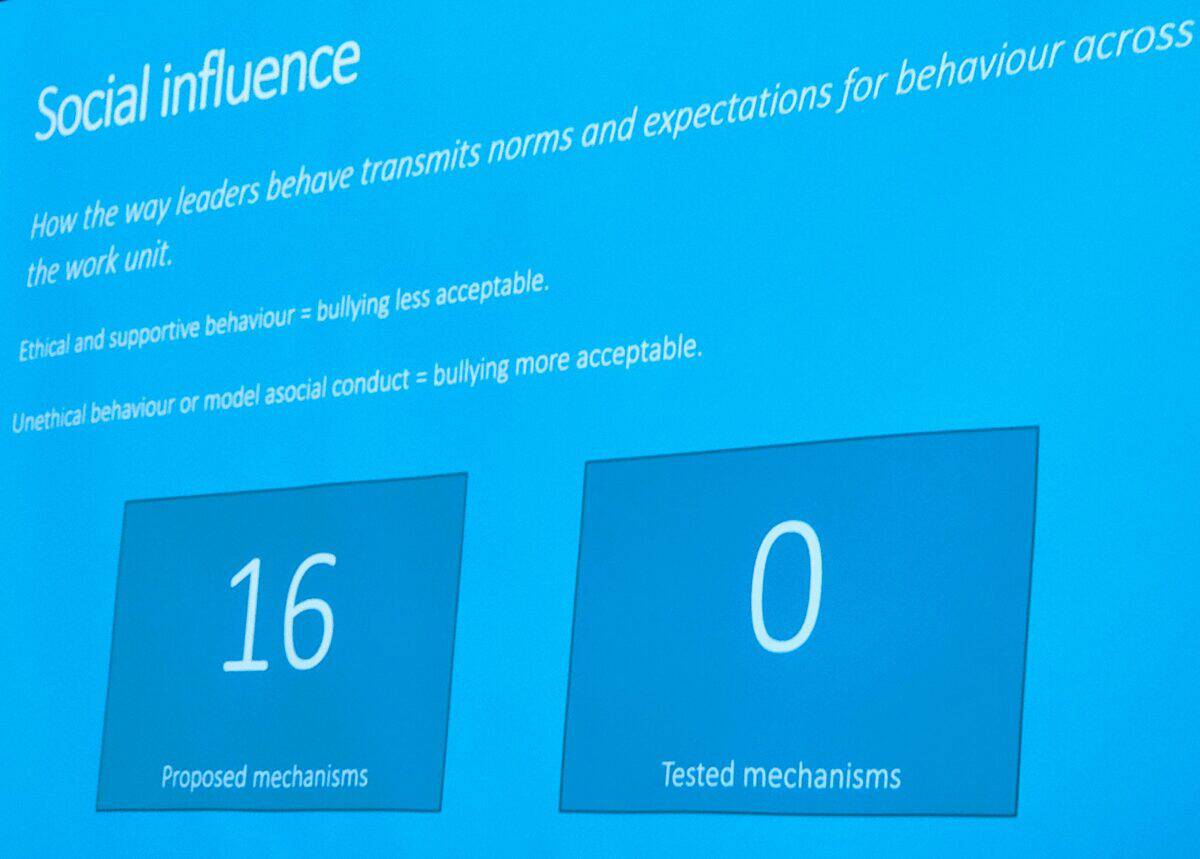
I was able to explore the concept of business leadership a little further at the recent conference of the International Association on Workplace Bullying and harassment. Lucienne Ruddenklau presented on ‘Mechanisms through which Leadership influences Workplace Bullying: A Conceptual Review”. I asked her, a leadership researcher, whether Leadership is an honorary title for executives or an adjective for leadership throughout an organisation. Her response was useful, as was her research presentation.
The Real Groundhog Day: Reports Change, Systems Don’t
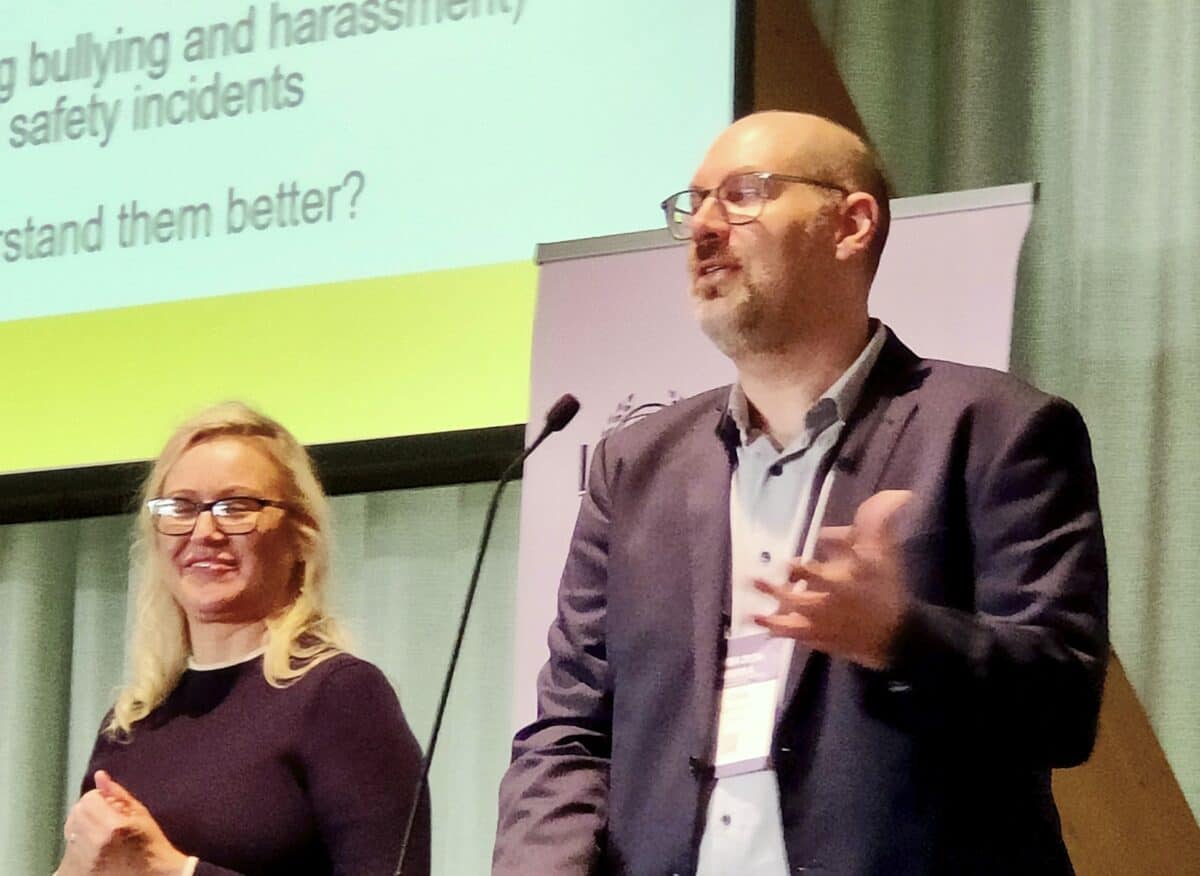
Psychological health in the emergency services has come to the fore recently as governments pay more attention to using occupational health and safety (OHS) to push employers to prevent psychosocial hazards. In the emergency services, psychosocial hazards such as trauma cannot all be prevented; the best that can be achieved is lowering these risks as far as is practicable (ASFAIRP). But ASFAIRP is a movable feast, which was on display in two presentations at a recent conference.
If We Want Change, We Need to Lobby the People Who Call the Shots
I have been trying to challenge some of the speakers at this week’s conference of the International Association on Workplace Bullying and Harassment to think further. In a panel discussion on day one, I asked why party politics is not being discussed. The panellists were gracious in responding and challenged my thinking.

Seeing Productivity Differently = Social Maturity
The impact of announcements made by the Australian Treasurer Jim Chalmers in his 2026 Budget is settling, even though some media outlets will not let the supposed injustice die. But a core argument of the Treasurer’s was to improve Australia’s productivity, and occupational health and safety (OHS) is inseparable from productivity. And perhaps how we measure productivity needs to be redefined.