The well-being and psychosocial “wild west”

With the new Psych Health and Safety regs/codes of practice, it seems many corporate ‘wellness’ providers are now branching out into the now topical, psychosocial risk management domain.  As someone who supports several national/multinational organisations, I am seeing a big gap between the academic research, provider capability, corporate understanding, and real-world activity.  I am also seeing some very questionable tools/approaches/programs and activities emerging in the race to sate the increasing corporate psych risk appetite.

[Guest post by David Burroughs]

Continue reading “The well-being and psychosocial “wild west””


Violence against teachers

Unless you are a teacher, it is difficult to comprehend the extent of stress and pressure teachers can face at school. A recent court case in Queensland involving an appeal against a decision by the Regulator not to accept a workers’ compensation claim provides some insight into the teacher’s lot.

The case, Roberts v Workers’ Compensation Regulator [2023] QIRC 76 (6 March 2023), was won by Ms Karen Roberts as the Commissioner decided that Roberts’ experiences at work, over time, were the major contributor to her post-traumatic stress disorder. There are statements in this decision that the school’s management practices did not worsen her experiences, and there are arguments over the degree of influence of other factors, but there is no occupational health and safety (OHS) perspective here. Even though it is not an OHS prosecution, there is an important OHS context.

Subscribe to SafetyAtWorkBlog to continue reading.
Subscribe Help
Already a member? Log in here

Hubris, thy name is HR

The Human Resources (HR) sector often feeds off itself, reinforcing what it has always done, rather than seriously looking at opportunities to improve from outside its own experience and discipline. Workplace mental health is a particular example.

Recently the Human Resources Director (HRD) website promoted a new well-being survey from AON with the headline:

“Want to boost company performance? Invest more in wellbeing – Higher wellbeing scores can enhance performance by up to 55%: Aon report”

My initial response was WTF?! But after giving up some of my identity data to the website and reading the AON Report. My surprise diminished as I realised the report was just another example of comforting a profession on a workplace issue about which it is losing control.

Subscribe to SafetyAtWorkBlog to continue reading.
Subscribe Help
Already a member? Log in here

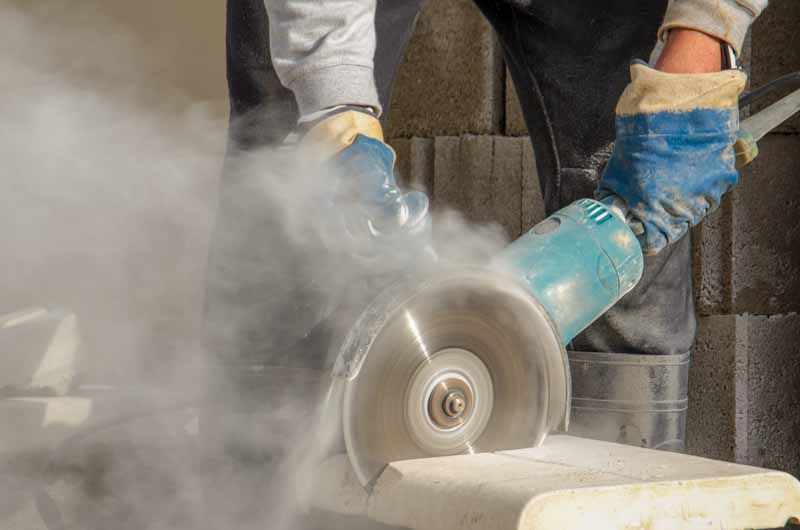
Silicosis campaign is about safety but is also about politics

The calls for banning engineered stone‘s importation are curious and likely to be acted on later this week.

Politicians, unions and some OHS associations have undertaken a risk assessment and determined that elimination is the most effective harm prevention strategy. Previous risk assessments of silicosis have been reported on in this blog for some time without banning the material. The risks have not changed even with increased inspection and enforcement. So what has changed? Politics.

Subscribe to SafetyAtWorkBlog to continue reading.
Subscribe Help
Already a member? Log in here

Research shows good ROI for OHS

According to the abstract of a recent piece of research from Canada:

“Financial benefits combined estimates of the tangible financial benefits arising from averted disabling work-related injury and illness and intangible financial benefits associated with improved employee retention and morale, improved production quality and strengthened corporate reputation. Applying these plausible assumptions, the average return on OHS expenditures was 1.24 for 289 manufacturing employers, 2.14 for 56 transportation employers and 1.34 for 88 construction employers.”

One can froth up about the Return on Investment (ROI) figures, which are notable, but of interest was the mix of tangible and intangible factors in the equation.

Subscribe to SafetyAtWorkBlog to continue reading.
Subscribe Help
Already a member? Log in here

Excellent (and free) Australian guide on psychosocially healthy workplaces

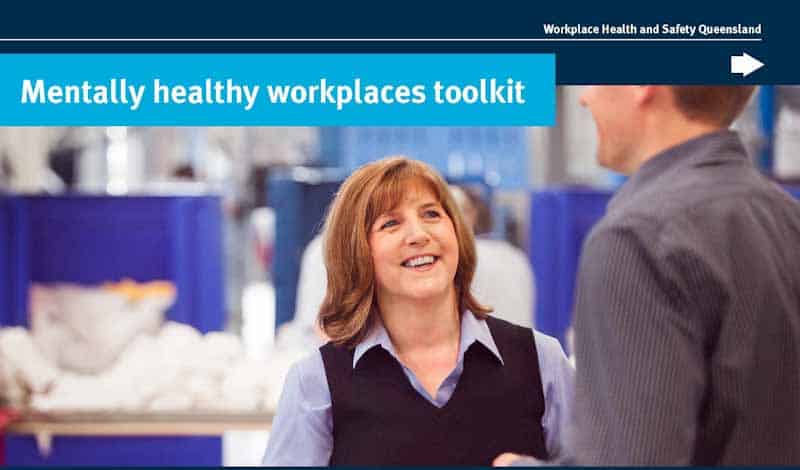
Readers have shown considerable interest in the EU-OSHA e-guide for psychosocial health at work. A similarly formatted document has been released by Workplace Health and Safety Queensland in support of the new “Managing Psychosocial Hazards at Work Code of Practice 2022“. The Mentally Healthy Workplaces Toolkit is an interactive PDF slightly more sophisticated than the EU document through its extensive use of hyperlinks to external information sources.

Subscribe to SafetyAtWorkBlog to continue reading.
Subscribe Help
Already a member? Log in here

Plain psychosocial health guide has great potential

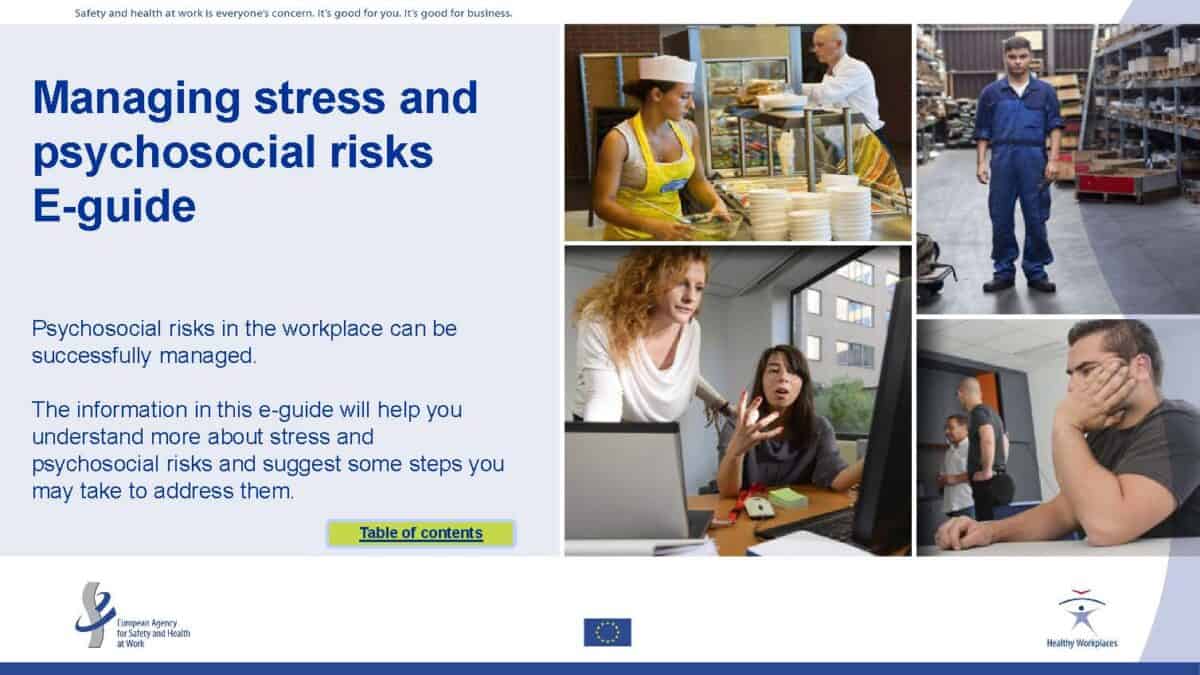
Recently the European Agency for Safety and Health at Work released an “e-guide” on managing stress and psychosocial risks at work. It offers a radical contrast to some of the information on risks and burnout that originate from the United States.

The e-guide is really a PDF file that uses the software’s features to establish links between the table of contents and relevant pages of information. This is a little “old school” but the Agency often does this, I think, to allow for wide distribution and easy application.

Subscribe to SafetyAtWorkBlog to continue reading.
Subscribe Help
Already a member? Log in here
Concatenate Web Development
© Designed and developed by Concatenate Aust Pty Ltd