

WorkSafe Victoria has actively campaigned against occupational violence for the last few years. The pandemic, understandably, brought the focus onto violence against emergency services workers and healthcare staff. Recently the campaign has focussed on gendered violence at work. The intention is to be inclusive, to address the variety of violent acts and the variety of people gendered violence affects, but it is not as inclusive as it could be.
Category: wellness
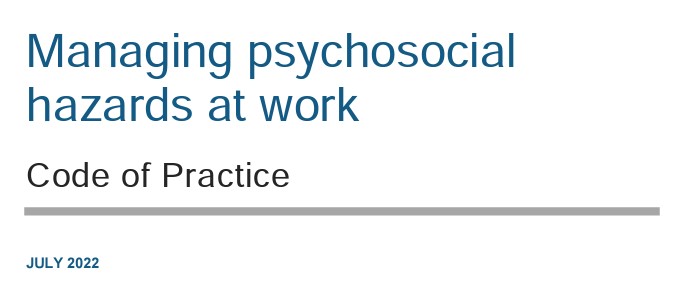
New mental health code and regulations
Last week Safe Work Australia released its “Managing psychosocial hazards at work – Code of Practice“. It offers solid guidance on psychosocial hazards reflective of the work already conducted by Victoria, New South Wales and other jurisdictions and in support of the new regulations in the Model Work Health and Safety laws. In connection with a blog article earlier today, the Code provides some insight into cognitive demands.
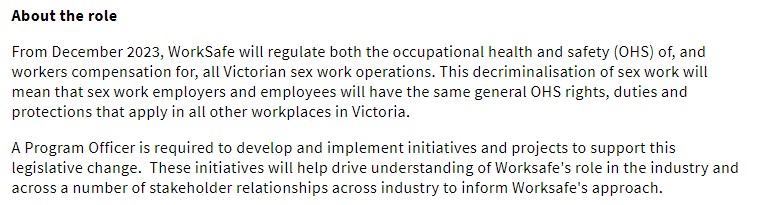
WorkSafe advertises for a sex work Project Officer
WorkSafe Victoria is advertising for a Program Officer for its new sex work industry obligations. It’s a tough ask as the candidates will need to combine a good level of occupational health and safety (OHS) knowledge with a close, effective association with the local sex work industry networks.
WorkSafe has outlined its expectations for sex work OHS with these suggested considerations:
A Wellbeing Budget needs a strong cultural change strategy
Jim Chalmers has completed his first week of Australia’s Parliament as Treasurer. On Thursday, he presented a statement of the country’s finances without mentioning his well-being intentions (which some are claiming to be a gimmick). This does not mean that well-being is dead, as the “Wellbeing Budget” is not due until October; Chalmers needs to establish his authority, but it illustrates a common perspective on occupational health and safety (OHS) in the minds of many small business people.
Psychological regulations and control
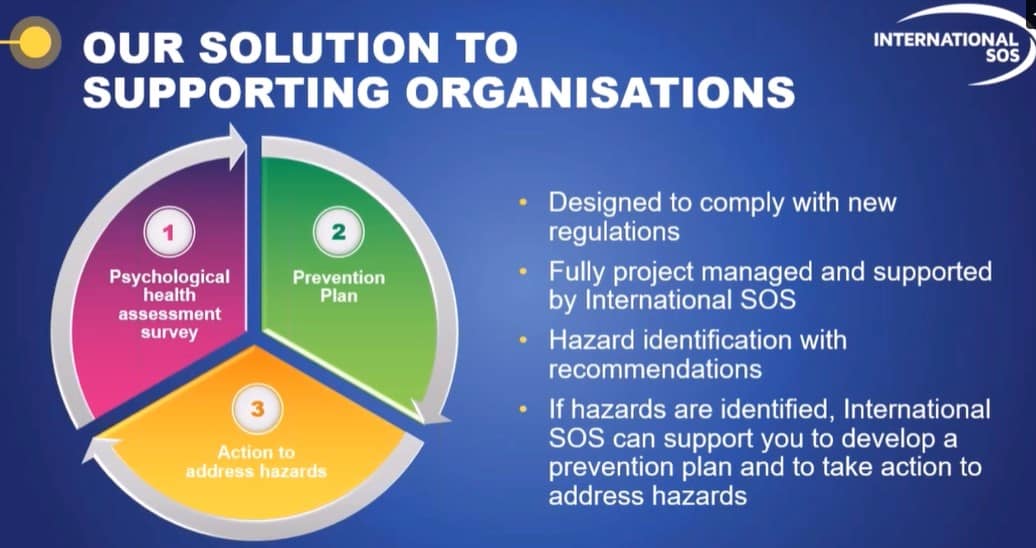
Recently International SOS conducted a webinar on workplace psychosocial hazards and controls. Parts of it were clearly marketing and promotional, but some of the speaker’s content was fascinating and useful.
The seminar’s structure was good because it included a global perspective and a local Australian. The speaker from a worldwide standpoint, Dr Rachel Lewis, used financial figures to illustrate the seriousness of workplace mental health risks. These involved annual costs to employers, costs of workplace stress and other figures in the billions. This approach encourages a misunderstanding of the audience for workplace mental health seminars and the occupational health and safety (OHS) approach to the hazard.
Victorian sexual harassment recommendations protect workers – sort of
In light of many workplace sexual harassment scandals in Australia, the Victorian Government established a task force to look at the issues and make recommendations. That task force has released its findings, the government has responded, and the media has focused on mainly one issue – non-disclosure agreements (NDAs) – missing out on other important information. And questions like, why did Victoria have the task force at all?
What’s not worked on workplace mental health
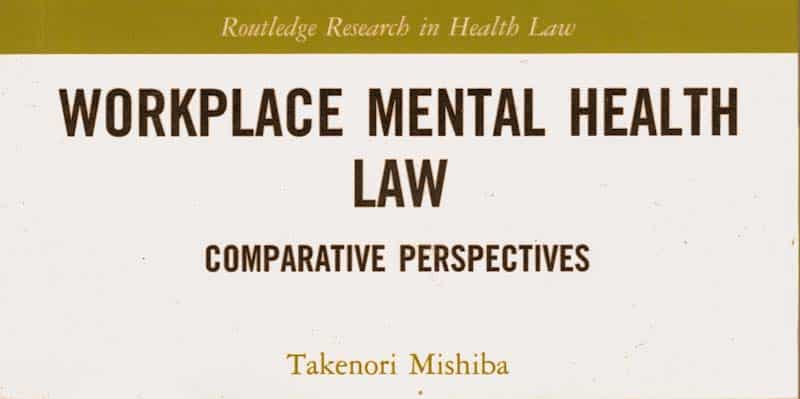
We need to seek alternative perspectives to better understand ourselves and our place in the world. In 2020,Takenori Mishiba wrote about comparative perspectives of workplace mental health laws. The book has been published in a more affordable paperback edition very recently. The attraction of this book is that Australia was not part of Mishiba’s research.
On the first page, Mishiba states that:
“…there is currently no precise legal definition of mental health.”
This alone should generate great concern in the occupational health and safety (OHS) discipline.