

Two years ago this blog looked at the origins and the permutations of the “one-in-five” phrase used in Australian reports about mental health. The earliest occurrence of the statistic was from the Australian Bureau of Statistics (ABS) in 2007. It was hoped that the Productivity Commission (PC) would revisit the statistics in its recent inquiry into mental health. It did not, however a new statistical assessment of mental health is not too far away.
Category: wellness
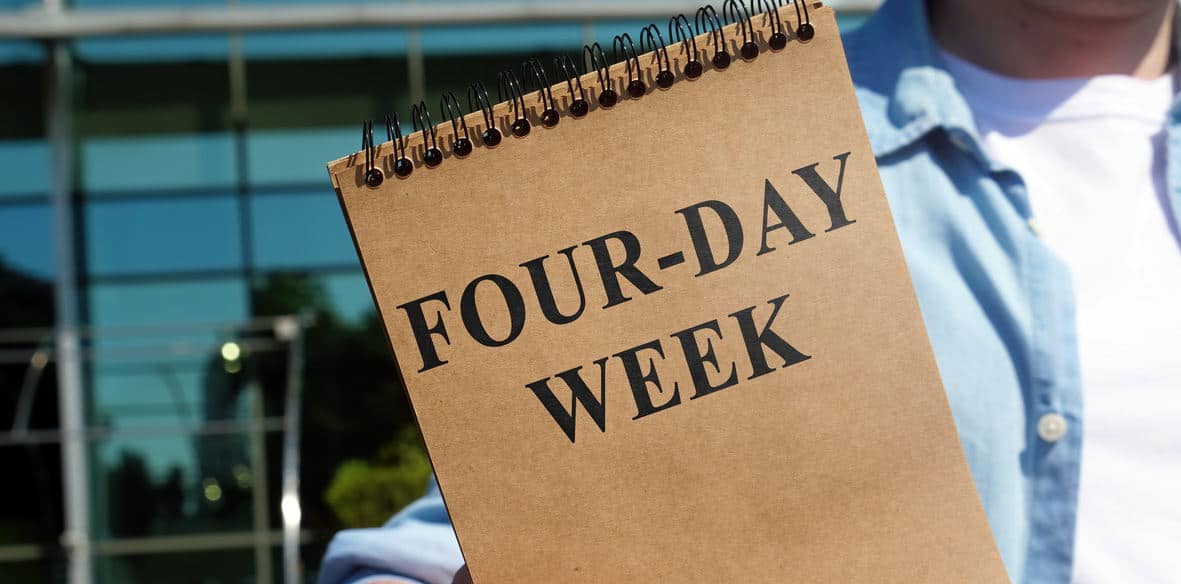
OHS and the Four Day Week
Recently the BBC’s Business Daily had a short discussion about the introduction of the 4 Day Week. This workplace reform has knocked about for a few years now and seems to have some mental health and job satisfaction benefits. This is enough for it to interest occupational health and safety (OHS), especially as it is one of the few examples of a structural and organisational change rather than an intervention aimed at each individual worker.
The BBC discussion indicates the difference (it may be a schism) between a new way of thinking about work and the old traditional way. The opponent to the 4 Day Week emphasises the individual over the organisational and compares service industries to those that produce goods.
The episode, now a podcast, is a good introduction to the for and against of the 4 Day Week but careful listening shows the challenge ahead.
Continue reading “OHS and the Four Day Week”
Right information, wrong magazine
The OHS Professional magazine for December 2020 contains a very good article about workplace psychological risks and the occupational health and safety (OHS) strategy to prevent mental harm. The only negative is that it is not published in a Human Resources magazine, or one for company directors. The preventative techniques are well known to the OHS profession and based on independent scientific evidence, but it is other managerial disciplines that need to learn the difference between preventing psychological harm and providing symptomatic relief.

The certainty of diagnosis
Occupational health and safety (OHS) is not famous for its certainty. The days of prescriptive compliance to OHS laws are, probably, never to return. But the flexibility offered by modern OHS laws and the pervasiveness of “reasonably practicable” has complicated the management of workplace health safety by increasing that uncertainty.
The attention being given to workplace mental health, over the last 20 years and since work-related stress was identified as a major problem, has highlighted this flexibility/uncertainty. However, some certainty on workplace mental health is accessible if one is prepared to challenge the dominant workplace wellness paradigms.

Work-related mental health remains contentious
This article is about SafeWorkNSW’s recently released Draft Code of Practice for Managing the Risks to Psychological Health, but it is not going to focus on the Code. Instead the focus will be on the supplementary Explanatory Paper because this presents the rationale for the Code’s contents and, in many ways, is a more useful tool for occupational health and safety (OHS) discussions. However, just as the Code has structural and legislative limitations as part of its Purpose, the Explanatory Paper is a support document for submissions on the Draft Code and therefore has its own limitations.
Wellness programs – Do They Work?

Many companies operate wellness programs at work. Some of these claim to reduce the likelihood of work-related injury or ill health. Others are aimed at reducing chronic health risks such as obesity, heart disease and more. A recent book from the United States encourages us to be sceptical of such programs and ask about employers’ purposes in introducing such programs. The book is called “Calling Bullshit – The Art of Scepticism in a Data-Driven World” and offers important insights beyond workplace wellness.
If staff are “going to hit the wall”, redesign the wall
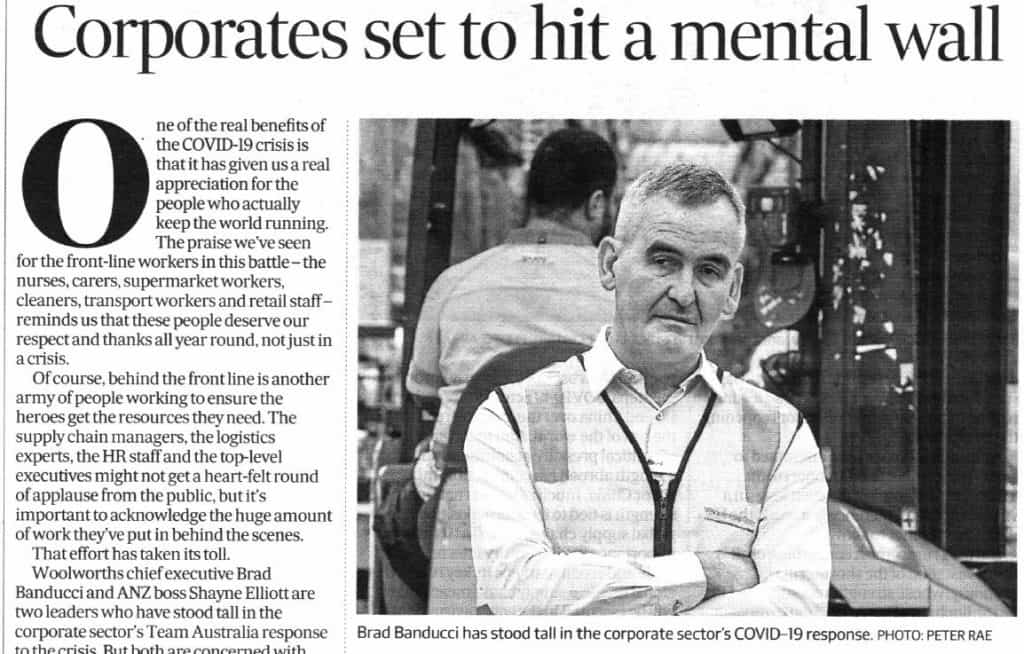
On May 11 2020, the Australian Financial Review’s back page ran an article (paywalled)about how “corporates” are becoming aware of mental health risks due to the COVID19 disruption. It is a good article but also one that reveals the dominant misunderstanding about mental health at work and how to prevent it.