Evidence to support Stand Up, Sit Less, Move More

Office workers need to exercise more.  This is one of the simplest occupational health and safety (OHS) statements that can be made.  Whether one stands while answering a telephone, walks to a photocopier, have a walking meeting or take the stairs instead of the lift or escalator, you will be healthier by moving.  Too often this simple OHS message is confused by sellers of apps, products, furniture and training courses that promise success from a single intervention.  The way to avoid this is to look at the research and some recent Australian research into sedentary work is a useful reference in determining workplace safety interventions.

The research “A Cluster RCT to Reduce Office Worker’s Sitting Time: Impact on Activity Outcomes” has been written by a swag of researchers from around Australia and found that a:

“workplace-delivered multicomponent intervention was successful at reducing workplace and overall daily sitting time in both the short- and long- term.”

Subscribe to SafetyAtWorkBlog to continue reading.
Subscribe Help
Already a member? Log in here

If worker engagement is lacking, reassess the product

Australian companies continue to introduce workplace wellness programs when the evidence for their effectiveness is still weak.  A major reason for this weakness is that many workers do not see health and wellness as part of the workplace’s role. It is also a problem that the American motivation for workplace wellness is not relevant to Australia.

What’s perhaps more worrying is that wellness programs often get more prominence than occupational health and safety interventions that do work but are less “sexy”.

A March 2016 article in EHS Today illustrates some of these issues.

Continue reading “If worker engagement is lacking, reassess the product”

“Cabbage Salad and Safety” podcast launched

KJ SFH HeadshotIt has been my intention for many years to establish a conversational podcast with a workplace safety lawyer. The opportunity to pitch the idea occurred earlier this year and the first episode of Cabbage Salad and Safety is now available.

Siobhan Flores-Walsh of Corrs Chambers Westgarth (pictured right with the author) was the lucky lawyer and she has been enormously supportive also providing the recording equipment, personnel and opportunity. Continue reading ““Cabbage Salad and Safety” podcast launched”

Stress advice that builds on what came before

In occupational health and safety (OHS), as in most things, it is possible to learn more from what is not said than what is said. Recently WorkSafe Victoria released a guidebook for employers on “Preventing and managing work-related stress”. Given the current community focus on stress, health and wellness, discussion of this document’s release has been quite muted. Part of the reason is that, in some ways, the guidebook does not fit with the contemporary health and wellness push.

WorkSafe has been publishing guidance on workplace stress and its subset, workplace bullying, for well over 20 years. It’s Stresswise publication  has been a de facto reference on the hazard and the workplace bullying changes initiated by the ACTU and implemented by WorkSafe Victoria, emerged from. ACTU surveys of its members specifically on workplace stress.

Part of the significance of investigating workplace stress is that the major causes are institutional, that is, the way businesses are managed rather than with the individual’s capacity to cope. It is here that the WorkSafe guidebook conflicts with the common approaches of the wellness advocates.

Subscribe to SafetyAtWorkBlog to continue reading.
Subscribe Help
Already a member? Log in here

NZ survey reveals useful OHS profile

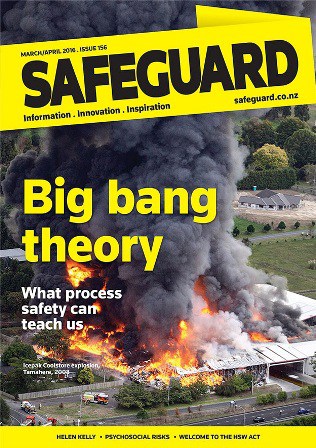
Safeguard-Issue 156New Zealand’s Safeguard magazine is a long-standing institution.  Recently it undertook its first ever Safety State of the Nation survey.  The results are interesting and should provide a format for Australia and other countries or publishers to follow.  Cross border comparisons could be fascinating.

Safeguard’s editor Peter Bateman says in a media statement:

“Given all the scaremongering stories which have accompanied the new Health and Safety at Work Act, it is pleasing to see 40% of respondents feel health and safety is an opportunity to improve their business rather than just to comply with the law.”

The fact that the results are made publicly available is also significant.  Not only does this allow me to write an article on the results, it shows a level of transparency that other safety-related surveyors, particularly those who charge hundreds of dollars for a survey report, could easily follow.

Subscribe to SafetyAtWorkBlog to continue reading.
Subscribe Help
Already a member? Log in here

Gender, buzzwords and safety/wellness knowledge

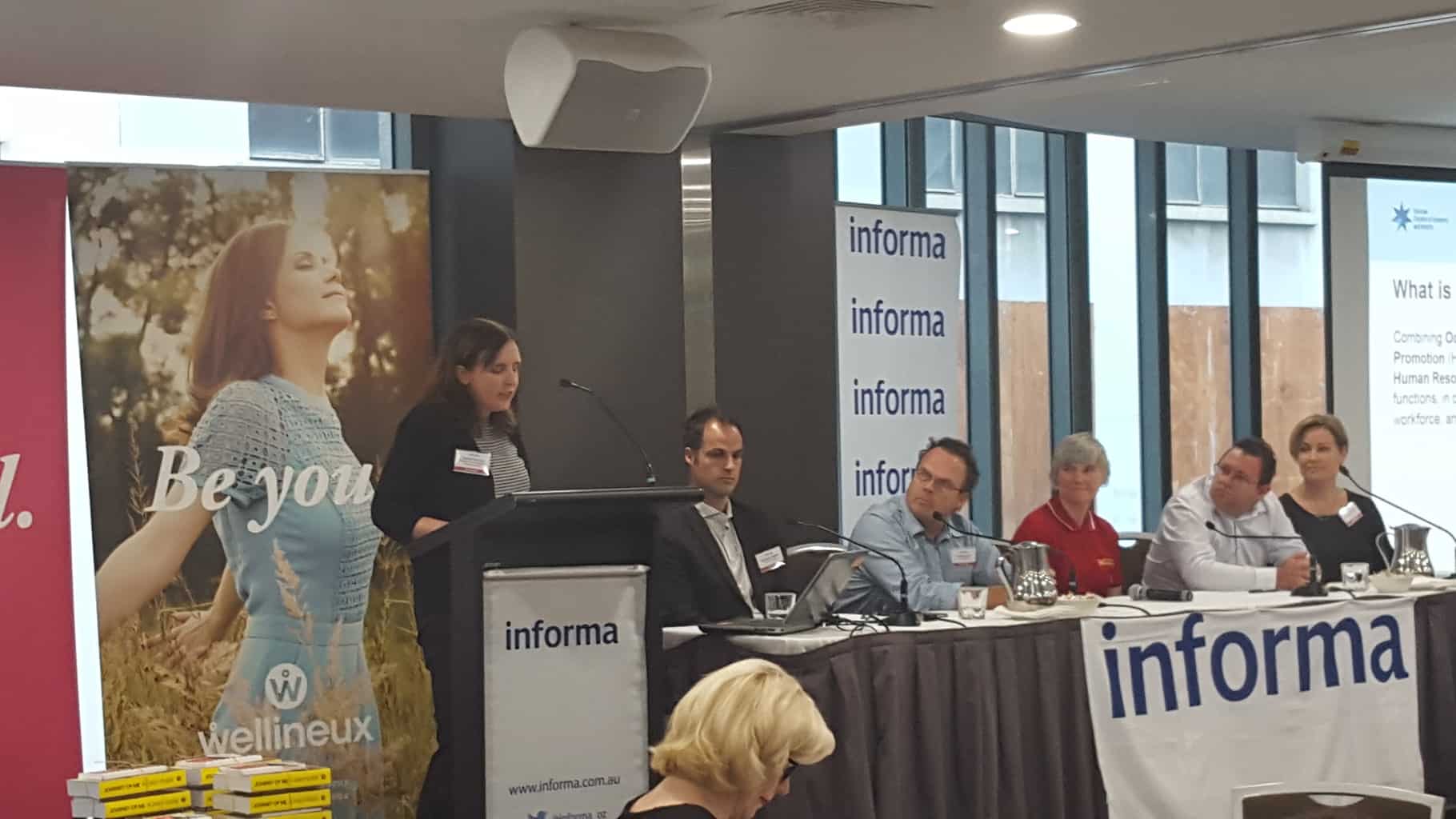
On 30 March 2016, Melbourne hosted a Workplace Wellness conference organised by Informa. (SafetyAtWorkBlog attended as a guest.) The reason for attending was to see how occupational health and safety (OHS) is growing, or needs to grow, to accommodate workplace wellness issues and how the wellness sector looks on OHS. Continue reading “Gender, buzzwords and safety/wellness knowledge”

Concatenate Web Development
© Designed and developed by Concatenate Aust Pty Ltd