
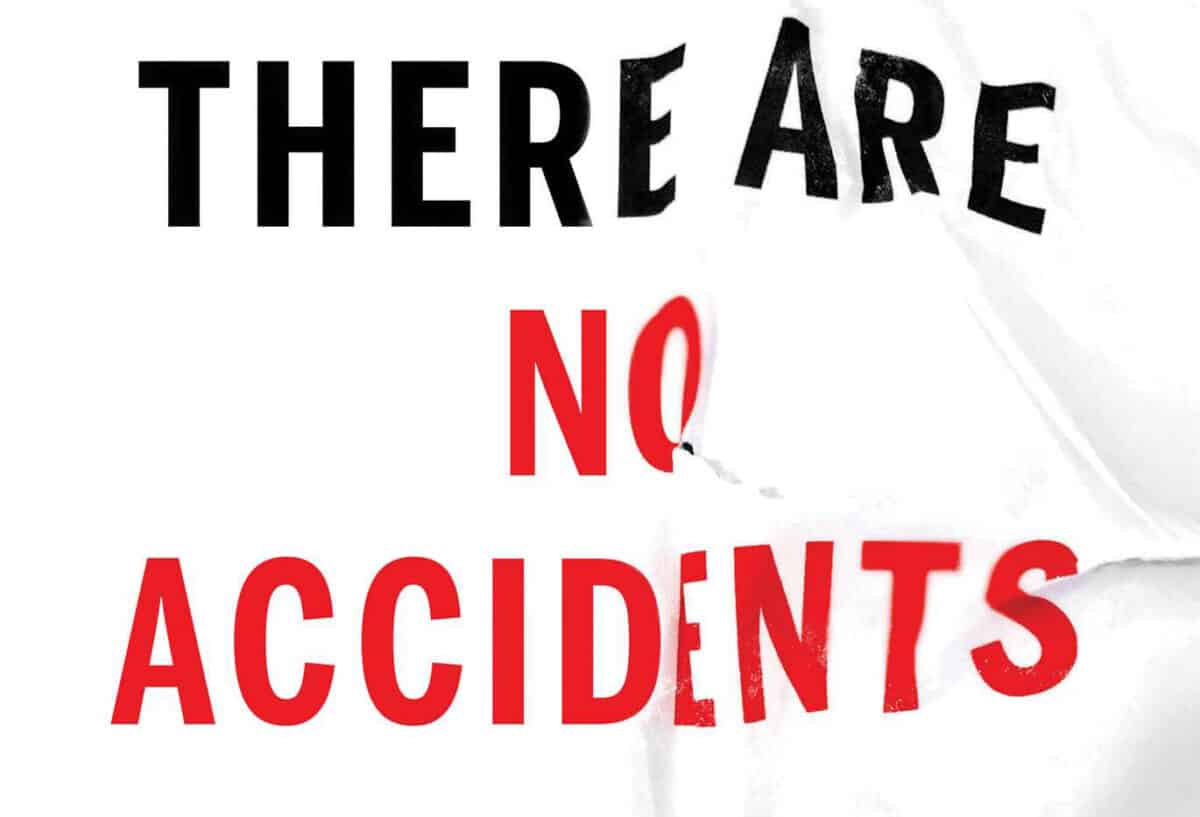
I am halfway through an extraordinary book called “There Are No Accidents –
The Deadly Rise of Injury and Disaster—Who Profits and Who Pays the Price” by Jessie Singer. It is extraordinary in many ways, but the most significant is that Singer chose to write a book for the general reader about how people are hurt at work, home and when driving and how describing these as “accidents” deflects responsibility, as if there was nothing that could be done to prevent them. This is of huge significance to the advocates of work health and safety, and the book’s release should spark interviews with Singer and book reviews which could lead to a broader social discussion of safety.
Category: workers compensation

Why bother with the Federal Government on OHS matters?
Australian political debate has a recurring thread of State and Federal responsibility. Currently, this debate focuses on the emergency response for floods in Queensland and New South Wales. Before this was the COVID response and the Black Summer bushfires. This argument over responsibility has trickled along for many years, for Constitutional and other reasons, including occupational health and safety (OHS).
Some years ago, all the Australian governments had a stab at resolving the split without reforming the Constitution through the OHS harmonisation strategy. It tweaked the system without Constitutional reform, but OHS will remain primarily a State and Territory matter (except for Comcare). This allows Prime Minister Scott Morrison to make bold statements (and some not-so-bold) about national problems like sexual harassment in Australian workplaces or worker exploitation in agriculture, understanding that the local jurisdictions are the ones who need to fix and police the problems.

On mental health, everyone wants to win
In response to the first of this series of articles on Victoria’s proposed Psychological Health regulations, one reader provided an excellent outline of one of the roads leading to the proposal. It is certainly worth looking back to the Boland Review and recommendations, but it is also worth considering some of the politics around Minister Stitt’s announcement in May 2021.
Recently WorkSafe Victoria’s Principal Psychological Health and Safety Specialist, Dr Libby Brook, was interviewed on the Psych Health and Safety Podcast. In providing background to the proposed regulations, politics was touched upon, sort of, but it was good to hear directly from a WorkSafe representative on the issue and the proposed regulations. The interview illustrated some of the strengths and weaknesses in the regulations.
What is a psychological incident?
The Regulatory Impact Statement (RIS) for Victoria’s draft Psychological Health Regulation does not seem to define what is meant by a psychosocial incident. (If I have missed it, please include a reference in the comments section below) In trying to establish a workplace mental health demographic, the RIS states that:
“As there is currently no legislative reporting requirements for psychosocial incidents, voluntary calls received by WorkSafe’s advisory service have been used as a proxy to estimate the prevalence of psychosocial incidents in the workplace.”
page 34
It is a pretty fluffy determination that the RIS accepts, further illustrating the need for additional data. The advisory service figures record 80% of psychosocial calls relate to bullying.
Continue reading “What is a psychological incident?”
Achievements and opportunities
In November 2022, Victoria has its State Election. The current Government of the Australian Labor Party has a solid parliamentary presence and is tipped to win another term of government. Although the 2022 Platform is yet to be released, it is worth looking at the 2018 policy document for what was promised and has been achieved in occupational health and safety (OHS) since then and speculating on what is left to do or announce in 2022.
The opposition Liberal Party of Victoria does not release policy documents but does include a list of its “beliefs”.
Below is a list of what Labor “will” do from the OHS chapter of its 2018 platform document:
Safety is less of a joke but still struggles for credibility
In a SafetyAtWorkBlog post from early 2008, “Is OHS a Joke?“, I included an example of the misunderstanding of occupational health and safety (OHS) by a supermarket worker. This echoed some of the myths being busted by the United Kingdom’s Health and Safety Executive. OHS is less of a joke in 2010, but only just. HSE’s myth-busting campaign was suspended in 2018, but OHS may face a more significant challenge than ridicule, its credibility. The application of OHS laws is gradually eroding the “occupational” from the “health and safety”, and the social ripples of this change are only just being acknowledged.
Suicides and historic data
Recently Safe Work Australia (SWA) released an excellent batch of occupational health and safety (OHSA) information in its annual “Key WHS Statistics – Australia 2021″. The decline in fatalities is significant, but there remains an odd omission that is worrying the longer it is not addressed – work-related suicides.
Limiting the statistical period also has implications for how OHS is understood and for the rate of change.