
During April 2019 Executives from Safe Work Australia (SWA) attended the Senate Estimates hearings as usual. This current session was a little different as a General Election was imminent and Industrial Manslaughter laws have increased focus on occupational health and safety (OHS) organisations and regulators. Also the Committee included Senator Gavin Marshall who, late last year, was the Chair of the committee which conducted an inquiry into industrial deaths.
Continue reading “Safe Work Australia at Senate Estimates”Category: workplace
Better jobs should also be safer jobs
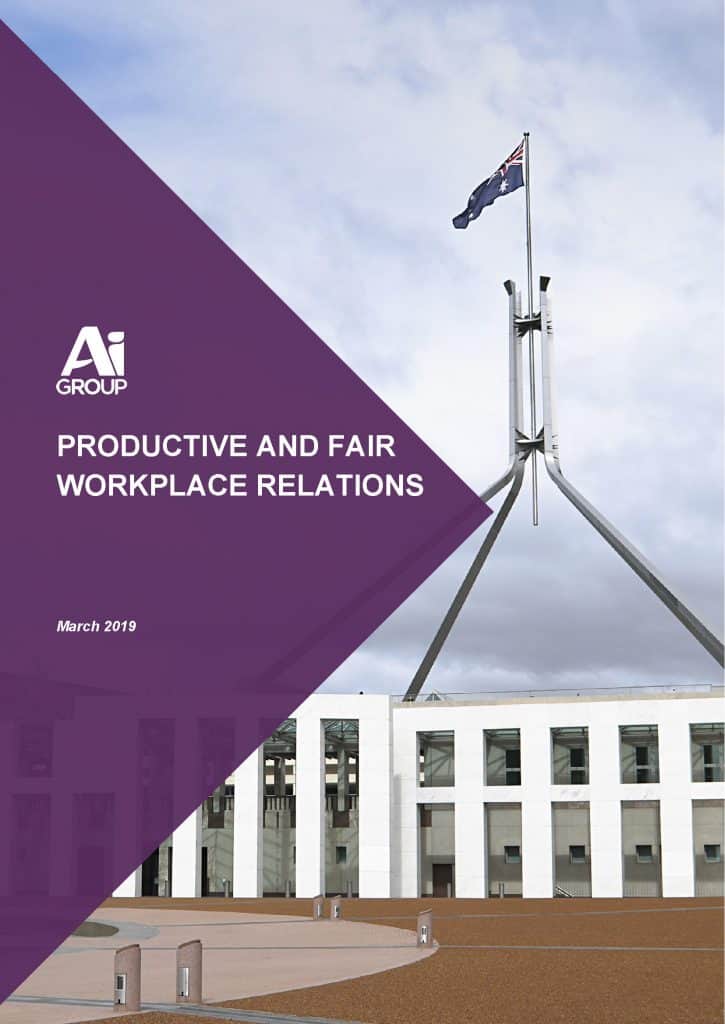
The impending election in Australia has started to generate various position statements and discussion papers from various lobbyists. The Australian Industry Group (AiGroup) and the Business Council of Australia (BCA) are the latest of these.
The AiGroup released its Productive and Fair Workplace Relations statement in late March 2019. Surprisingly there is no mention of occupational health and safety (OHS) even though its contribution to a productive workforce is well established. Its omission is doubly surprising given the political stink in some States about the introduction of Industrial Manslaughter laws.
What was overlooked during Budget week
Last week the Australian media was dominated by discussions on the Federal Budget and it being the precursor to a Federal Election in May 2019. But there were several actions in the few scheduled days of Parliament which relate to occupational health and safety (OHS). Below is a summary of some of them.
Labour Hire
In support of the Morrison Government Budget, Minister for Jobs and Industrial Relations, Kelly O’Dwyer, issued a media release stating that in response to Migrant Workers Taskforce Report, the Government (should it be re-elected, in reality) will establish:
“….a National Labour Hire Registration Scheme to ensure compliance and transparency in the labour hire industry in high-risk sectors;”
Labour Hire licencing scheme to be rolled out in Victoria
Labour Hire is almost always seen in purely commercial terms of salaries, business costs, production rates, labour availability, migrant workers, and more. Occupational health and safety (OHS) is often seen as an add-on, a term that is included in a media story because it should be, not because the author has really thought about it or sees OHS as legitimate.
Australian States are beginning to introduce certification/regulations schemes for the Labour Hire industry as a result of the exposure of workplace abuses in this labour supply process. Not all States though. Queensland has one that has been running a year or so, Victoria’s is open for registration applications at the end of April 2019 and full operation before the end of 2019; South Australia began its system, but an election changed the political priorities and that scheme is in limbo. The other States are unclear on their preferences, but it is clear that there will be no national labour hire scheme.
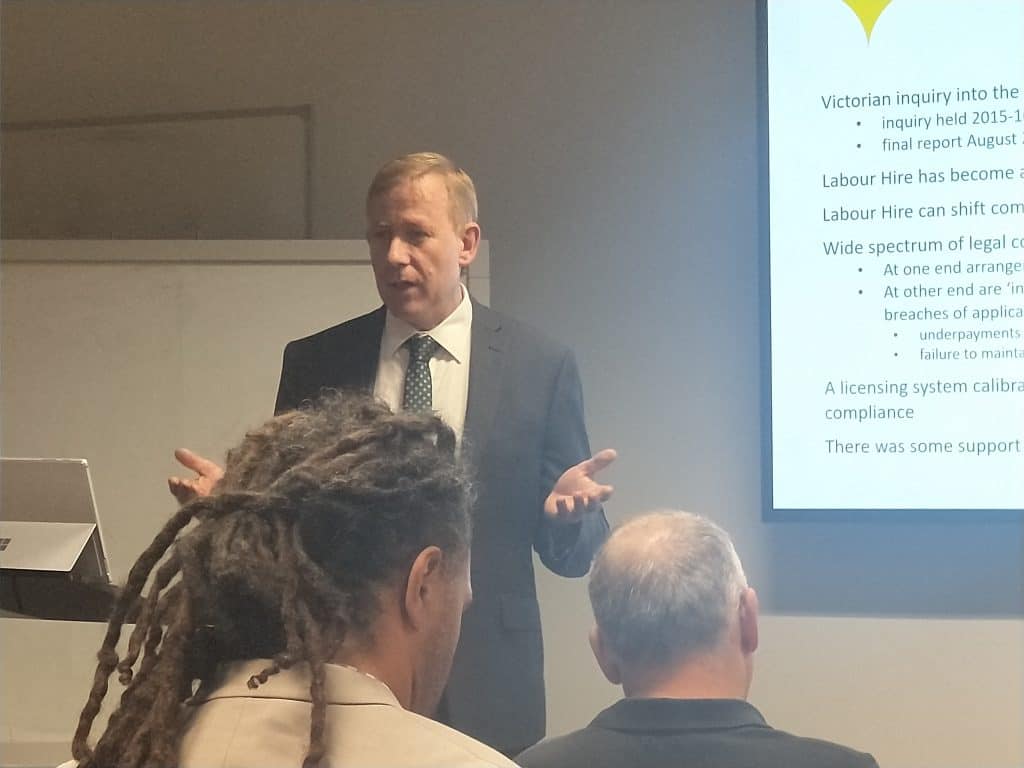
Victoria’s Labour Hire Authority (LHA) Commissioner, Steve Dargavel, has just started his roadshow for explaining what the regulations are all about, how to apply, what it will mean and what it will cost. Importantly OHS and workers’ compensation are integral parts of the scheme and therefore part of what the LHA Inspectors will be looking at and enforcing.
Exclusive interview with independent WHS reviewer, Marie Boland
SafetyAtWorkBlog had the opportunity to interview Marie Boland earlier this week after the release of her review into Australia’s Work Health and Safety (WHS) laws. Below is an edited version of that interview.
Marie, thanks for talking to me, it’s a terrific report you’ve produced. What was it like to undertake a national investigation of this type, given that it was pretty much you and just a couple of others?
…It was quite daunting at the beginning, but as I said in the introduction and nothing kind of clichéd about it, it was very much a privilege to be able to do it. And the privilege was enhanced by having the opportunity to go travel all around Australia, and some places I’ve never been before like Tamworth and what it really brought home to me was the diversity of people, workplaces, geography and that these laws are covering and the diversity of people who are dealing with the laws on a daily basis. So, it was certainly a once in a lifetime experience for me I suppose, and maybe a point in history for the laws as well.
I was very much aware throughout the process of my privilege and being able to do it and also the waves of expectation I suppose and this being the first review of the national laws and also very much aware of all the work that went into creating the laws in the first place. And certainly, a lot of the people who put so much effort into that work were still obviously very keen on how they were being applied and as I said I was very conscious of respecting all of that as I went around the country.
Another generation of safety thinking
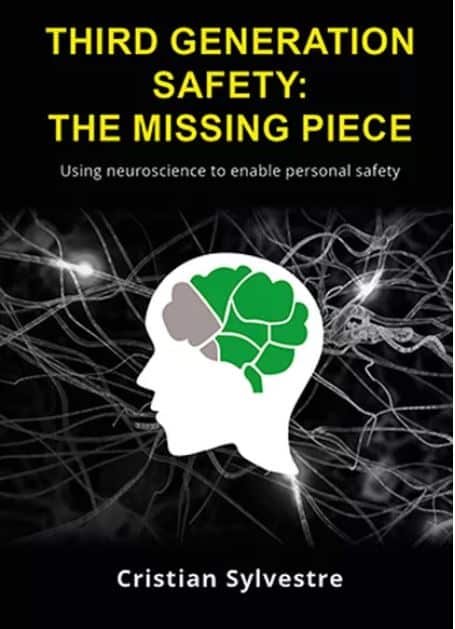
Several years ago I attended an occupational health and safety (OHS) conference at which Cristian Sylvestre was speaking. He was in one of the secondary rooms, it was packed with conference delegates and he was talking about neuroscience and its potential to affect safety. In 2017 he self-published a book called “Third Generation Safety: The Missing Piece“.
OHS has a lot of people talking about new approaches to address the plateauing of safety performance. We are pushed to reassess how we got here and how we look at OHS – Safety II, psychology of risk and others, or we need to have OHS fit with the Fourth Industrial Revolution. Sylvestre advocates a third generation of safety. This is his take on the previous two generations and how we should progress in the future.
New film provides an update on legal action over the 2014 Hazelwood mine fire
An independently-produced documentary, Our Power, about the Hazelwood mine fire had its Victorian premiere on March 2 2019. The Hazelwood coal mine fire was a major workplace disaster than generated substantial public health damage in the neighbour communities in the Latrobe Valley. An early record of the event and its impacts can be found in Tom Doig‘s book The Coal Face.
The documentary provides unique vision of the fire and how it burned and polluted the neighbourhood for over a month in 2014. As time goes on, the fire is seen more as an environmental disaster as it is workplace incident and speakers in Our Power are certainly confident in linking the fire with the privatisation of State-owned assets and the social injustice that underpins neoliberalism.