
Master guide or handbook

In 2012, SafetyAtWorkBlog reviewed the first edition of the Australian Master Work Health and Safety Guide. CCH Wolters Kluwer has released its second edition and, sadly, it repeats many of the criticisms in the 2012 review.

The title of Australian Master Work Health and Safety Guide (2nd ed) seems inaccurate if one considers a book with “master ” in its title to be a “masterwork”. This is not a masterwork and the publishers have emphasised to SafetyAtWorkBlog that the book was never intended to be.  The book is intended to be a brief outline of the most important contemporary occupational health and safety (OHS) issues in Australia and to provide practical advice, checklists and templates.  In fact, the word that should be focussed on in the title is “guide”.

The publishers advised that “master” is in the title to indicate it is part of its “Master Series“, a “brilliant” series described as

“Australia’s premium range of professional books, widely accepted as the leaders in their fields.”

SafetyAtWorkBlog looked at a couple of chapters to assess the quality of the content.  As workplace bullying is such a contentious issue. the Bullying and Violence chapter was a focus. There were a surprising number of omissions in this chapter.
Subscribe to SafetyAtWorkBlog to continue reading.
Subscribe Help
Already a member? Log in here

Abolition of Construction Code is a return to the past on OHS

The new Andrews Government in Victoria has followed through on its election pledge to abolish the Construction Compliance Code Unit (CCCU) of the Department of Treasury and Finance. It announced this in a peculiar manner within a media release on whooping cough, a process that Senator Abetz went to town on. But Premier Andrews’ decision raises the question of, if the Code is gone, what replaces it? The simply answer is nothing.

A spokesperson for the Premier advised SafetyAtWorkBlog that

“The Andrews Labor Government has delivered on its election commitment to scrap the Victorian Code of Practice for the Building and Construction Industry and its monitoring body the Construction Code Compliance Unit (CCCU).

Contractors bidding for Victorian Government work and applying for pre-qualification on construction registers will still need to meet safety and industrial relations management criteria. Contractors must also have occupational health and safety policies and procedures to meet legislative and regulatory requirements.”

Continue reading “Abolition of Construction Code is a return to the past on OHS”

Productivity Commission looks at workplace bullying – not really

The Australian Government has announced an inquiry into workplace relations through the Productivity Commission (PC). The most obvious occupational health and safety (OHS) element of this inquiry relates to workplace bullying which is discussed in the fourth of five issues papers released in January 2015. However the purposeful separation of workplace bullying actions through the Fair Work Commission (FWC) from actions in other sectors, such as OHS regulators, limits the potential impact of the inquiry on this issue.

The PC issues paper acknowledges the lack of the anticipated avalanche of anti-bullying applications and accepts that the structure of the FWC process may be partially responsible.  This lack of applications, an issue discussed

Subscribe to SafetyAtWorkBlog to continue reading.
Subscribe Help
Already a member? Log in here

Research project opportunity

SafetyAtWorkBlog believes that the following research project may be of interest to readers.

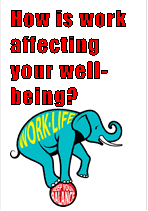
Underhill graphicA research team from the Faculty of Business & Law at Deakin University, led by Drs. Elsa Underhill & Melissa Parris, are conducting a research project to:

  • Develop a better understanding of how health, safety and well-being outcomes differ between types of workers (ie. permanents, casuals & labour hire) within the same workplace; and
  • Develop an understanding of how employment status impacts on work/life balance.

Their findings are intended to better inform HRM and WHS practitioners on the development of evidence based strategies and policies to improve the health, safety and wellbeing of all employees.

 They are seeking organisations which will allow them to survey their employees including, where appropriate, labour hire workers placed with organisation.  Responses will be anonymous and respondents will have the chance to win 1 of 10 mini Ipads. Participating organisations will receive a report specific to their organisation, as well as the full project report.

 Is your organisation interested in participating?  If so, please contact Elsa.Underhill@deakin.edu.au for further information.

Trade Union Royal Commission affects OHS credibility

Whether one believes that the Royal Commission into Trade Union Governance and Corruption is a political witch-hunt or a genuine attempt to clean up a corrupt industry sector, the Royal Commission seems to have revealed an abuse and exploitation of occupational health and safety (OHS) – an exploitation that has received next to no attention. The release of the Commission’s interim report allows for a quick analysis of this situation.

Former Prime Minister Julia Gillard was a particular target of the Commission in relation to a “slush fund” established by her then-boyfriend, Bruce Wilson, commonly referred to as the “AWU affair“.  The “slush fund”, known as the Australian Workers Union Workplace Reform Association, was developed, according to Gillard

“… to support the re-election of union officials who would campaign for workplace reforms including better occupational health and safety.” (Interim Report, Vol 1, page 99)

Subscribe to SafetyAtWorkBlog to continue reading.
Subscribe Help
Already a member? Log in here

Political statements on OHS need to be tested

Today Australia’s Employment Minister, Senator Eric Abetz, released a statement concerning a change to the renewal of Comcare licences in the spirit of reducing business red tape but there are two mentions of workplace safety that are curious.

In the statement entitled “Comcare self-insurance licence change“, Senator Abetz has welcomed:

“…a reform that will see businesses save more than $1 million a year which can be reinvested in Work Health and Safety and jobs.”

and states

“This reform will reduce the regulatory burden, remove the cost of licence extensions in years two and four, and push back the costs of audit until year eight as well as ensure safer workplaces.”

The argument on reducing OHS red tape is that the cost savings can be reinvested into occupational health and safety measures but there seems to be no independent evidence to support this belief.

Subscribe to SafetyAtWorkBlog to continue reading.
Subscribe Help
Already a member? Log in here

Sniping in social media raises issues about hydration

A spat has recently emerged on one of the safety discussion forums in Linkedin.  The catalyst was a statement that

The source of this data, not disclosed at the time of the original post, was a company that sells

“…a great tasting, scientifically proven mix of cutting-edge branch chain amino acids and low Gi carbohydrates for sustained energy release, combined with a formulated blend of electrolytes for optimum hydration in harsh Australian conditions”.

The discussion quickly refocused from the original safety concern to one of unreliability of statements; sadly the discussion also became personal and abusive. but the discussion raised two discussion points:

  • The reliability of statements on the internet, and
  • the issue of hydration and work performance.

Continue reading “Sniping in social media raises issues about hydration”

Concatenate Web Development
© Designed and developed by Concatenate Aust Pty Ltd