
Mind Set – Mental Health in Australian Workplaces

[This article was written by Helen Borger and was first published in the May-June 2014 edition of National Safety – a magazine of the National Safety Council of Australia.  Reproduced with permission. (Links added by SafetyAtWorkBlog ) ]

rsz_ns__mayjun_2014A quick online search reveals a plethora of advice and information about choosing the right mood-altering paint colours for office walls and selecting the best beanbags for worksite chill-out spaces. Not to mention the availability of on-site massages to ease employee tension and anxiety.

It’s tempting to make these interventions the centrepiece of workplace mental health and wellbeing programs because they are feel-good, visible signs of management action that are relatively easy to implement. Continue reading “Mind Set – Mental Health in Australian Workplaces”

Beyondblue’s latest research report is too narrow

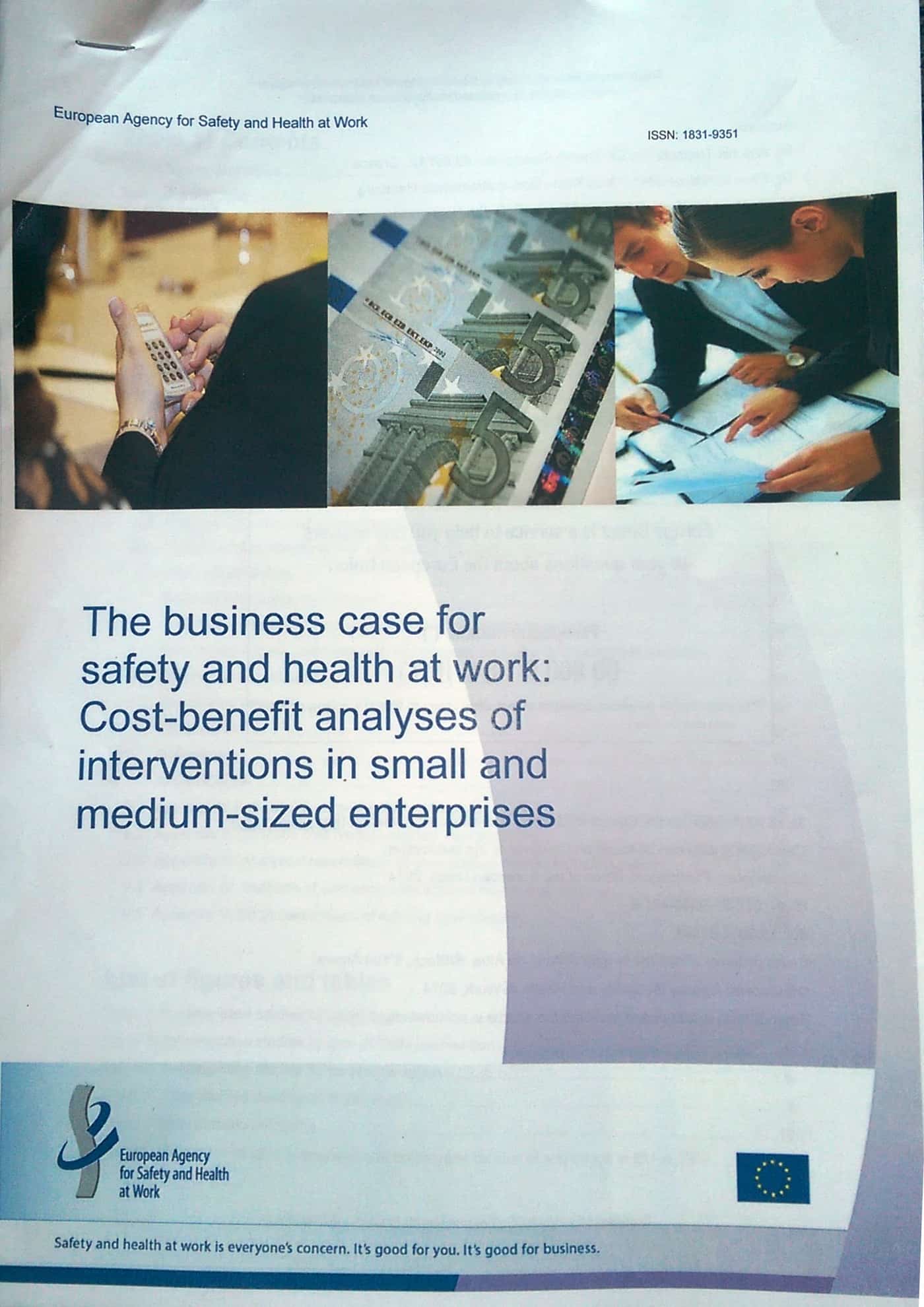
Beyondblue has just released a report into the cost of mental health in the workplace prepared by PricewaterhouseCoopers (PwC) and called “Creating a mentally healthy workplace – Return on investment analysis“. The report is interesting but of limited use for those looking for ways to make their own workplaces safer and healthier with minimal cost.  The Beyondblue  media release claims

“… that Australian businesses will receive an average return of $2.30 for every $1 they invest in effective workplace mental health strategies.

The research, which looked at the impact of employees’ mental health conditions on productivity, participation and compensation claims, also found these conditions cost Australian employers at least $10.9 billion a year.”

The first claim looks attractive but achieving such a return is unlikely unless the company includes the following:

  • “commitment from organisational leaders,
  • employee participation,
  • development and implementation of policies,
  • provision of the necessary resources, and
  • a sustainable approach.” (page iv)

The best chance for the return on investment (ROI) will likely occur in a company that has an enlightened management, “necessary resources” and a leadership that is already likely to have mental health and a safe organisational culture on its agenda.  This is a rare combination which limits the application of the PwC report findings.

Subscribe to SafetyAtWorkBlog to continue reading.
Subscribe Help
Already a member? Log in here

Can Broken Windows Theory help OHS?

There are very few innovations that originate from within the occupational health and safety (OHS) profession.  Most of the change seems to come from the application of external concepts to workplace activities and approaches.  Recently a colleague was discussing how some of the current OHS initiatives mirror the “broken windows” concept which originated in criminology in the United States.  In some ways Broken Windows Theory mirrors OHS positives but it may also reflect some of the negatives or OHS dead-ends.

Ostensibly Broken Windows Theory discusses how attention to small improvements may generate cultural change.  However the improvements introduced seem to have different levels of success depending on the context in which they are applied.  For instance in OHS, a construction site may mandate that protective gloves are worn for all manual activity but if there is a variable level of manual handling risk, the wearing of gloves will be an accepted practice in one area but haphazard in another.  The intention of a mandated safety requirement is to change the risk and safety culture of a workplace but the different levels of risk mean that the requirement can be seen as “common sense” in one area but unnecessary “red tape” in another.

The criminological application of the theory reached its peak in New York City in the 1980s and 1990s.

Subscribe to SafetyAtWorkBlog to continue reading.
Subscribe Help
Already a member? Log in here

Royal Commission and risk registers

Most of the Australian media is waiting for the former politicians to appear at the Royal Commission into the Home Insulation Program later this month but the Commission has not been quiet in its many public hearings recently.  One of the hearings heard evidence that is particularly significant and relates to risk registers.

According to 

Subscribe to SafetyAtWorkBlog to continue reading.
Subscribe Help
Already a member? Log in here

Red tape (again) and Obama’s support – Melbourne’s Workers’ Memorial Day 2014

IWMD 2014 01A short time ago the International Workers Memorial Day commemoration in Melbourne, Victoria, concluded. The ceremony was less sombre than in previous years with, it seemed, fewer families and relatives of deceased workers.  Certainly there was no speech from a family member, nothing from workplace safety advocates other than the three trade union speakers, Meredith PeaceBrian Boyd and Michael Borowick (all pictured right), however there were tears for some in the crowd and wreaths were laid prior to a minute silence.

The politics was reduced this year as there were no noisy protests from the back of a tray truck and no march on Parliament afterward, however politics is never far from the surface of this type of event. Michael Borowick, Assistant Secretary of the Australian Council of Trade Unions  was the more effective of today’s three speakers.  Continue reading “Red tape (again) and Obama’s support – Melbourne’s Workers’ Memorial Day 2014”

Self-employment should not be seen as a work/life solution

Work/life balance is a close cousin to occupational health and safety (OHS), particularly health.  It is often the gateway people use to reduce occupational health risks such as stress and other psychosocial issues.  Moving to self-employment can be a successful strategy but it is not as easy as simply relocating one’s individual workplace or teleworking, the expected control on work hours may not eventuate and it may be very difficult to maintain a livable wage.  In The Saturday Age on April 26 2014 (not locatable on-line), Dr Natalie Skinner of the Australian Centre for Work + Life, provided a useful perspective.

Skinner writes that her annual surveys over the last six years have indicated that:

“self-employment is neither better nor worse for work-life conflict than being an employee.”

Skinner acknowledges that this seems odd because there has been so much debate about the win-win of workplace flexibility.

Subscribe to SafetyAtWorkBlog to continue reading.
Subscribe Help
Already a member? Log in here

“Safety is paramount”, “safety is our number one priority” = bullshit cliches

After a major incident or at an Annual General Meeting, it will be common to hear a senior executive state something like “Safety is our number one priority”.  This is unrealistic and almost absurd because even in the most worker-friendly company, the continued existence of that organisation is the real and ultimate goal.  Most corporate leaders believe these safety clichés because they think they reflect their own values but the statements are misrepresenting occupational health and safety (OHS) and need to be questioned.

Corporate leaders who say such statements are not hypocrites.  They are more likely to not understand the consequences of their statements.  If safety really is the number one priority, an executive should be able or expected to close the company if its work cannot be conducted safely.  If a company’s people are paramount to the success of the company, how does it handle an accusation of bullying against a manager?  Which of the people does the Board or the company choose to keep and which to lose?  Should it keep the “evil” sales representative because the rep is its most effective salesperson or sack the rep because he or she is abusive?

These are executive decisions that need to be worked through if any company is to develop an effective operational culture that truly values the safety of its workers.  It is vital that the reality behind the statements is analysed and acted upon, or perhaps such statements should not be uttered in the first instance.

Subscribe to SafetyAtWorkBlog to continue reading.
Subscribe Help
Already a member? Log in here
Concatenate Web Development
© Designed and developed by Concatenate Aust Pty Ltd