
The social context of OHS laws is being poorly handled

Australian lawyer Michael Tooma is mentioned regularly in the SafetyAtWorkBlog, mostly because Tooma is one of the few who consider workplace safety in the broader social context.  In The Australian newspaper on 10 February 2012 Tooma wrote that new work health and safety laws being introduced in Australia present

“…a march … into the traditional heartland of the public safety, product safety and professional liability territory, and it brings with it a criminalisation of what was once an exclusively civil liability domain.  The new laws did not invent this trend, they just perfected it.”

Right-wing commentators would jump on this and declare “nanny state” but it is vitally important to note that this trend of “protectionism”, or the “compensation culture” as described in the United Kingdom, did not originate in occupational health and safety (OHS) laws.  The OHS profession, business operators and workers will need to learn to accommodate and manage this social trend that has been imposed.

Tooma writes that ”

“…we have not had a proper debate about the incursion of the laws into nontraditional areas and its impact on the resources of firms, regulators and ultimately work safety standards.”

The debate may already be over. Continue reading “The social context of OHS laws is being poorly handled”

Testosterone could impede collaboration

Testosterone does not have an immediate association with occupational health and safety, however it could have an impact on collaboration according to a recent article abstract in the Proceedings of the Royal Society B: Biological Sciences.

Researchers at University College London have found that

“Testosterone causally disrupts collaboration during joint decision-making – and does so by increasing individuals’ egocentricity, so that they overweigh their own subjective decisions.” Continue reading “Testosterone could impede collaboration”

The lobbying for “control” impedes corporate and OHS growth

“When we look at global trends it’s clear that Australia’s labour laws are not the primary cause of the contraction in manufacturing.”

Shelley Marshall, a Monash University researcher and Fair Wear Australia spokesperson made this statement at an Australian Senate inquiry on 2 February, 2012.  The statement, reported in The Australian Financial Review (not available online), was used to illustrate the complexities of outworker protections under the Fair Work Act but it is, occasionally, worth looking a broader context.  If one accepts that workplace safety is a subset of industrial relations laws (as SafetyAtWorkBlog does), Marshall’s comments help cut through some of the recent hyperbole from the industry associations and lobbyists about the significant economic and productivity costs of OHS law reform.

Marshall identified the extension of supply chains as affecting productivity.  The issue of supply chain responsibility has an established OHS context as it relates to the issue of “control”, a matter raised as an objection to the implementation of new Work Health and Safety laws.  Continue reading “The lobbying for “control” impedes corporate and OHS growth”

UK’s approach to OHS reform is flawed by short-term political strategy

England’s Prime Minister, David Cameron, has described OHS as a “monster” in a speech to small business owners on 5 January 2012. It is important to note the PM’s comments prior to his monster reference that have not been repeated in the mainstream press. He refers to

“… a great big machine of health and safety that has built up over years.”

Cameron feels that he needs to address an OHS regulatory system and enforcement strategies that have become too complex for, particularly, small business to comply with. Part of his solution is to exempt the self-employed, in some specific sectors, from OHS laws. This is a questionable decision as it effectively establishes a two-tier safety management regime and sets a precedent for other similar sectors to lobby for an exemption from other, perceived, onerous laws.

It may be that OHS laws in the UK have become overly complicated over time but the role of the media must be considered in that it has focussed on many absurd managerial decisions that have resulted from a skewed understanding of OHS and risk. Frequently the media reports have no relation to OHS laws and all to do with an increasing litigious society and the pursuit of money through, potentially spurious, public liability insurance claims.

In the 5 January 2012 speech Cameron states that

“…the key about health and safety is not just the rules and the laws and the regulations – it is also the culture of fear many businesses have about health and safety.” (emphasis added)

Cameron explains his answer for reducing this fear of health and safety, the capping of fees that lawyers can earn from legal action against businesses on behalf of their clients, usually, employees. There is no fear of health and safety, it is a fear of litigation. Cameron is not on about OHS law reform, his concern is about “unnecessary” litigation costs. This is unlikely to be reduced by cutting the budget of the Health & Safety Executive (HSE) which must reduce services as the HSE resources have been contracting for some time. Continue reading “UK’s approach to OHS reform is flawed by short-term political strategy”

Labor lawyer raises strong concerns over new Work Health and Safety laws

Yesterday morning, Mike Hammond of the Australian law firm, Norton Rose, conducted a seminar on the harmonisation of Australia’s work health and safety laws.  This was the last in the current series of seminars on this topic but Hammond’s seminar differed considerably from previous sessions.  Hammond is clearly less than enamoured with the model Work Safety and Health Act, describing parts of the legislation as “bad law” and asking whether the laws were examples of “social engineering”.

Understandably, these comments generated considerable discussion from the audience of around 50 people.

The crucial nub of Hammond’s concerns was the lack of essential definitions in the model law.  Continue reading “Labor lawyer raises strong concerns over new Work Health and Safety laws”

OHS app is attractive but may be no better than a paper system

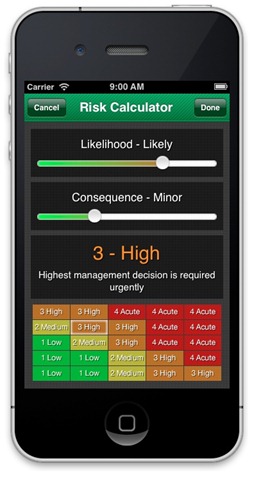
Over the last few months I have been using my iPad to take photographs of good and bad workplace practices.  These photos are usually shown to a site or business manager after a visit so that control measures can be identified.  The advantage of an iPad is that no one has to squint at a small screen to try to see the hazard.  I have kept my eyes open for potentially useful OHS apps for the iPad.  One app recommended to me is iJSA.

iJSA, designed for the iPhone initially, is packed with features that could assist the tech-savvy OHS professional in developing Job Safety Analyses (JSA) (Job Hazard Analysis in the United States).  However any app must prove to be better, more convenient and more effective than existing measures and I am not sure that iJSA does this. Continue reading “OHS app is attractive but may be no better than a paper system”

Australia risks OHS ridicule in the media

The Sunday Herald-Sun ran an article that would not have been out-of-place in the English tabloid newspapers.  The article, “Safety regulations taking the fun out of schools”, indicates many of the confused lines of responsibility that English articles include.

In Victoria, the safety requirements of government schools are determined by the Department of Education and Early Childhood Development (DEECD).  The OHS regulator, WorkSafe, has some influence but far less that DEECD. (The only really school-related OHS document from WorkSafe Victoria was released in 2008)

The Sunday Herald-Sun article states, in some pictures not in the online version, that the Victorian Principals Association has been told of OHS regulations that require teachers to  “put on mask, surgical gloves to apply a band-aid”.  Continue reading “Australia risks OHS ridicule in the media”

Concatenate Web Development
© Designed and developed by Concatenate Aust Pty Ltd