
Last week, I was able to interview several speakers, sponsors and delegates at the 23rd World Congress on Safety and Health at Work, sometimes on behalf of the Congress and at other times privately. Some of these interviews were edited from forty-five minutes of content to ten. The interview with the Team Lead on Occupational Safety and Health at the International Labour Organization, Manal Azzi, available online, was once such. This SafetyAtWorkBlog article is the full, slightly edited, transcript of that interview.
Category: workplace

Leadership and Culture confusion is self-inflicted
Every occupational health and safety (OHS) conference over the last twenty years seems to have revolved around the twin concepts of culture and leadership. The fascination with these concepts deserves analysis as they are confusing, and sometimes conflicting, and this is unhelpful for those in the lower or middle order of the management structures who are trying to affect change.
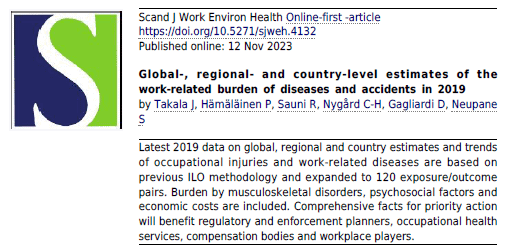
New international and local workplace data should cause a reassessment of national OHS strategies
Earlier this week, the International Labour Organisation (ILO) released new data showing that in 2019:
“According to the latest estimates developed by the ILO and covering the year 2019, over 395 million workers worldwide sustained a non-fatal work injury.”
More research on global work-related deaths has been released. This time, it was through the Scandinavian Journal of Work, Environment, and Health and with regional data breakdowns. This latest report includes some important statistical data about psychosocial exposures at work.
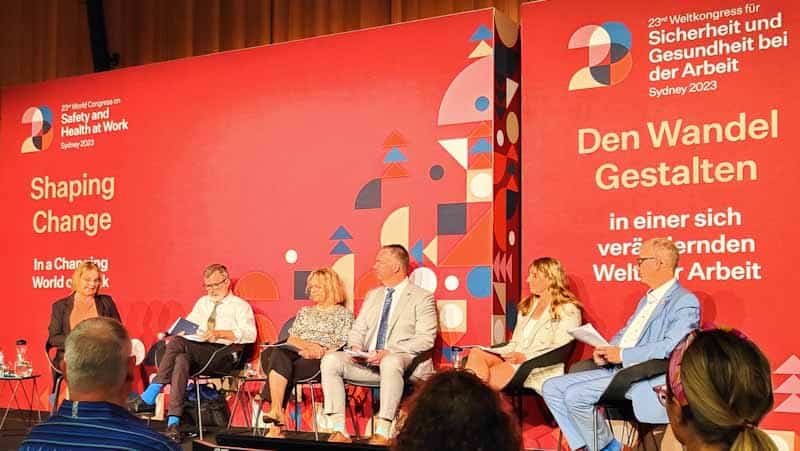
Rory O’Neill provides a spark
Rory O’Neill was a member of a panel at the 23rd World Congress for Safety and Health at Work, ostensibly, about Safety in Design in high-risk industries. It is fair to say he was expansive, engaging and provocative. It was a rare opportunity to hear him speak in person. Below are some examples of his challenging and, in some ways, traditional approach to occupational health and safety (OHS).
ILO sets the OHS picture at the 23rd World Congress
This afternoon, the 23rd World Congress on Safety and Health at Work commences in Sydney. Already important information is being released, with the International Labour Organisation (ILO) being first out of the block, setting the broader occupational health and safety (OHS) context.
In a media release dated November 27 2023, the ILO says:

Work From Home conflict between corporate desire and worker reality
The working-from-home (WFH) debate continues in business newspapers with tension about what the employer and worker want. The Australian Financial Review (AFR) has its regular voices from business groups saying that it is damaging productivity for workers to be away from the offices as much as they are, but also reporting the lived experience of working from home with workers identifying positive social and familial benefits.
On November 25, 2023, the newspaper confirmed that Amazon Australia is using career progression as a nudge for workers to come to the offices more frequently.

Politics can mask OHS
The push for workers to return to offices for the majority of their working hours or full-time continues but is one step forward and two back, or vice versa. This is partly due to mixed mainstream and online media messages from conflicting and confusing sources. This is not helpful when one is trying to make a decision on the best available evidence.
A recent example was in the Australian Financial Review (AFR) on November 22, 2023 (paywalled). A commercial real estate services provider CBRE, has released quarterly figures that say workplaces in Melbourne are “only a little over half-occupied on average”. According to Tom Broderick of CBRE: