Cooperation, duty of care, jail, death and a simple message

The details of the death of disabled woman Ann Marie Smith are horrific. (Readers can look them up online but be warned that they are confronting) Last week the South Australian police (SAPol) charged two directors of Integrity Care SA, Amy June Collins and Alison Maree Virgo, and the company itself with criminal neglect causing death and failing to comply with a health and safety duty of care, according to one media report.

There are many occupational health and safety (OHS) lessons from Smith’s death, but one of particular note is that the South Australian Police and SafeWorkSA conducted a joint investigation. Deputy Commissioner of Police Linda Williams said, in a media release:


Subscribe to SafetyAtWorkBlog to continue reading.
Subscribe Help
Already a member? Log in here

Does OHS research have a Left and a Right?

Occupational health and safety (OHS) has had an uneasy ride in political debates in Australia, often because there is a disturbing morality in laws that dictate an employer has responsibility for the safety and health of their workers, even if legal wriggle room is allowed. There is no written history of OHS in Australia except within the confines of Industrial Relations, if it gets mentioned at all.

Recently I engaged in a conversation with a professional colleague on LinkedIn (I know, didn’t your Mother always say not to engage with people on social media? Well, this is a blog so….). That colleague made some odd political statements.

Subscribe to SafetyAtWorkBlog to continue reading.
Subscribe Help
Already a member? Log in here

Australia’s Wellbeing Budget and Living Standards Framework is on its way

Australia’s new Treasurer, Jim Chalmers, shows an awareness of the importance of good mental health in Australia’s citizens and workers but his strategy, which remains in its infancy, has some problems.

In one of Chalmers’ first interviews after the Australian Labor Party won power last month, he was asked about the Budget he will be releasing in October 2022 (the same month as National Safe Work Month!):

Subscribe to SafetyAtWorkBlog to continue reading.
Subscribe Help
Already a member? Log in here

Research shows the danger of overconnection

Many companies are starting to settle into hybrid working arrangements where workers are in the office for part of their time and at home for others. The occupational health and safety (OHS) impacts are still being discovered and refined. The flexibility of these hybrid arrangements is both good and bad, as identified recently by the European Foundation for the Improvement of Living and Working Conditions (Eurofound) in its analysis of the Right-To-Disconnect.

This could/should become a significant consideration when complying with Australia’s OHS regulations for psychologically safe workplaces currently under development.

Eurofound’s Executive Summary states:

“Digital technologies have made it possible for many workers to carry out their work at any time and anywhere, with consequent advantages and disadvantages. Potential advantages include greater autonomy, better work–life balance, improved productivity and environmental benefits. However, the constant connection enabled by information and communications technology (ICT)-based mobile devices can pose risks to health and well-being, as well as causing work–life balance conflict linked to longer working hours and the blurring of boundaries between work and private life.”

Subscribe to SafetyAtWorkBlog to continue reading.
Subscribe Help
Already a member? Log in here

OHS change

Recently I have been critical of political speeches concerning occupational health and safety (OHS) for being bland, safe, unadventurous and lacking vision. Recently a reader sent me these words:

“In recent years occupational health and safety has become the forgotten element of national workplace relations policy. It’s now time to focus on its importance – to protect lives and livelihoods and to ensure the future strength of Australia’s workers compensation schemes. There’s too much in the balance to let the system decline in effectiveness and increase in cost. Lives are at stake.

Continue reading “OHS change”

Can you vote for OHS?

Australia is in the last few weeks of its federal election. Because it is a national election and occupational health and safety (OHS) is almost totally regulated at the State and Territory level, workplace health and safety is rarely if ever mentioned directly in campaign pledges. However, OHS does have a political campaign context if one accepts that some workplace hazards are caused or affected by social and government policies.

Australian Labor Party

The Australian Labor Party’s suite of campaign policies includes several items that could reduce the mental anguish in the community, thereby encouraging people to take jobs and making applicants more attractive to employers but there are no direct pledges on OHS. It states in its “Secure Australian Jobs” policy that:

Subscribe to SafetyAtWorkBlog to continue reading.
Subscribe Help
Already a member? Log in here

Prohibition on Administrative Controls for psychological health at work

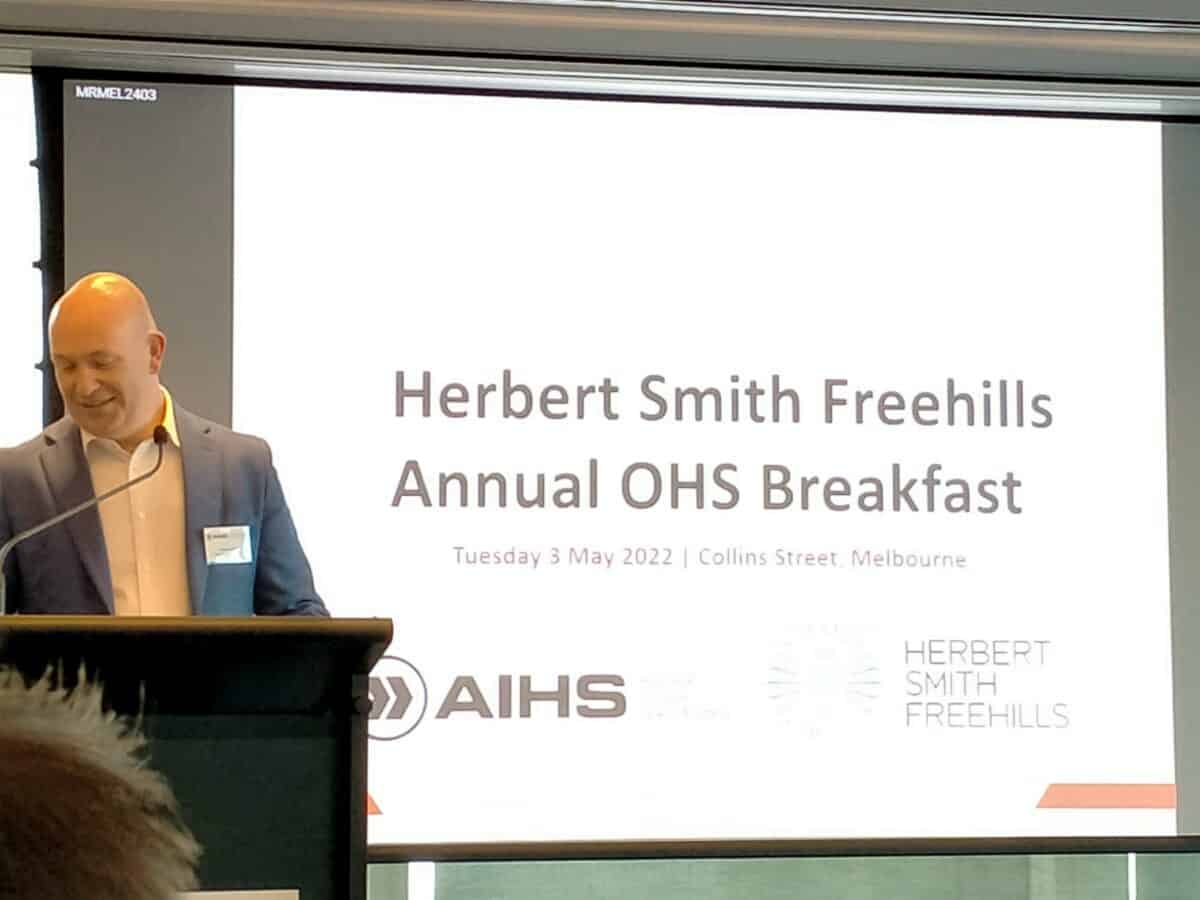
The Australian Institute of Health and Safety (AIHS) and Herbert Smith Freehills (HSF) annual breakfast physically returned this month after a few years of enforced absence. It kept its traditional structure – speeches from the local OHS regulator WorkSafe Victoria, representatives from HSF and AIHS and a summary of a salary survey report focused on occupational health and safety (OHS) professionals. The presentation that made the expense worthwhile came from one of HSF’s Regional Heads of Practice, Steve Bell, concerning new regulations for psychologically healthy workplaces.

Subscribe to SafetyAtWorkBlog to continue reading.
Subscribe Help
Already a member? Log in here
Concatenate Web Development
© Designed and developed by Concatenate Aust Pty Ltd