Noisy Buggers in the Post-COVID world

Guest Post by Melody Kemp

In my more bizarre moments, I can imagine the cockpit conversation:

‘Hey Bill, there’s the blue and white house. We turn left here’
‘Bob, Copy. Over.’

Of course, it’s nonsense to think that the complexities of aircraft take-offs and landings would depend on visual cues, rather than complex technology, weather and fuel economy.  In fact, it’s the very technology that allows communities to track and identify aircraft and the noise level as they pass overhead.

But I have to admit that, particularly at night, when I see the queue of aircraft waiting to approach, their starboard and port lights blazing into our living room, it’s hard not to go out and shake an impotent fist at the crew.

As I completed this third paragraph, a Jetstar plane flew overhead. I measured the roar at 76DbA, another app told me it was slightly less than 1000 feet above my roof.  As it continues to descend, it passes over the densely populated parts of the city that follow the Brisbane River, including New Farm and Doomben, well known to race goers. What was that old saying about don’t scare the horses?

I work at home. My concentration and the paragraphs I write, come in lumps divided by the passing of planes. Some, like the Flying Doctor prop-jets, make, in objective terms, little noise (around 58dBA), but if one is sensitised to the noise in general, they become yet another psychological hazard. Evidence for aircraft noise exposure being linked to poorer well-being, lower quality of life, and psychological ill health is reflected by the responses to my questions and Facebook comments posted by concerned residents (some are included below)

Continue reading “Noisy Buggers in the Post-COVID world”
The never-ending line between healthy and sick

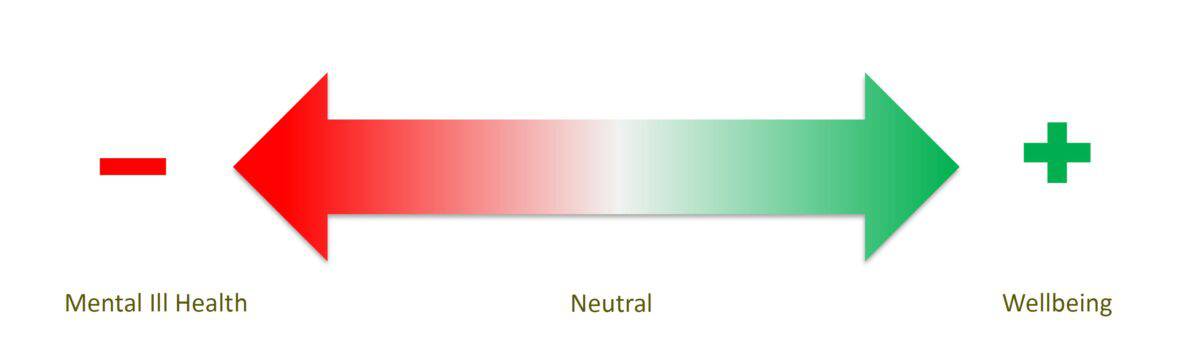
Infographics are increasingly used to summarise sometimes quite complex reports about occupational health and safety (OHS) matters. But often the nuance of the facts being depicted are stripped away in the translation process. There is one graphic that is repeatedly used in the context of mental health that seems to misrepresent reality for the sake of clarity.

Subscribe to SafetyAtWorkBlog to continue reading.
Subscribe Help
Already a member? Log in here

Thanks, but we need more

Statistics are vital to any decisions about occupational health and safety (OHS). Safe Work Australia (SWA) does a great job providing statistical packages based on the data sources it can access. Last week SWA released its 2019 report on “Work-related Traumatic Injury Fatalities” which identified vehicle collisions as, by and large, the most common cause of worker fatalities. This category may be a surprise to many readers but perhaps the most important part of the report is what is omitted.

Subscribe to SafetyAtWorkBlog to continue reading.
Subscribe Help
Already a member? Log in here

The black sheep of safety leadership

Western Australia’s Industrial Manslaughter (IM) laws are now in effect. The same arguments for and against were posed in Parliament and outside as they were in Queensland and Victoria, and the Australian Capital Territory well before that. The IM laws will face the same institutional hurdles to application and offer the same, nominal, deterrent effect.

But WA also prohibited insurance policies that cover the financial penalties applied by the Courts. Such policies may make good business sense in managing risk, but they also remove the pain and deterrence intended in the design and application of Work Health and Safety laws.

Subscribe to SafetyAtWorkBlog to continue reading.
Subscribe Help
Already a member? Log in here

A respect at work council is not enough

Australian discussions about workplace bullying and sexual harassment at the moment is in a mess indicating that insufficient work has been spent on clarifying what these terms mean, how the consequences are managed and whether the harm can be prevented.

In Parliamentary debate on the 2020 Budget, the Liberal Party’s Sussan Ley, said:

“The Morrison government will establish a respect at work council to provide practical support to employers and employees to prevent and address sexual harassment in Australian workplaces. We know it’s a barrier to women’s workforce participation, particularly for women working in male-dominated fields, and the government is committed to eradicating it from Australian workplaces.”

page 100, Hansard

Respect and countering incivility are important in building a workplace culture that is equitable and safe. However a discussion on sexual harassment of women by a Federal Government Minister in November 2020 rings hollow when the government has still to respond to a world-leading inquiry into sexual harassment in workplaces handed to them early this year.

Subscribe to SafetyAtWorkBlog to continue reading.
Subscribe Help
Already a member? Log in here

Clues to the “new normal” of work

The COVID19 pandemic has devastated many countries but it has also created business opportunities. Recently workplace IT company Skedulo released a whitepaper about the new work normal. The document is essentially a marketing strategy but there are some hints about workplace change that may be of interest to occupational health and safety (OHS) advocates and professionals.

Subscribe to SafetyAtWorkBlog to continue reading.
Subscribe Help
Already a member? Log in here

Hospitality survey shows the size of the hurdle to reform

This photo was taken in the Victorian Night Market during winter

Hospo Voice, a trade union for Australian hospitality workers has released a report on a survey of more than 4000 workers between March and June 2020. #RebuildHospo: A Post-Covid Roadmap For Secure Jobs In Hospitality has all the limitations of other surveys done by members of an organisation rather than independent research but this report offers a framework for safe and decent work that reflects many of the occupational Health and safety (OHS) that SafetyAtWorkBlog has reported on.

The union claims that hospitality workers endorse four important work elements:

  • Secure jobs,
  • End to wage theft,
  • Safe and respectful workplaces, and
  • Justice for migrant workers

OHS has a thin presence in this report, mainly discussed in that third bulletpoint but an integrated analysis would show that OHS is involved with more of the elements.

Subscribe to SafetyAtWorkBlog to continue reading.
Subscribe Help
Already a member? Log in here
Concatenate Web Development
© Designed and developed by Concatenate Aust Pty Ltd